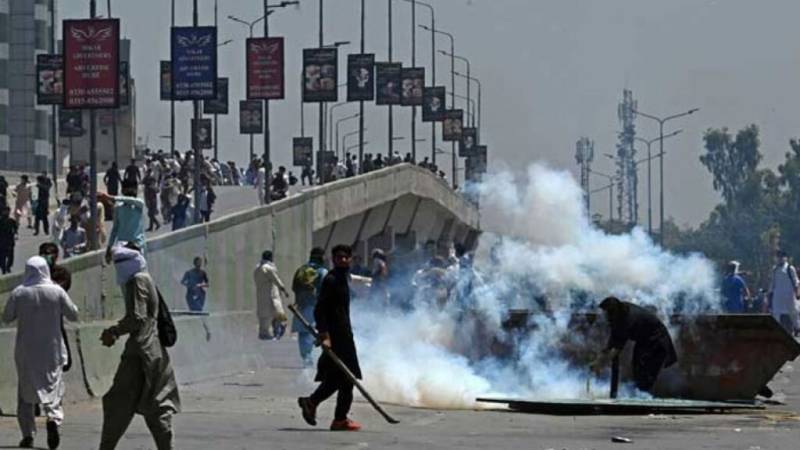

ISLAMABAD — For over two decades, Pakistan has confronted persistent internal security challenges along its western borders, particularly within Balochistan. During this period, anti-state militant networks have undergone multiple cycles of near-elimination followed by operational resurgence.
While external support—including technical and financial backing from regional actors—continues to fuel insurgent activities targeting civilians, infrastructure, and security posts, strategic consensus emphasizes that kinetic force alone cannot deliver long-term stability. Enduring counterinsurgency requires shrinking the social pool from which insurgent groups draw recruits, intelligence, and passive legitimacy.
Categorizing the Insurgent Spectrum
Developing a multidimensional response requires segmenting the broader spectrum of actors operating within the insurgency into four distinct operational tiers:
Ideological Hardcore: Committed insurgents who remain irreconcilable regardless of cost.
Operational Cadres: Members whose primary allegiance stems from organizational ties and local command structures.
Fence-Sitters: Segments of the populace that yield to whichever authority appears stronger or more legitimate.
Coerced Cooperators: Individuals who assist insurgent groups solely out of fear, vulnerability, or a lack of state protection.
While the ideological hardcore necessitates decisive military action, the remaining three categories require targeted political engagement, economic integration, robust local policing, and civil protection to isolate the insurgent leadership from the broader population.
Historical Precedents and Strategic Lessons
Classical and modern military doctrines consistently affirm that population security—rather than mere enemy body counts—serves as the primary center of gravity in internal conflicts:
Classical Strategy: Sun Tzu’s The Art of War underscores that the highest form of victory lies in breaking the adversary’s capacity and will to resist without relying solely on destruction.
Modern Counterinsurgency Theory: Strategist David Galula, alongside the framework outlined in US Counterinsurgency Field Manual (FM 3-24), notes that tactical actions measuring success purely by casualties risk alienating the public, emphasizing that counterinsurgency is fundamentally a political struggle.
The Malayan Emergency: The British campaign successfully dismantled a communist insurgency by coupling relentless military operations with structural political reform, expanded citizenship, improved governance, and public protection.
Northern Ireland: Decades of military operations in Northern Ireland contained violence, but peace was ultimately secured through sustained political negotiations culminating in the Good Friday Agreement of 1998, which brought former militants into constitutional politics.
Consolidating Gains in Pakistan
Pakistan’s previous counter-terrorism operations, including Zarb-e-Azb and Radd-ul-Fasaad, demonstrated that while kinetic strikes successfully clear territory and dismantle hostile infrastructure, long-term stabilization requires immediate follow-through in local governance, community engagement, rapid justice delivery, and economic rehabilitation.
Furthermore, leveraging political dialogue aligns with traditional Islamic statecraft. Historical precedents such as the Treaty of Hudaybiyyah demonstrate that strategic negotiation, conducted without compromising core state principles, serves as a mechanism to fragment hostile coalitions and secure durable peace.
Ultimately, military force establishes the necessary operational security, but public legitimacy and responsive governance determine the ultimate outcome of an internal stability campaign.