
Parliamentarians and energy experts have urged the government to reconsider long-term energy contracts that risk locking Pakistan into costly take-or-pay obligations and deepening circular debt, calling instead for greater flexibility in LNG and other fuel imports as the country’s rapid solar expansion reshapes overall energy demand.
The recommendations emerged from a dialogue titled “The Sun and the Pipeline: Energy Contracts in an Era of Solar Disruption in Pakistan,” organized by the Parliamentary Forum on Energy and Economy in Islamabad. Discussion centered on Pakistan’s shifting RLNG requirements, global market volatility, geopolitical risk, and policy options that could preserve energy security while shielding consumers from rising costs.
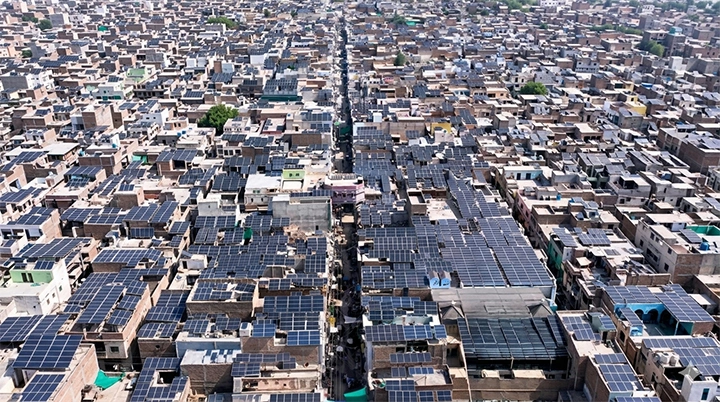
Pakistan has deployed an estimated 50 gigawatts of solar capacity within just a few years, largely without public subsidy, spanning utility-scale projects, net-metered systems, agricultural applications, off-grid installations, and behind-the-meter generation. That capacity is estimated to generate roughly 54.75 terawatt-hours of electricity annually, equivalent on a gross-energy basis to nearly 1,279 million cubic feet per day of gas-fired generation. Experts described the scale of this deployment as a structural shift that has outpaced many of the assumptions underlying Pakistan’s long-term gas and LNG commitments.
Dr Nafisa Shah, Convener of the Parliamentary Forum on Energy and Economy and a member of the National Assembly, said Pakistan needs to revisit its energy mix and regulatory framework to reflect the rapid growth of distributed solar generation. She said long-term take-or-pay contracts have contributed to expensive electricity, and stressed that future energy planning must account for the demand shifts solar power has introduced. “We are not simply choosing solar over LNG,” she said. “We are looking for a flexible, competitively priced energy layer that ensures security without penalising the progress Pakistan has made in distributed generation.”
Barrister Danyal Chaudhry, Parliamentary Secretary for Information and Broadcasting and Secretary of the Parliamentary Forum on Energy and Economy, said the policy conversation needs to move past framing solar and gas as competing alternatives, and instead focus on how solar generation, gas infrastructure, the electricity grid, and emerging technologies can work together to deliver affordable, reliable, and secure energy.
Muhammad Arif, former Member Gas at the Oil and Gas Regulatory Authority (OGRA) and a petroleum law and policy adviser, called for greater integration across energy governance, along with mechanisms to monetise surplus solar generation, particularly during periods of peak solar output.
Asim Riaz, Energy Adviser at the All-Pakistan Textile Mills Association, said Pakistan’s LNG challenge has evolved beyond simply securing supply. He said the expansion of solar has altered both the timing and volume of RLNG demand, making flexibility, affordability, and market design increasingly central to determining what kind of LNG portfolio the country can realistically sustain.
Syed Faizan Shah, an energy expert and adviser to the power minister, said Pakistan should prioritise building a system more resilient to external price shocks and more efficient across generation, transmission, and distribution. He said expanding domestic solar generation, backed by battery storage and other modern technologies, could improve system flexibility and reliability, reduce losses, make better use of existing infrastructure, and offer consumers stronger protection against swings in international fuel prices.
The dialogue was attended by parliamentarians, energy experts, civil society representatives, and members of academia.