
For sixty-five years, a river did what rivers rarely do in a hostile neighbourhood: it flowed according to law rather than the whims of the stronger state. That arrangement is now under threat.
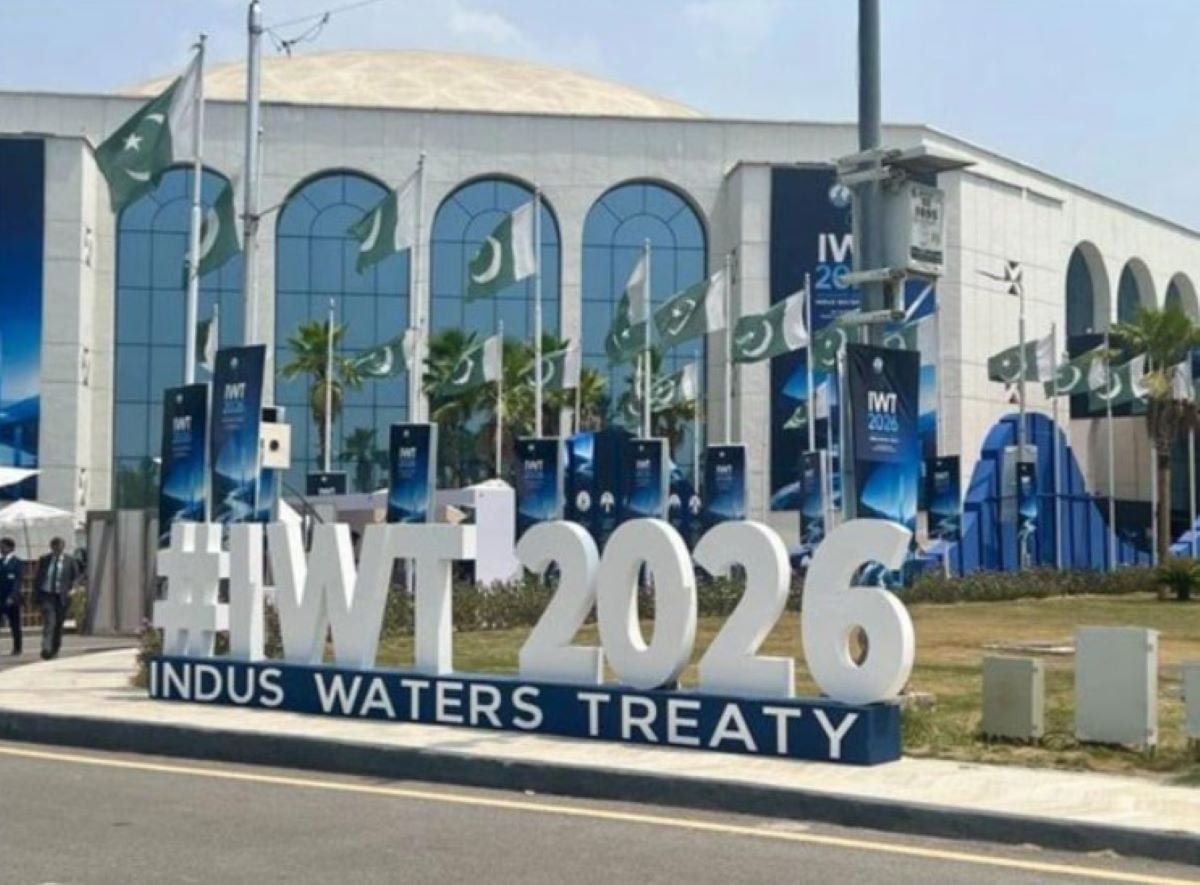
The Indus Waters Treaty of 1960 was never a gift from India to Pakistan. It was the product of a decade of hard negotiation, World Bank arbitration, and mutual concession, binding two newly partitioned states to share six rivers that neither could survive without. Pakistan received the western rivers—Indus, Jhelum, Chenab—as the backbone of its agriculture and food security. India retained the eastern rivers and limited, conditional rights over the western system for hydropower generation. The treaty has survived three wars, decades of hostility, and a Kashmir dispute that refuses resolution. What it was not designed to survive is a unilateral decision by New Delhi to suspend it altogether.
That is precisely what happened in April 2025. Following the Pahalgam attack, India announced it was holding the IWT “in abeyance,” pinning responsibility on Pakistan without evidence subjected to any neutral investigation. Islamabad’s offer to participate in a transparent inquiry was ignored. The treaty itself, under Article XII, permits termination only through mutual consent via a duly ratified agreement. There is no clause, no precedent, no interpretive stretch that allows one party to simply step outside the treaty because it finds the arrangement inconvenient. The Court of Arbitration said as much in its supplemental award of June 2025, stating unambiguously that the treaty’s text does not provide for unilateral abeyance or suspension. India’s response has been to reject the tribunal’s legitimacy altogether—a move that speaks louder than any legal brief.
This is not India’s first attempt to bend the treaty to its convenience. The pattern stretches back decades: Salal in the 1970s, Wullar Barrage since 1984, Baglihar in the 2000s, Kishanganga from 2010 onward. In each case, India has pursued dam designs with gated spillways, storage capacities, and drawdown provisions that push against the treaty’s narrow exceptions, and in each case Pakistan has had to fight—through the Permanent Indus Commission, through Neutral Experts, through the Court of Arbitration—simply to hold India to what it signed. The Court’s own award in August 2025 reaffirmed that India’s projects must conform strictly to treaty limits, not to whatever “best engineering practices” New Delhi finds expedient. That India continues to boycott these proceedings while claiming their outcomes are non-binding tells Pakistan everything it needs to know about the sincerity of India’s professed commitment to rules-based order.
The stakes for Pakistan are not abstract. Agriculture employs nearly half the country’s labour force and contributes a quarter of GDP, and more than ninety percent of it depends on irrigation from these very rivers. Tarbela and Mangla, already crippled by sediment build-up, have lost forty-three and eleven percent of their storage capacity respectively. Per capita water availability has fallen to levels perilously close to the international scarcity threshold. Every additional obstruction India places on the western rivers—every gate, every diversion tunnel, every unilateral abeyance—tightens a noose around a country already gasping for water security.
Pakistan’s response must be deliberate rather than reactive. The legal architecture built into the treaty—arbitration, neutral experts, the Court’s binding awards—remains Pakistan’s strongest weapon, and it should be pursued relentlessly rather than abandoned in frustration. Equally important is building diplomatic pressure through the United Nations, allied capitals, and multilateral forums, so that India’s conduct is understood internationally for what it is: a violation of one of the world’s most cited transboundary water agreements, and a dangerous precedent for the 153 countries that share river basins across borders.
What is not in doubt is the gravity of the moment. A treaty that survived war, insurgency, and decades of mutual suspicion is being tested not on the battlefield but in the language of “abeyance” and bureaucratic delay. Pakistan cannot afford to treat this as a diplomatic irritant. It is, in every meaningful sense, a matter of national survival—and it deserves to be defended with the same seriousness India has shown in trying to dismantle it.