
Amina Shahab
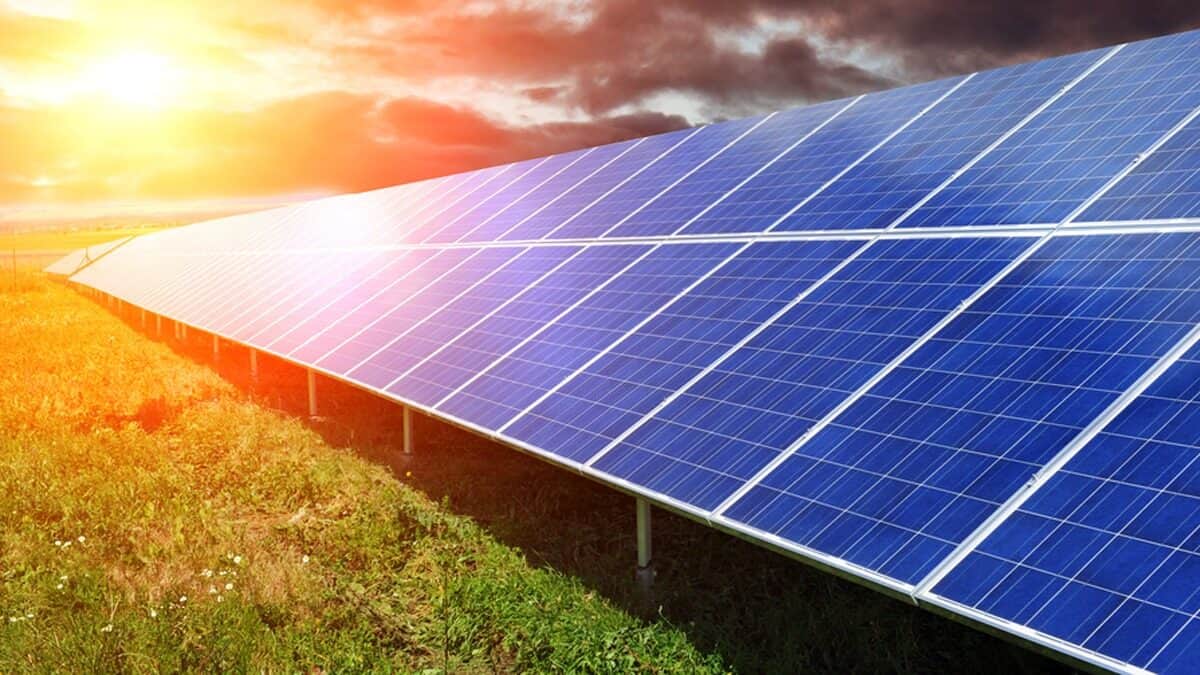
Drive through Lahore, Karachi, or Peshawar today, and the rooftops tell their own story: blue panels catching sunlight over car parks, small factories, shopfronts, entire housing colonies. Ask around, and most people will confidently say Pakistan is in the middle of an energy transition.
Look closer, though, and a harder question emerges: is the country actually transforming its power system, or are millions of consumers simply finding a private escape route from a grid whose tariffs they can no longer afford?
That distinction matters more than it sounds. Installing a rooftop panel and rebuilding a national electricity system are related undertakings, but they are not the same one. One is a household decision made over a weekend. The other is a decade-long project spanning generation, transmission, storage, and market design, rebuilt around cheaper, cleaner power rather than imported fuel.
Pakistan has made real progress on the first. It has barely begun the second, and the gap between the two is precisely where the country’s energy debate has become stuck.
A genuine energy transition means overhauling the fundamentals of how power is generated, moved, stored, and sold, not merely stacking panels on top of a system built for a different era. Done properly, solar, hydel, wind, and battery storage stop being add-ons and become the backbone the grid is actually designed around. That shift cuts fuel imports, lowers emissions, strengthens energy security, and eventually lowers costs for everyone on the grid, whether or not they own a panel themselves. None of that follows automatically just because rooftops have gotten brighter.
Pakistan doesn’t need convincing that solar works; rooftop adoption alone has already made that case. What it needs now is the far less visible work: a functioning trading market, transmission infrastructure extended to the country’s best solar sites, storage procured alongside generation rather than as an afterthought, and financing terms credible enough to attract capital at a fair price.
And Pakistan’s rooftops have brightened remarkably fast. Research from the Policy Research Institute for Equitable Development and Renewables (PRIED) puts distributed rooftop capacity somewhere between 33 and 38 gigawatts by mid-year, almost entirely the product of individual household and business decisions rather than any coordinated national plan. PV Magazine has tracked roughly 51.5 gigawatts of solar modules imported into the country since 2023, making Pakistan one of the largest buyers of solar hardware in the world, a real achievement that says something about ordinary households and small businesses seizing an escape from punishing electricity bills the moment one appeared.
But follow where that electricity actually goes. Since the shift from net metering to net billing this year, most new rooftop systems are designed primarily to serve the building they sit on, increasingly paired with batteries for self-consumption rather than exporting power back to the grid. Their impact shows up on low-voltage wires, 11kV feeders, and neighbourhood transformers, not on the national transmission network. That’s not a flaw in rooftop solar; it was simply never built to do what utility-scale generation does, supplying power a grid operator can forecast, dispatch, and plan around.
The result is a genuine paradox: as more Pakistanis generate their own power during the day, the grid still has to maintain the same plants, wires, substations, and reserve capacity for everyone else, even as its daytime sales, and the revenue funding all of it, keep shrinking. Distribution companies end up carrying nearly identical fixed costs across a shrinking paying customer base, a problem that doesn’t disappear just because it’s no longer visible on any single rooftop.
What’s still missing is utility-scale solar, plants feeding directly into the national grid rather than a single building. Such plants can be deliberately sited in the high-irradiation belts of southern Punjab, Balochistan, and Sindh, and connected directly to the transmission backbone, letting planners forecast output in a way scattered rooftop decisions never could. It displaces imported coal, furnace oil, and LNG at a falling cost per unit, benefiting not just households who can afford their own panels but everyone still paying the standard tariff. China, India, Australia, and the UAE, despite their differences, have all followed the same pattern: utility-scale and rooftop solar expanding together, with thermal generation shrinking as a share of the mix rather than disappearing overnight.
None of it functions without storage. Solar alone is a daytime resource inside a system that needs power around the clock. Battery storage built alongside utility-scale plants can hold power for the evening peak, absorb sudden output drops when clouds roll in, and provide the frequency regulation and reserve capacity thermal plants currently supply almost by default, allowing the grid to absorb a much larger share of renewables without the lights failing every time weather shifts over Multan or Peshawar. Pair storage with generation from the outset, and flexibility stops being thermal power’s job alone.
So why has so little of this actually been built? Start with the Competitive Trading Bilateral Contract Market, the reform meant to open the door to independent power producers and enable genuinely competitive electricity trading. Years of delay in launching it have left developers uncertain what market they’d even be entering. Add to that an understandable but shortsighted anxiety within government: with rooftop solar already eating into daytime demand and the system currently sitting on surplus capacity, officials are wary of approving still more generation. That caution looks prudent, but it confuses today’s temporary glut with tomorrow’s demand, which Pakistan’s own planning documents say is coming regardless. The Integrated Generation Capacity Expansion Plan assumes GDP growth rising from around 4% in FY2025 to 5.8% by 2035. Power plants take years to plan, finance, and build; waiting for today’s surplus to vanish before breaking ground only guarantees a future shortage, financed at a worse price than today’s.
If the technology and the underlying case are this well established, the real obstacle is money, or more precisely, the terms on which Pakistan can borrow it. Four risks sit atop every utility-scale solar proposal in the country: offtaker risk, whether the buyer will actually pay on time given the state’s long, unresolved history of circular debt; currency risk, since loans arrive in dollars while revenue comes in rupees, with every devaluation widening that gap; regulatory risk, whether the tariff and contract terms a developer signs today will still hold decades into a project’s life; and sovereign risk, which raises the cost of capital for every project regardless of how sound it is individually. Solar panels have never been cheaper. In Pakistan, the money needed to build with them has rarely been more expensive, and that gap is what’s actually holding the sector back.
Pakistan doesn’t need convincing that solar works; rooftop adoption alone has already proven that. What it needs now is the less visible work: a functioning trading market, transmission extended to the country’s best solar sites, storage procured alongside generation rather than after it, and financing terms credible enough to attract capital fairly. Get these four things right, and utility-scale solar stops being the missing piece and becomes what it should already be: the backbone of a grid that finally earns the word transition.