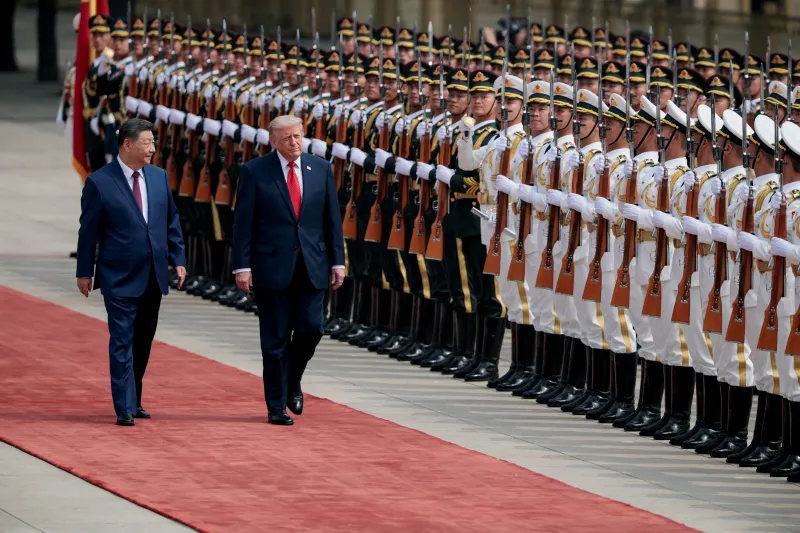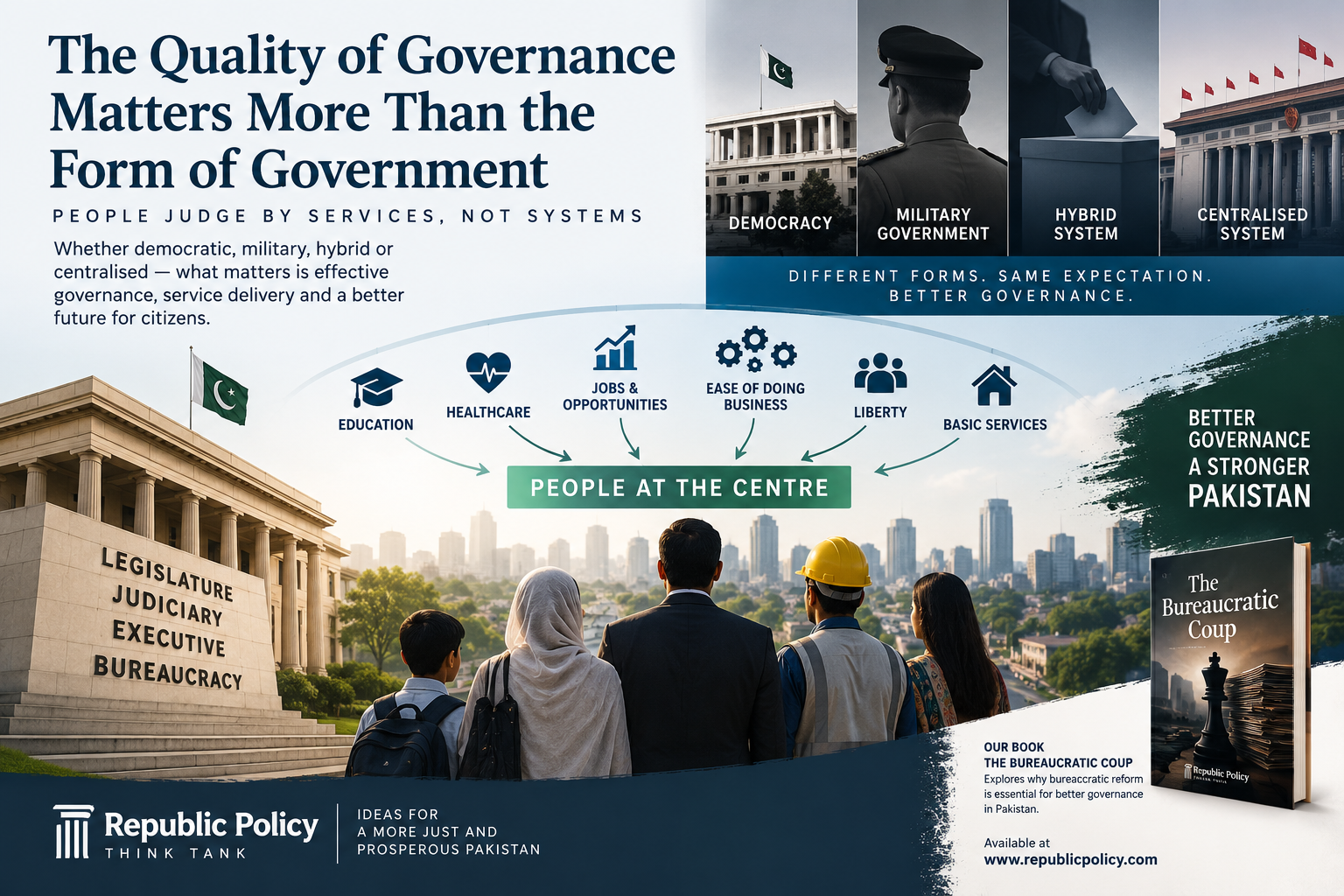

The modern era has demonstrated that regardless of the form of government—democratic, military, hybrid or based on a centralised political party—the ultimate measure of public satisfaction is the quality of governance and service delivery. Even in centralised systems such as China, local governments play an important role in delivering public services. For ordinary citizens, the fundamental question is whether the state effectively provides education, healthcare, economic opportunities, ease of doing business, liberty and other essential services. In this sense, the present age is not merely an age of ideological debate; it is an age of practical governance.
Republic Policy Think Tank does not approach governance merely as an academic subject. Instead, it examines governance within the society in which it operates. In our view, Pakistan’s governance problems cannot be resolved simply by changing political faces or governments. Political leadership is only one part of the system, while much of the state’s everyday functioning depends on the executive, legislature and permanent bureaucracy. Unless this broader institutional structure is reformed, political change alone cannot fundamentally transform governance.
Within this system, bureaucracy essentially serves as the machinery of implementation. The judiciary delivers judgments, but the administration implements them. The legislature makes laws, but administrative institutions translate those laws into practice. If the bureaucracy fails to implement decisions effectively, manipulates the flow of files and information, or fails to provide accurate data, even well-designed laws and judicial decisions may fail to produce the intended results.
Republic Policy therefore maintains that better governance in Pakistan is impossible without reforming the civil service and bureaucracy. This argument is examined in detail in our book, The Bureaucratic Coup, which can be obtained through Republic Policy’s website.