
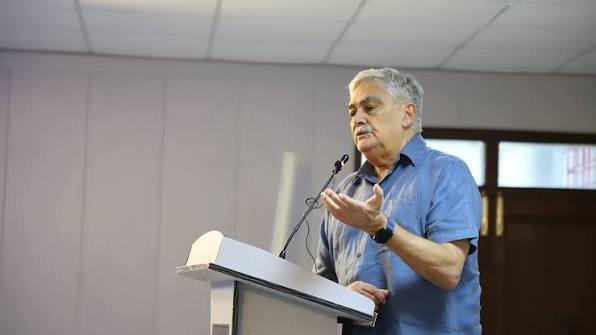

Nadeem-ul-Haque
Pakistan has plenty of economists. What it has never had is an economics profession: a community of scholars who set their own questions, argue in the open, judge each other’s work and, over time, build up a body of knowledge about their own country. Nadeem Ul Haque and Mahmood Hasan Khan made this case in 1998. Pakistan, they argued, trained economists to serve government, aid agencies and projects, but never built universities where economics could grow as a discipline in its own right.
They were right, but the argument can be pushed further. The profession did not simply fail to grow. It was crowded out, and the crowding out came from a contest over who gets to set Pakistan’s economic agenda. For lenders, the agenda is the price of the loan: whoever writes the diagnosis writes the conditions. For bilateral donors, aid is an instrument of foreign policy, and the analysis that justifies it has to fit the politics behind it. Neither has much use for an independent domestic profession that might reach its own conclusions.
Where it began
The pattern was set early. When the Harvard Advisory Group arrived at the Planning Board in the mid-1950s, funded by the Ford Foundation, Pakistan had just joined SEATO and the Baghdad Pact. American aid was a Cold War tool, and Pakistan was meant to be a showcase: a market-friendly ally that could grow fast. The advisers helped write the plans and gave intellectual cover to the Ayub-era belief that growth required concentrating income among those who save. Pakistani economists staffed the system. The questions, the models and the yardsticks of success came from outside.
A profession normally grows out of argument. University economists criticize government economists, rival schools test rival claims, and over time a country works out what its problems are. In Pakistan that argument was settled before it began. The Planning Commission had the agenda, the foreign money and the best jobs. The universities had none of these, so talent went where the agenda was. Even PIDE, founded in 1957 and for decades the best economics institution in the country, was built beside the universities rather than inside them, and its early research was tied to the plan and it has been tightly held subservient to the Planning Commission.
Haque and Khan describe what followed: multiplication of donors and their funding brought in foreign consultants, starved university departments, while economists trained to prepare projects rather than to do research, with a suspicion of theory, were prepared to be in a subservient role to foreign consultants. All of these share one cause. The demand for economists came from people who needed a plan, a project or a loan document, and the largest and steadiest source of that demand was foreign.
Aid follows alliances
Aid to Pakistan has tracked geopolitics far more closely than economic performance. It surged in the Cold War years, again during the Afghan war of the 1980s, and once more after 2001, when the Kerry-Lugar-Berman Act promised $7.5 billion over five years. In between it collapsed, under the Pressler sanctions of 1990 and the nuclear sanctions of 1998, and the IMF and World Bank stepped in with structural adjustment. Each wave brought its own priorities. When the patron wanted a showcase, economists wrote growth plans. When it wanted a dependable ally, money came with few questions. When it wanted repayment, they wrote fiscal programs.
The IMF relationship is the clearest case. Pakistan first went to the Fund in 1958 and has gone back more than twenty times since. Each programme arrives with its own diagnosis, targets and timetable. For seven decades the most important economic conversation in the country has taken place between the Finance Ministry and a visiting mission, while Pakistani economists comment from the sidelines, never to be heard.
Shahid Mahmood’s study of aid puts disbursed aid since independence at about $155 billion, or $170-175 billion counting off-book flows. Saeed Ahmed, a former senior IMF adviser, notes that bilateral aid is now tiny relative to the economy and still buys outsized influence. What the money purchases is not development. It is a seat at the table where the agenda is set.
How the crowding out works
The mechanics are mundane. A donor project pays several times a university salary, so the best young PhDs take the project. Donor work comes with its questions already written, so years of it produce skilled report-writers rather than researchers who choose their own questions. Where local institutions look weak, donors build parallel ones: project units, secretariats, funded think tanks. Each makes sense to the donor; together they hollow out the institutions a profession needs. Survey data collected under donor projects often reaches independent researchers late or not at all. And credibility is conferred from outside, so a finding matters when the IMF or the World Bank repeats it.
Haque and Orden’s 2018 study of Pakistan’s research system describes exactly this. The best metropolitan researchers, they found, work on agendas set by aid agencies, and donors often evaluate their own programs. Topics that matter for Pakistan but not for lending, such as governance reform, law and economics, urbanisation and entrepreneurship, go unfunded.
The coalition
Donors do not do this alone. Their natural partner is the civil service Pakistan inherited from colonial rule. Hamza Alavi described it in 1972 as part of an “overdeveloped” state: a bureaucratic-military apparatus far stronger than the society it governed, mediating among the propertied classes under foreign patronage. Donors had no need to displace it. It was centralised, answerable to no elected body, and able to sign agreements without public debate. It suited them perfectly.
The partnership runs on patronage, paid in trips, per diems and training. PIDE’s aid study found that foreign tours are called “training” when the taxpayer pays and “capacity building” when a donor pays. In 2009 alone, sixty Planning Commission officers went on foreign trainings costing Rs 35.6 million, and when PIDE asked ministries and donors for trip data, they refused to share it. The same study found a donor-hired consultant billing Rs 250,000 a day, roughly what a top civil servant earns in a month. Evidence from elsewhere shows how this works. In Mozambique, health workers at one three-week donor workshop received the equivalent of eighteen months’ salary. The anthropologist Daniel Jordan Smith called the resulting culture in Nigeria a “workshop mentality”. When a workshop pays better than the job, officials learn to follow the funder’s calendar.
The arrangement also explains what never gets studied. Nadeem ul Haque has pointed out that civil service reform is widely accepted as essential, yet it has never attracted research money, conferences or ministerial attention. Donors did not back it, and the bureaucracy resisted it. The one reform that threatens both partners is the one nobody pays to examine. Cross-country work by Knack and Rahman adds a further twist: when many donors operate in one country, they poach capable officials for their own projects, and the quality of the bureaucracy falls.
The reach goes well beyond the bureaucracy. Pakistan has the largest US-funded Fulbright programme in the world; in 2022 it supported 189 students at a cost of $18.44 million, and US diplomats describe the country’s network of nearly 45,000 exchange alumni as the biggest anywhere. Studying abroad is good for the people who do it. But a profession whose senior members are trained, networked and validated abroad learns to look outward for approval, and the road from scholarship to donor project to caretaker cabinet is well travelled.
The media are cultivated in the same way. A State Department programme has taken more than 250 Pakistani journalists to American newsrooms since 2011, and that same year it emerged that two Pakistani journalists reporting from Washington were being paid out of US public-diplomacy funds. NGOs are built around the state rather than through society. Masooda Bano’s fieldwork shows aid eroding the very voluntary groups it claims to strengthen, as they turn to face their funders rather than their members. Think tanks such as SDPI and SPDC have relied for years on core funding from foreign programmes.
Pakistani scholars have been saying this for three decades. Akbar Zaidi wrote about the dismal state of the social sciences and the dominance of donors in research. Afiya Zia described how post-9/11 money created a small army of security experts while mainstream disciplines withered. Abbas Moosvi at PIDE describes donors using their money to capture the best talent and crowd out local knowledge.
For local universities and think tanks, the choice is stark. There is almost no domestic money for research. They can take donor money on donor terms, or do without. Most take the money.
The domestic side of the bargain
None of this lets Pakistan’s rulers off the hook. Hussain Nadeem’s book on US aid pointed out, the elite has long traded on the country’s vulnerabilities to keep the money flowing. An external diagnosis is convenient. It can be blamed when reforms hurt and quietly ignored when they threaten privilege. Benchmarks are missed, waivers are granted, and the rents survive. A serious domestic profession would name the rent-holders and measure what they take, and neither the donors, the bureaucracy nor protected business wants that. This is less domination than collusion, and the economist’s job inside it is to write the documents, not to question the deal.
Taking back the agenda
If the problem is crowding out, more money for economics will not fix it. What is needed is protected space in which a Pakistani agenda can form. Before any IMF or major multilateral programme, an independent panel of Pakistani economists should publish its own diagnosis, so that the government negotiates with that document in hand. Donors who want to support research should pay into a pooled, competitive fund run by Pakistani scholars, without donor-written terms of reference. Project units and secretariats should have sunset dates. Data collected with donor money should be published in full. Universities need the freedom and the salaries to keep their best people, and the country needs an economics association that no single institution or official controls. A cooling-off rule would stop officials moving straight between the negotiating table and the institutions on the other side of it.
None of this means rejecting foreign help. It means foreign help should stop substituting for Pakistani thinking.
Conclusion
Haque and Khan were right that Pakistan produced the visible economist before it built the profession. The fuller story is that the profession’s place was taken. From the Harvard advisers of the 1950s to today’s IMF missions, the authority to say what is wrong with Pakistan’s economy has largely sat outside the country. The domestic market for ideas was shaped to serve that authority, not by force but through salaries, projects, trips, scholarships and grants.
Pakistan now has hundreds of universities, thousands of PhDs and an endless supply of reports. What it lacks is an economics of its own. Until it builds one, it will keep returning to the same lenders with the same crisis, carrying a diagnosis written somewhere else.
Sources
• Haque, N. U., and Khan, M. H. (1998). “The Economics Profession in Pakistan: A Historical Analysis.”
• Haque, N. U., Mehmood, S., et al. Foreign Aid, Donors and Consultants. PIDE.
• Haque, N. U., and Orden, D. (2018). “Developing Research and a Research Culture: Results from a Pilot Project in Pakistan.”
• Haque, N. U. (2014). “The Problem with Aid.”
• Alavi, H. (1972). “The State in Post-Colonial Societies: Pakistan and Bangladesh.” New Left Review.
• Bano, M. (2012). Breakdown in Pakistan: How Aid Is Eroding Institutions for Collective Action. Stanford University Press.
• Knack, S., and Rahman, A. (2007). “Donor Fragmentation and Bureaucratic Quality in Aid Recipients.” Journal of Development Economics.
• Smith, D. J. (2003). “Patronage, Per Diems and the ‘Workshop Mentality’.” World Development.
• Erasmus, Y., et al. “Reflections on Per Diems in International Development Projects.”
• Zaidi, S. A. (ed.) (2003). Social Science in Pakistan in the 1990s. Council of Social Sciences.
• Zia, A. S. (2012). “The demand and supply of research.” Express Tribune.
• Moosvi, A. (2023). “Policy sector woes.” Express Tribune.
• Ahmed, S. (2025). “Quest for economic sovereignty.” Dawn.
• APP on Fulbright Pakistan, 2022; Pakistan Observer on the US alumni network.
• ICFJ, US-Pakistan Professional Partnership in Journalism; Express Tribune (2011) on State Department-funded journalists.
• SPDC on Think Tank Initiative funding.
• PIDE webinar on Aid, Politics and the War of Narratives in the US-Pakistan Relations.