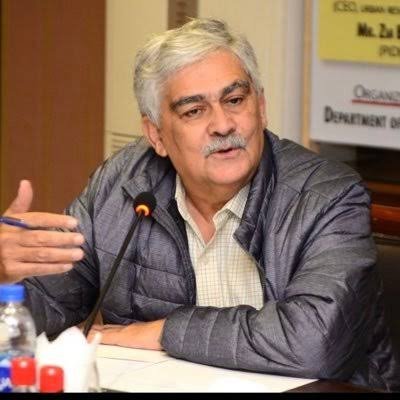

Dr Nadeem Ul Haq
Pakistan does not lack economists. It lacks intellectual fire.
Every year, degrees multiply. Conferences convene. Working papers circulate. Policy briefs are printed in polished fonts with international references and regression tables. Yet when the country faces recurring crises—fiscal collapse, circular debt, export stagnation, urban paralysis—the intellectual response feels recycled.
We have technical skill. We do not have paradigm conflict.
In serious intellectual cultures, economics is not administrative support. It is combat. Competing schools challenge first principles. They dispute not just instruments but assumptions: What is the state for? What constrains growth? Where do rents originate? Who benefits from policy inertia?
Those arguments spill into public view. They sharpen thought. They force policymakers to confront alternatives.
In Pakistan, disagreement is muted. Panels are polite. Reports are incremental. Critique is carefully worded. The vocabulary remains predictable: fiscal consolidation, revenue mobilization, structural reform, targeting efficiency, subsidy rationalization. Every few years, during another stabilization program, the same slides are updated with new numbers.
There is refinement. There is little rethinking.
Much of the profession operates within the gravitational field of international institutions. That is not a conspiracy; it is an ecosystem. Funding flows from outside. Policy access flows from outside. Recognition flows from outside. So local economists learn to speak in frameworks that travel well internationally.
The problem is not that those frameworks are always wrong. The problem is that they are rarely interrogated. They are treated as baselines to be implemented, not hypotheses to be stress-tested.
We debate tax bases and tax GDP ratios but not medieval predatory tax policy and the uncontrolled expenditures for VIP pleasures, huge cabinets and political giveaways. We continue to espouse “feel-good” economics like “end poverty” and give everyone health and education” without worrying about state capacity and the incentives to the state functionaries to do public good. We debate development allocations but not whether the development budgeting process itself is a distortion machine. We debate compliance but rarely measure regulatory density as implicit taxation.
The deeper structural questions are left floating.
Why does regulatory congestion function as a hidden tax on enterprise? Why do urban land markets remain frozen under bureaucratic control? Why are prime public assets underutilized while fiscal crises intensify? Why does litigation risk silently destroy capital formation? Why does public accounting conceal wealth and liabilities behind cash budgeting that masks the true fiscal position?
These are structural problems. They require structural critique. They require polemics.
Instead, we reach reflexively for a comfortable answer: education.
We are told—again and again—that the binding constraint is “human capital.” Invest in schooling. Increase years of education. Improve skills. Growth will follow.
It sounds virtuous. It is politically safe. It offends no one.
But where is the deeper analysis?
What is the quality of education being delivered? What are the measurable rates of return to education in a labor market marked by underemployment, informality, patronage, and low-productivity sectors? What incentive does a student face when degrees proliferate but high-productivity job creation stagnates? What opportunity cost does a household bear when years in school do not translate into earnings? Why are government jobs desirable? What is the cost of a public servant in real terms and indirect rent seeking terms?
Education is not magic. It is an investment. Investments require complementary structures to generate returns. Yet we treat education as a commodity? A mere collection of degreees?
When the economy cannot absorb skilled labor into productive activity, when regulatory and legal distortions suppress entrepreneurship, when public sector employment rewards credentialism over productivity, the private return to education falls. Degrees expand. Productivity does not.
Invoking “human capital” without confronting the structure of demand becomes an evasion. It shifts responsibility to students and teachers while ignoring the institutional environment that determines whether skills are rewarded. Politicians, bureaucrats and economists all pa y homage to “human capital” but is “human capital” a collection of degrees and teachers carrying old notes. Is human capital lots of trivial publications and old notes or thought leadership?
This is not an argument against education. It is an argument against shallow causality.
The same intellectual thinness appears elsewhere. We speak of “governance” as if it were a dial to be turned upward. We rarely dissect mechanisms. How exactly do court delays affect investment horizons? How do courts adjudicate economic, regulatory, business and energy issues without expert advice or testimony? How courts because of this arrogance have destroyed value such as in nasal tower and one constitution avenue? How does zoning rigidity reduce urban productivity? How does bureaucratic discretion create rents? How does state ownership of prime real estate distort markets? How do implicit perks and non-monetized benefits distort fiscal reality and public sector performance?
These are not marginal issues. They define the incentive system.
But confronting them requires intellectual risk. It means naming entrenched interests. It means questioning the comfort of donor-aligned templates. It means proposing competing paradigms.
And here lies the deeper barrenness: Pakistan’s economics profession does not generate visible paradigm competition.
Ideas cluster around personalities rather than institutions. There are no reform or policy narratives that dominate the conversation. All thought leadership comes from foreign consultants unlike countries that grow, there is no structured internal dissent—alternative theses competing openly. There are no enduring schools of thought, few intellectual rivalries sustained in public. Quite the contrary. Intellectual leadership is bestowed upon individuals by donors by donors and the powers that be. For evidence look at the economist who are awarded repeat positions in government and medals. Or look at the donor projects that are given to their favorites without peer review repeatedly.
Without rivalry, thought softens.
Professional incentives reinforce caution. Consultancy is safer than controversy. Publication metrics reward incremental additions to accepted frameworks. Public polemics can close doors. Donor ecosystems reward alignment more than adversarial reframing.
So, we produce maintenance, not transformation.
Meanwhile, the economy remains low-end. Cities stagnate instead of becoming engines of growth. Public assets lie dormant while fiscal stress deepens. Regulatory congestion suffocates enterprise. Legal uncertainty deters capital. Stabilization cycles repeat.
Each crisis is treated as a financial problem to be managed through increased borrowing or further arbitrary taxation rather than redesign of the economic institutions and incentive system in the economy. There is frequent mention of the term ‘structural reform” but no clarity on what it is. Often it is meant to be more arbitrary taxation as well as more borrowing.
The cost of this intellectual conformity is immense. A country that cannot generate bold ideas cannot generate bold reforms. A profession that avoids polemics cannot produce paradigm shifts.
Pakistan needs competing schools of economic thought. It needs open confrontation over first principles. It needs economists willing to argue that perhaps the binding constraint is not simply insufficient taxation or insufficient schooling, but distorted incentives embedded in the structure of the state itself. It needs scholars willing to quantify regulatory taxation, to treat judicial delay as economic infrastructure failure, to frame urban land lock-up as a fiscal crisis, to question whether “human capital” without institutional reform is merely credential inflation.
Above all, it needs public intellectuals.
A public intellectual is not someone who appears on television. A public intellectual reorganizes how society understands itself. They articulate coherent alternatives. They defend them against criticism. They sharpen their ideas in open contest.
We have analysts. We have commentators. We have technical experts.
We do not have enough intellectual combat.
Until we cultivate a culture of adversarial debate—where ideas clash, paradigms compete, and sacred assumptions are tested—we will continue to produce many economists and very little thought leadership.
And that barrenness of ideas may be our most binding constraint of all.