Naeem Afzal
Pakistan is once again debating whether it needs more provinces. Political parties are drawing new maps, and every region seems to have a claim. Yet the debate rests on a false premise. The question is not how many provinces the country should have. The question is why, after more than seven decades, Pakistan still refuses to hand real power to its cities and local governments. Nadeem Ul Haque and Javed Malik have made this point with unusual clarity, and their argument deserves serious attention.
Consider what a new province actually brings. It brings a new governor and a new chief minister. It brings a new secretariat, a fresh batch of Grade-22 posts, fleets of protocol cars and grand official residences. Most of these positions end up with the same political families that already dominate the existing provinces. The map changes, but the faces do not. For the ordinary citizen, the result is one more layer of distant bureaucracy, not better schools, cleaner streets or faster justice.
There is also a deeper structural problem. Pakistan’s administrative system was built by a colonial state whose purpose was control, not service. The Pakistan Administrative Service, heir to that tradition, still runs the country from the top down. Creating more provinces does not dismantle this machine. It multiplies it. Every new province needs chief secretaries, commissioners and deputy commissioners, and the same centralized logic is simply copied into new offices. A reform that expands the colonial apparatus cannot be called reform at all.
The economic argument is equally strong. Wealth in modern economies is generated in cities. Lahore, Karachi, Faisalabad, Sialkot and Peshawar are where trade, industry, services and innovation happen. Provinces, by contrast, mostly consume and control that wealth. They collect, allocate and spend, often with little regard for the cities that produce the revenue in the first place. If Pakistan wants growth, it must empower the places where growth actually occurs.
This is where the idea of local government collapses into farce. Pakistan has repeatedly held local elections, only to suspend, dissolve or starve the institutions they created. Without their own revenue, their own staff and genuine authority, local governments remain a joke. A mayor who cannot hire, fire or transfer his own officials, and who has no independent fiscal power, is a ceremonial figure. He can cut ribbons, but he cannot run a city. Real authority stays with provincial bureaucrats who answer upward to the secretariat, not downward to citizens.
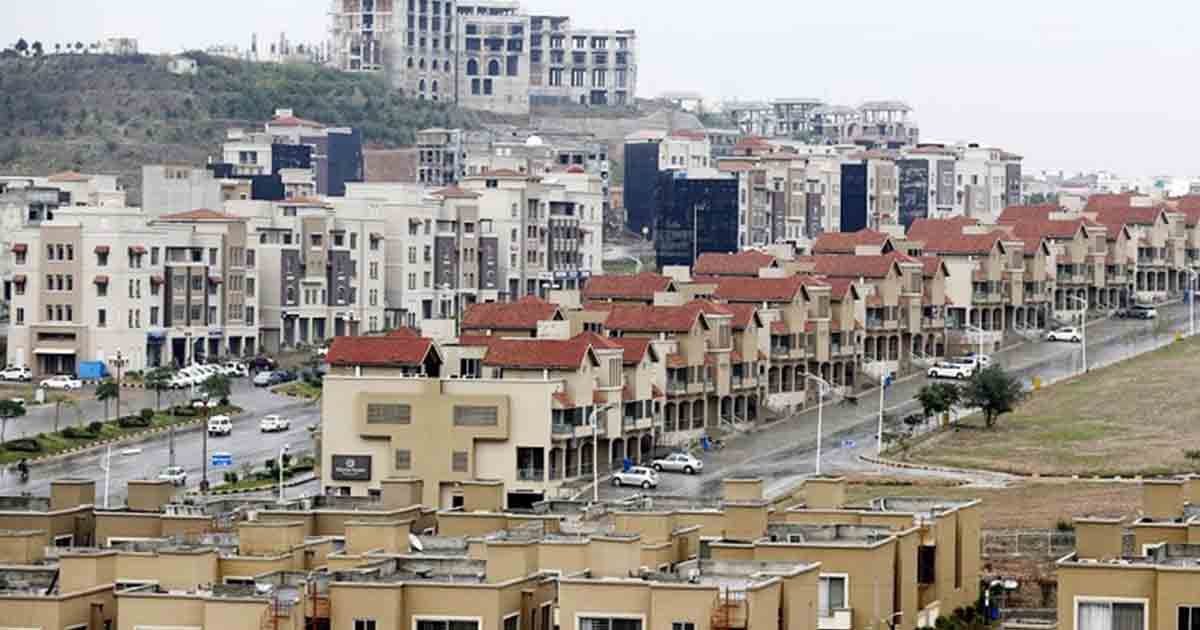
The consequences are visible on every major road. Governments keep building flyovers, underpasses and signal-free corridors, and traffic keeps getting worse. The reason is simple. Concrete cannot fix a problem created by rules. The laws governing land use, zoning, parking and urban planning remain unchanged, outdated and controlled from far away. Cities sprawl without design, commerce spills onto roads, and public transport remains an afterthought. Until cities can write and enforce their own rules, no amount of infrastructure spending will bring order.
The same logic applies to the countryside. Rural poverty persists because decisions about irrigation, health, education and local markets are made in provincial capitals by officials who rarely visit the villages they govern. Urban chaos and rural deprivation look like opposite problems, but they share a common cause: power sits too far from the ground. The answer to both is devolution, not a new provincial capital with another set of distant offices.
Politics, too, would change. Dynastic politics thrives when power is concentrated. A handful of families can capture a province because the stakes are high and the arena is narrow. When cities and districts govern themselves, competition opens up. New leaders emerge through performance in local office. Voters can judge a mayor by the condition of their streets and the quality of their water. Accountability becomes visible and immediate. This is exactly why entrenched elites resist meaningful local government.
Perhaps the gravest danger of the province debate is delay. Creating new provinces is a long, contentious process involving constitutional amendments, resource disputes and boundary quarrels. It will absorb political energy for years, and once completed, it will be sold as the great reform of its generation. Devolution will again be postponed, this time for another twenty or thirty years. Pakistan cannot afford that.
The way forward is not complicated, though it is politically difficult. Local governments must be protected by the Constitution so that no provincial government can dissolve them at will. They must have their own taxes, their own budgets and their own civil service. Mayors and district heads must control human resources and planning. Provincial governments should set broad policy and standards, not run every municipal function from a distant secretariat.
Pakistan does not need more governors, more chief ministers or more official mansions. It needs empowered cities, functioning districts and citizens who can see where power lies and hold it to account. The real debate is not about drawing new lines on the map. It is about moving power closer to the people. Until that happens, every new province will be just another monument to the same old system.
The best-selling books of Republic Policy Think Tank, including the landmark book The Bureaucratic Coup, are available at Vanguard Books, Liberty Books, Readings, Kitab Sarai, Sang-e-Meel, Saeed Book Bank Islamabad, National Book Foundation, and others across Pakistan. Contact for home delivery: +92 341 4222501.