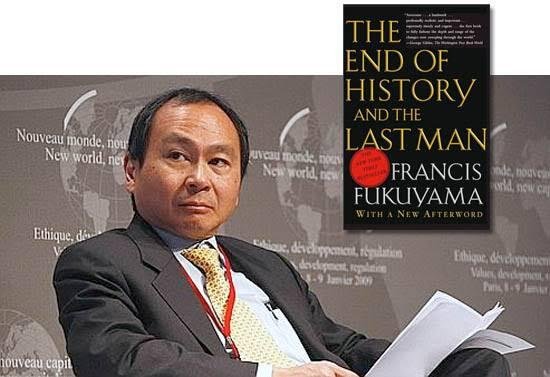

Fukuyama’s foundational thesis framed liberal democracy and free-market capitalism as the final convergence of human socio-political evolution. However, his reliance on Hegelian thymos—the human craving for recognition—introduced an intrinsic vulnerability into his framework. Liberalism provides formal legal equality (isothymia), yet it systematically fails to satisfy the demand for superior distinction (megalothymia). While Fukuyama initially envisioned this impulse being channeled into benign avenues like entrepreneurship, technology, or athletics, the contemporary political landscape demonstrates that unchecked megalothymia poses an existential threat to democratic institutions themselves.
Techno-Authoritarianism as the Anti-Democratic Impulse
Peter Thiel embodies the modern manifestation of megalothymia weaponized against the state. Thiel’s intellectual and financial endeavors—spanning seasteading, radical life extension, cryptocurrency, and aggressive political venture capital—are explicitly designed to build parallel structures that evade democratic governance. His famous dictum that freedom and democracy are no longer compatible reflects a broader ideological pivot within elite tech circles: the belief that the preferences of majority electorates are mere impediments to technological advancement and economic efficiency. Rather than operating within the parameters of democratic accountability, this techno-libertarian elite seeks to dismantle the regulatory apparatus of the modern state, effectively replacing public sovereignty with private rule.
The Failure of the End of History
The collision between Fukuyama’s political theory and Thiel’s political practice exposes the fundamental weakness of the “End of History” narrative. Fukuyama assumed that the internal contradictions of liberalism could be managed within the state’s institutional architecture. Yet figures like Thiel demonstrate that liberal capitalism actively generates concentrated wealth and technological leverage capable of subverting democratic norms from within. By funding counter-majoritarian political movements and building systems explicitly engineered to circumvent legal oversight, the modern tech oligarchy does not merely challenge state regulatory authority; it asserts a competing vision of governance wherein technological capability supersedes democratic legitimacy.
The Revenge of the Last Man
Ultimately, the phenomenon Thiel represents is the revenge of the “Last Man” transformed into the “First Man”—a rejection of egalitarian boredom in favor of unchecked hierarchy. When democratic majorities attempt to exercise regulatory control over capital and innovation, the techno-oligarchic class reacts by seeking total emancipation from the democratic social contract. Fukuyama’s attempt to redeem his thesis by recasting it as a warning overlooks the reality that liberal democracy’s greatest threat is no longer external ideological rivals like fascism or communism, but the very concentration of private power that liberal capitalism naturally yields. Without rigorous constitutional mechanisms to subordinate elite economic power to the democratic will, the liberal order risks collapsing into a new form of technological feudalism.