Muhammad Tauqir
Have you ever heard of a place where laws exist but rights remain elusive? Where security infrastructure expands, yet peace continues to recede? Where poverty prevails over land rich in natural resources? Where rules are written down, but power remains the ultimate deciding factor? For millions of people in Pakistan’s former Federally Administered Tribal Areas (FATA), these are not rhetorical questions. They are realities of everyday life.
History helps explain how this situation developed. The Frontier Crimes Regulation (FCR) was imposed in the tribal areas of British India in 1901 by the colonial administration. It became infamous for denying basic legal protections and was commonly summed up by the expression, “Na Appeal, Na Wakeel, Na Daleel” — no right to appeal, no right to legal representation and no right to present a reasoned defence. Although Pakistan gained independence in 1947, the FCR remained in force in the tribal areas for decades. The rulers changed, but the system largely remained intact.
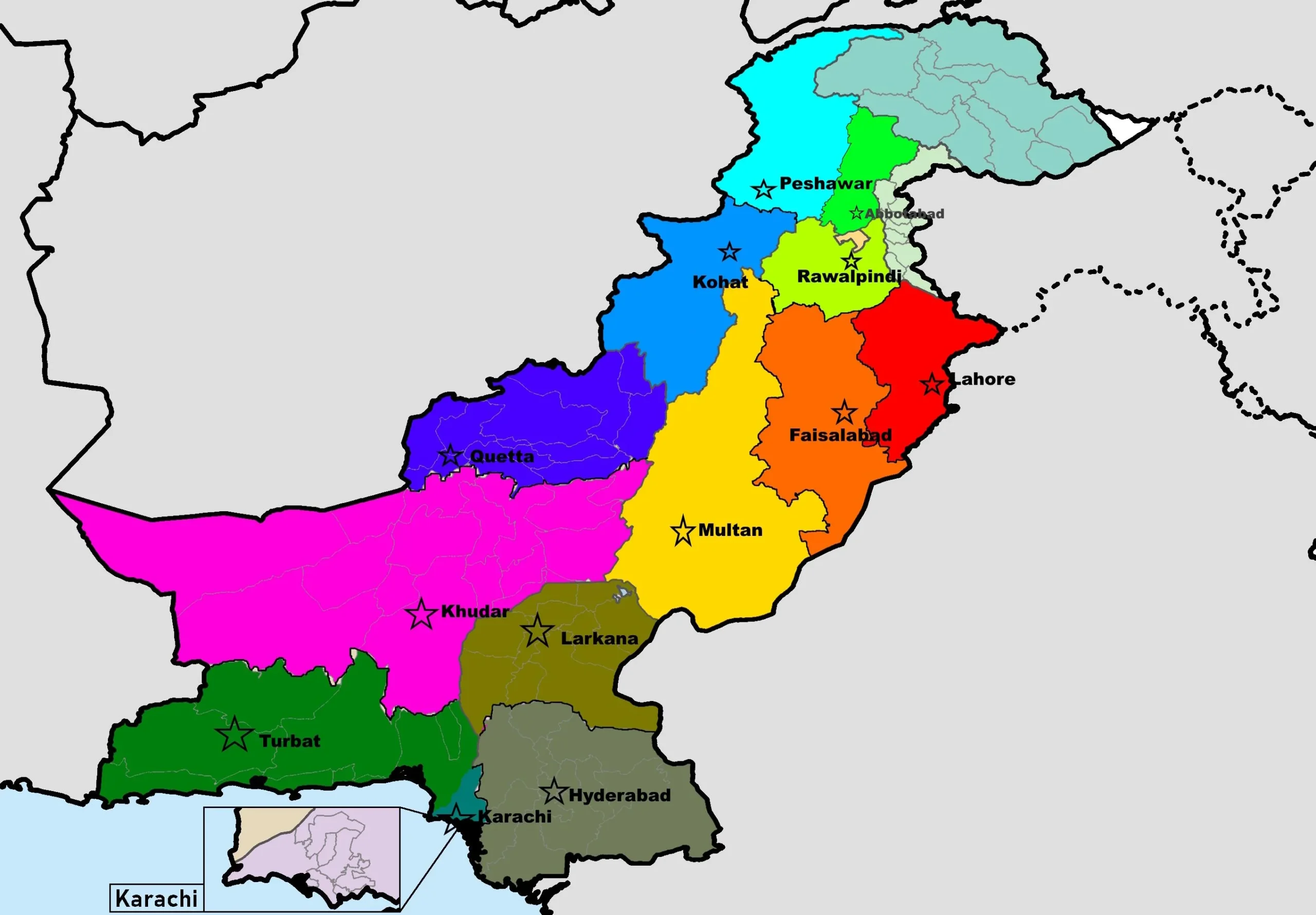
A historic opportunity for change came with the 25th Constitutional Amendment in 2018, which merged FATA with Khyber Pakhtunkhwa and extended the constitutional and legal framework of Pakistan to the former tribal areas. The expectation was simple but profound: changing the governance structure would change the fate of the people.
Yet, years after the merger, a fundamental question remains: has constitutional integration translated into meaningful rights and improved living conditions?
Pakistan’s Constitution recognises education as a fundamental right. Article 25-A obligates the state to provide free and compulsory education to children. Yet the literacy situation in the former tribal areas remains deeply troubling. Available data puts the literacy rate in the former FATA at around 33.3 percent, while female literacy has historically remained exceptionally low. The figures expose a fundamental gap between constitutional promises and the ability of the state to deliver them. A right written in the Constitution becomes meaningful only when schools, teachers, infrastructure and opportunities reach ordinary citizens.
The same contradiction is visible in healthcare and social welfare. Article 38 directs the state to promote the social and economic well-being of citizens and provide basic necessities, including food, clothing, housing and medical relief. Yet the former tribal areas continue to suffer from high levels of deprivation. According to UNDP’s multidimensional poverty estimates, approximately 73.7 percent of the population in the former FATA lives in multidimensional poverty.
Maternal healthcare provides another stark illustration. The Asian Development Bank reported a maternal mortality ratio of 261 deaths per 100,000 live births in the merged districts in 2014. Pakistan’s national maternal mortality ratio has since declined, with the World Bank reporting an estimate of 155 deaths per 100,000 live births in 2023. Although these figures belong to different years and should not be treated as a direct statistical comparison, they nevertheless highlight the historically severe maternal-health challenges faced by women in the former tribal areas.
The condition of health facilities is equally concerning. A recent assessment of maternal and neonatal health facilities in the merged districts found that 66 percent of the facilities assessed were categorised as providing poor services, while only one percent were classified as good. For communities already struggling with poverty and geographical isolation, inadequate healthcare facilities can turn preventable medical complications into life-threatening crises.
Food insecurity adds another layer to this humanitarian challenge. According to the Integrated Food Security Phase Classification (IPC), approximately 1.18 million people — around 23 percent of the population of the 13 newly merged districts — faced Crisis or Emergency levels of acute food insecurity during the assessment period. For communities that have experienced decades of conflict, displacement and economic disruption, food insecurity is not simply an economic indicator. It is a direct challenge to human dignity and survival.
The housing situation of returning internally displaced persons (IDPs) is similarly troubling. A UN-Habitat assessment of Tirah Valley found that 49 percent of returnees were living in damaged houses. This figure should not be generalised to all former FATA returnees, but it nevertheless provides an important picture of the difficulties faced by communities attempting to rebuild after years of conflict and displacement. A population cannot be expected to build a secure future when many families are still struggling to restore their homes.
Women and children, who require particular protection under the Constitution, continue to face serious socioeconomic challenges. Article 25 allows the state to make special provisions for the protection of women and children, while Article 11 prohibits slavery, forced labour and hazardous child labour. Yet women’s participation in the labour market in the merged districts remains extremely low, estimated at around three percent in recent reporting. Such limited economic participation not only restricts women’s independence but also deprives the region of a significant source of human capital.
The situation of children is equally concerning. The Khyber Pakhtunkhwa Child Labour Survey 2022 found that approximately 922,000 children aged five to 17 were working, representing 11.1 percent of children in that age group across the province, including the newly merged districts. These numbers remind us that poverty and weak access to education are closely connected. When families lack economic security, children are often pushed into work at the expense of their education and development.
Freedom of expression and the safety of those who speak out are also essential to a functioning constitutional order. Article 19 guarantees freedom of speech and expression, subject to constitutional limitations. Yet journalists and civil-society actors in the region have paid a heavy price. According to the Khyber Union of Journalists, more than 50 journalists have been killed in Khyber Pakhtunkhwa, including the former FATA, since the beginning of the conflict period. Such violence has not only cost lives but has also weakened independent reporting and public accountability.
These realities suggest that the challenge facing the merged districts is not simply a shortage of development projects. It is fundamentally a governance and rights deficit.
The consequences inevitably extend to law and order. A young person who is unemployed, unskilled and deprived of meaningful economic opportunities can become vulnerable to recruitment by violent and extremist networks. Development, employment and security, therefore, cannot be treated as separate policy areas. They reinforce one another.
The state has taken several steps towards improving security and governance, but implementation remains a major challenge. One of the most important obstacles is financial capacity. Under the post-merger arrangements, a three percent share of the National Finance Commission divisible pool was promised for the development of the newly merged districts. However, delays and disputes over the release and utilisation of funds have constrained the development of infrastructure and public services. Without predictable financing, even well-designed reforms remain confined to official documents.
The justice sector illustrates the same problem. Twenty-five Tehsil Judicial Complexes were planned for the merged districts to provide people with better access to speedy and relatively inexpensive justice. Yet the continued presence of unfinished projects years after their initiation raises questions about implementation capacity. For communities historically excluded from Pakistan’s mainstream judicial system, access to functioning courts should be regarded not as a development luxury but as a constitutional necessity.
Education and higher learning also remain inadequate for a population of roughly five million. FATA University, established in Akbarzai, was the first public-sector university created specifically for the former tribal areas. However, the region still lacks higher-education capacity proportionate to its population and needs. Similarly, the shortage of quality vocational training limits the ability of young people to benefit from emerging economic opportunities.
Healthcare presents a comparable challenge. The merged districts lack tertiary-care capacity comparable to the major Medical Teaching Institutions in Peshawar. Consequently, patients requiring specialised treatment frequently have to travel outside their districts, placing additional financial and logistical burdens on families that are already economically vulnerable.
Economic development initiatives have also struggled to produce the scale of transformation originally envisioned. Projects such as Mohmand Marble City, mineral exploration in Waziristan, the North Waziristan Industrial Zone and Wana Agricultural Park were expected to promote local industry, create employment and generate revenues. Their limited progress demonstrates that announcing projects is not enough. Effective implementation, transparency, infrastructure, market access and institutional continuity are essential for converting natural resources into sustainable local prosperity.
The state has increasingly looked towards constitutional provisions relating to emergency measures and extraordinary administrative interventions, including Articles 232 and 234. However, emergency arrangements and enhanced administrative control cannot by themselves resolve problems rooted in poverty, unemployment, weak institutions, inadequate education, poor healthcare and limited economic inclusion.
The people of the former FATA do not merely need more security structures. They need stronger civilian institutions. They need functioning schools, hospitals, courts, police stations, universities, markets and local governments. Above all, they need the Constitution to become a lived reality rather than a document whose promises remain distant.
The 25th Constitutional Amendment was a historic step, but constitutional integration cannot be measured merely by changes in administrative boundaries. Its real success will be determined by whether an ordinary citizen in Bajaur, Khyber, Kurram, Mohmand, North Waziristan, Orakzai or South Waziristan can access the same fundamental rights, public services and opportunities that citizenship promises elsewhere in Pakistan.
The question, therefore, is no longer whether the former tribal areas have been constitutionally integrated. They have. The real question is whether their people have been integrated into the **substance of constitutional citizenship**.
If constitutional integration changes administrative structures without transforming everyday realities, the promise of the 25th Amendment remains incomplete. The people of the merged districts deserve more than formal citizenship. They deserve functioning institutions, economic opportunity, dignity, justice and security.
Pakistan’s challenge is not simply to govern the merged districts. It is to ensure that the Constitution finally reaches the people it promises to protect.
Writer is civil servant and can be reached at tauqirkhanmardan@gmail.com