
Tahir Maqsood Chheena
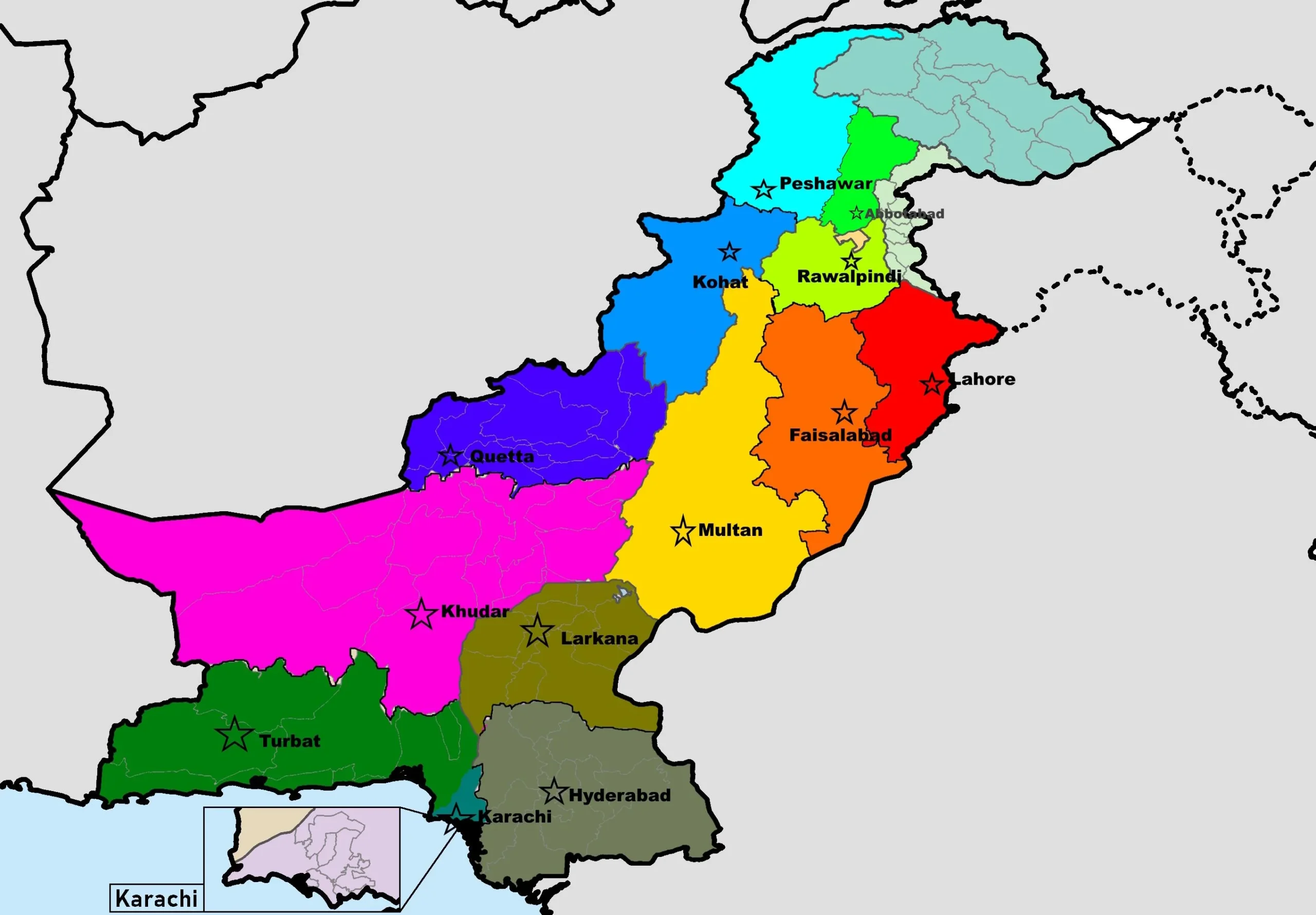
The question of new provinces refuses to go away, and the Pakistan Peoples Party is clearly uneasy about it. Speaking at an event in Karachi on Tuesday, PPP chairman Bilawal Bhutto-Zardari declared that no one outside Sindh had the right to decide its future. He went further. He said it was time to end this conversation altogether.
According to him, the people of Sindh and their elected representatives have already given their verdict. He was apparently referring to the resolution passed by the Sindh Assembly in early September on this very question. For the PPP, the matter is settled. The assembly has spoken, and that should be the end of it.
On principle alone, his position is sound. The Constitution lays down a clear procedure for creating new provinces or altering provincial boundaries. Article 239 requires that any such amendment be approved not only by Parliament but also by the assembly of the affected province with a two-thirds majority. The elected house of each province holds the final word. That is not a political preference. It is the law of the land.
Of course, not everyone in Sindh agrees with the PPP chairman. There are public representatives from the same province, belonging to other parties, who hold a different view and say so openly. Their disagreement is legitimate in a democracy. But disagreement, however loud, cannot override a process that the Constitution has clearly defined. Dissent is a right. It is not a veto.
Yet principle and practice are not always the same thing in Pakistan. Recent events in Khyber Pakhtunkhwa have shown how easily the public mandate can be set aside when the centre is determined enough. The verdict of the ballot box did not protect that province. Today, decisions for KP are being made not by its elected representatives but by administrators chosen by Islamabad. The people voted. Others now rule.
Some will say the comparison is unfair. Sindh is not KP, and the circumstances differ. Perhaps. But Mr Bhutto-Zardari should recognise that his position may carry less weight than he assumes. Constitutional protection is strong only as long as those in power choose to respect it. When they do not, a resolution passed in an assembly hall can be ignored as easily as a mandate won at the polls.
Nor will this agenda be easy to bury. Within the ruling coalition at the centre, several voices are openly pressing for the division of all provinces into smaller, more manageable units. They are not fringe voices. They sit in government. As KP has shown, such voices can be amplified when needed, and a pretext can be found. Lawyers call it causa proxima, the immediate cause that triggers an intervention. In Pakistani politics, a trigger is rarely hard to manufacture.
The wiser course, therefore, is not to shut down the debate but to remove the reasons that keep it alive. Calls for new provinces do not arise in a vacuum. They grow out of real grievances: poor schools, broken roads, absent hospitals and a sense that the provincial capital is too distant to care. Address these grievances, and the demand for division loses much of its force. Ignore them, and no resolution will hold it back for long.
Here lies the heart of the matter. Governance in Pakistan does not fail because provinces are too large. It fails because provincial capitals refuse to share power with local governments. Lahore, Karachi, Peshawar and Quetta have each, in their turn, preferred to hold authority rather than devolve it. Article 140A of the Constitution obliges every province to establish a local government system and to transfer political, administrative and financial responsibility to elected local representatives. That obligation has been honoured more in the breach than in the observance.
Few can honestly claim that the local government system, as it stands today, is capable of bringing meaningful change at the grassroots. Elections are delayed for years. Elected councils are dissolved at will. Funds are withheld, and powers are clawed back by provincial departments. Local bodies exist on paper, but they have little life in practice. A mayor without money is a title, not an office.
At the same time, creating more provinces is not a cure. It would add new layers of provincial bureaucracy, each with its own secretariat, assembly, cabinet, governor and high court. Every new province means new buildings, new salaries, new vehicles and new perks. Pakistan, struggling with debt and living on borrowed money, can hardly afford such expense. More provinces would mean more government, not better government.
The social costs are steeper still. Provincial boundaries in Pakistan are not mere lines on a map. They carry history, language and identity. Redrawing them without broad public consent could open old wounds and ignite ethnic tensions that no government would be able to contain. A reform that divides people in the name of serving them is no reform at all.
The answer, then, lies closer to home. Empowered local governments can meet almost every need that is now offered as a reason to break up the provinces. They can bring decisions to the street, the mohalla and the union council. They can make the official answerable to the citizen who lives next door. As Alexis de Tocqueville observed, local institutions are to liberty what primary schools are to science: they bring it within the reach of the people.
The decaying local government system must therefore be revived. It needs regular elections, protected tenure, a fair share of provincial finance and real authority over services. Resources must be invested wisely and audited honestly. Done properly, this would improve service delivery at the neighbourhood level in a way that no new province ever could.
So let the PPP defend Sindh’s constitutional right. But let it also give the people of Sindh what they want: clean water, working schools and a councillor who answers their call. Reader, ask yourself whether you need a new capital or a functioning union council. The answer will tell us where reform must begin.
The best-selling books of Republic Policy Think Tank, including the landmark book The Bureaucratic Coup, are available at Vanguard Books, Liberty Books, Readings, Kitab Sarai, Sang-e-Meel, Saeed Book Bank Islamabad, National Book Foundation, and others across Pakistan. Contact for home delivery: +92 341 4222501.