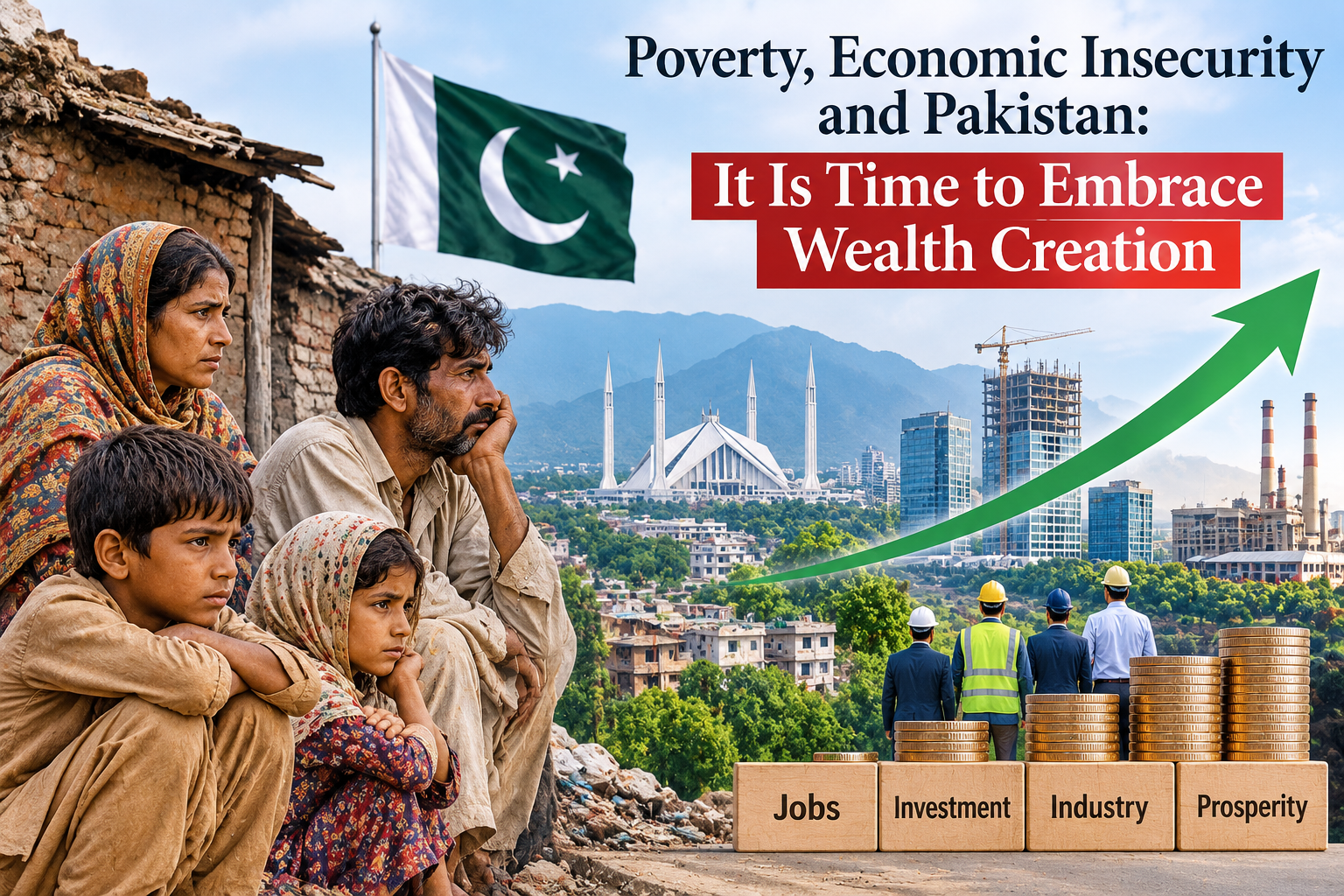

Pakistan’s poverty rate is estimated to be close to 40 per cent. Unemployment is rising, and a substantial segment of society continues to struggle to meet even its most basic economic needs. In such circumstances, it should hardly come as a surprise when thousands of people gather at an event after being promised a car, a few motorcycles and cash prizes. This phenomenon cannot simply be dismissed as a reflection of public ignorance, lack of seriousness or limited awareness. It is essential to understand the underlying economic reality: poverty and economic insecurity.
We often criticise people for their behaviour at such gatherings. Some rush towards free food, others display extraordinary enthusiasm for winning prizes, while many are willing to wait for hours in the hope of receiving even a modest financial reward. Yet we rarely ask what economic conditions have brought people to this point. For someone uncertain about the next meal, the needs of their children, access to healthcare, education or employment, a car, a motorcycle or a cash prize is not merely entertainment. It represents a possible opportunity for greater economic security.
These behaviours reflect the conscious and unconscious effects of poverty. Economic insecurity reshapes people’s priorities, psychology, social attitudes and collective behaviour. When a large proportion of society remains preoccupied with meeting everyday needs, expecting consistently high standards of collective dignity, social trust and civic responsibility becomes a complicated matter. Rather than looking down upon such people, we should seek to understand the circumstances that have brought them to this position.
The real question is not why thousands gather in the hope of winning prizes. It is why the state has allowed economic conditions to deteriorate to the point where even a modest reward holds extraordinary appeal for so many people. This situation should prompt serious reflection, both within the state and across society.
One of the most fundamental responsibilities of the state and society is to create an environment conducive to economic prosperity, employment and wealth creation. A country cannot become prosperous through administrative structures, laws, slogans, political ideologies or welfare announcements alone. Prosperity requires the generation of wealth, increased investment, business expansion, higher productivity, the establishment of new industries and the creation of employment opportunities.
Wealth creation is a fundamental condition for the economic development of any modern state.
Nations that have achieved significant economic progress over recent decades have made wealth creation a national priority. They have treated business, industry, agriculture, trade, technology, research, innovation and investment in human capital as drivers of development. They have adapted their economies to emerging technologies, modern production systems and the demands of global markets. As a result, their productive capacity has expanded, capital has accumulated, employment opportunities have increased and economic prosperity has reached wider sections of society.
Pakistan needs to adopt the same fundamental economic approach.
We must understand wealth creation free from ideological, political, cultural and social prejudices. Investment, business, industry and trade should be assessed on the basis of their economic value, productive potential and contribution to public prosperity rather than through narrow ideological perspectives. Wealth creation is not inherently a negative activity. What matters is how wealth is generated, how many people participate in the process, how widely its benefits are shared and how effectively the state ensures that economic activity remains fair and sustainable.
This does not mean accepting monopolies, exploitation, environmental destruction or economic inequality in the name of wealth creation. A modern democratic state must maintain a balance between economic freedom, competition, the rule of law, equal opportunity and social protection. The responsibility of the state is not to obstruct wealth creation but to make the process broader, more transparent, competitive and inclusive.
Wealth creation is not simply about attracting investment or starting businesses. It requires a comprehensive intellectual, institutional and technological transformation. This transformation begins with economic freedom, business-friendly regulations, secure property rights, an effective judicial system, merit-based institutions, human resource development and reform of state institutions. It must then be reinforced through modern technology, artificial intelligence, automation, research and development, the digital economy and higher levels of productivity.
Pakistan must place wealth creation, investment, productivity and employment at the centre of its economic policy. We need to recognise that the lasting solution to poverty does not lie merely in charity, food assistance, temporary relief or the distribution of prizes. It lies in creating economic opportunities through which people can achieve prosperity by using their labour, abilities and entrepreneurial potential.
Before criticising people for their conduct, we should examine the conditions that have made them economically insecure. When thousands of people gather in the hope of receiving a car or one of a few motorcycles, the scene is not merely a social spectacle. It may also serve as a reflection of the economic condition of society.
Pakistan must move beyond the psychology of poverty and towards an economy built on wealth creation.
This transformation is not merely a change in economic policy; it requires an intellectual and ideological shift as well. We must rethink the roles of the state, politics, society, education, technology and business around a fundamental question: How can we generate wealth, increase productive capacity and ensure economic security and prosperity for our citizens?
A state that fails to generate wealth will see poverty spread. Widespread poverty gives rise to economic insecurity, and where economic insecurity becomes pervasive, human dignity, social trust and collective consciousness are also undermined.
Pakistan no longer needs a national strategy centred merely on distributing the burden of poverty. It needs a national project devoted to creating wealth.