
Hamidul Haq
The contemporary advancement in ideas, perceptions, and technologies is actually the fruit of libraries. A library is a place where old thoughts are refined, new thoughts and ideas are generated, and future ideologies might be predicted. A library does not merely provide a collection of books but an environment to deliberate and to explore. The tales of previous generations have been safely stored by libraries where the contemporary generations seek solutions to their respective problems. It also helps in quenching the curiosity of minds.
For a long time, the West had realized the significance of libraries. They have tried their best to establish libraries at street level to facilitate readers at their doorsteps. It is evident from the pages of history that colonial empires had established libraries in their colonies as well. Unfortunately, the East has yet failed to inculcate the habit of reading as well as establishing libraries. The absence of libraries is one of the major obstacles in finding solutions to the prevailing socio-economic and political problems. Even if it is a hindrance in the development of maturity in relations. The society remains in Hobbesian state of nature.
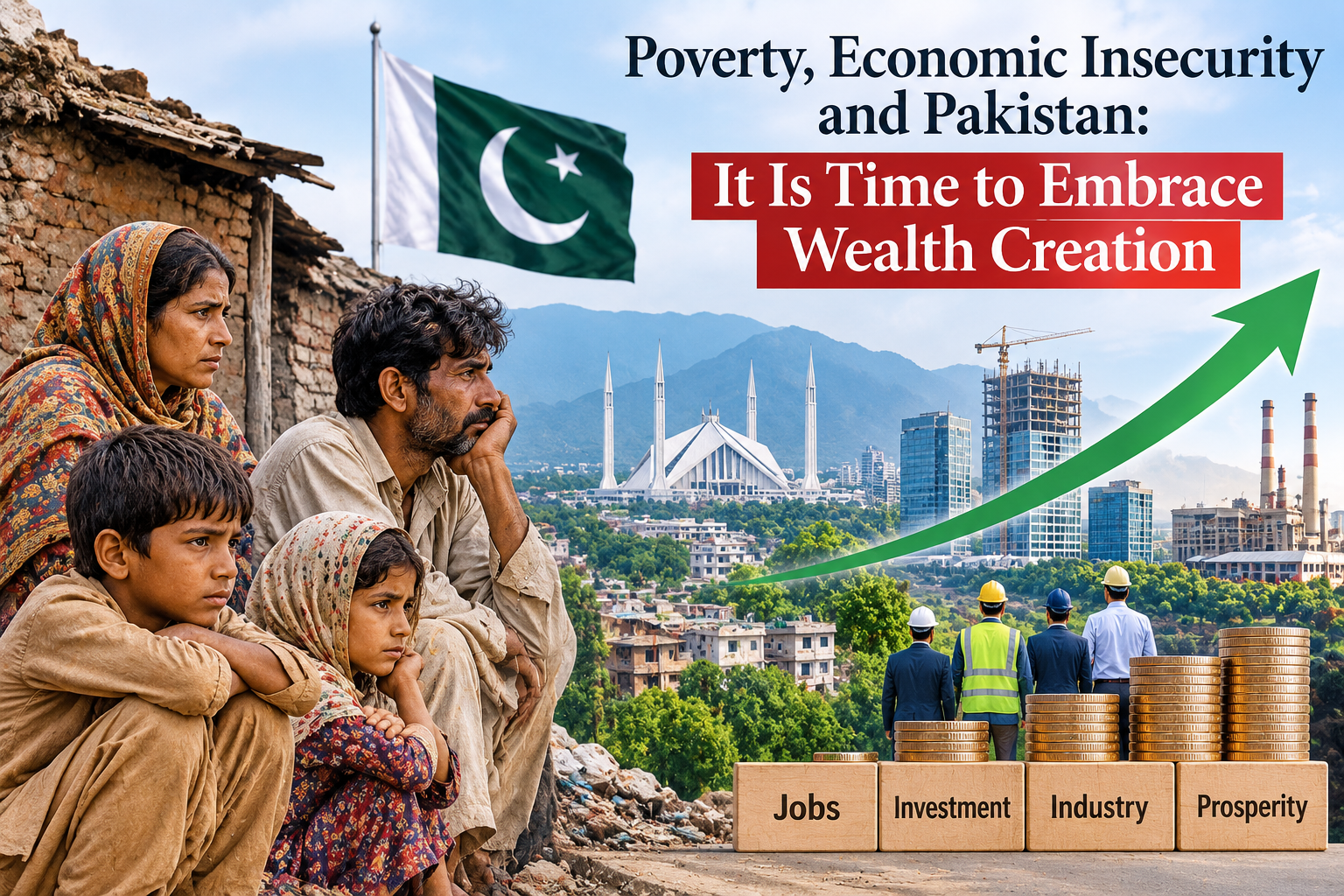
Similarly, the age of Pakistan is almost 80 years. Critics usually question the capabilities of Pakistanis. No doubt, people of the beloved land are hardworking and altruistic, but yet they could rarely have an optimistic opportunity to refine themselves to shine bright in the world. Pakistan, being a nuclear power, is lagging behind in education with respect to other regional nuclear states. Almost 26 million children are out of school, while budget allocation for education in FY 2026-27 is less than 1% of the GDP. It is alarming for the nation with respect to the needs and competition of the 21st century.
Likewise, it is evident that education has never been prioritized in the country. It may not be wrong to state that Pakistan has never been let down in conventional war, but yet it remains the last in the competition of education in the world. Students have been making their efforts to fight with the world with very meager resources and a noisy environment. If they are given a disturbance-free and tension-free environment, they can change the fate of the country in every field. In this regard, an ideal library holds an apex position to wield a standard study environment in order to address the prevailing socio-economic and political issues of the beloved land.
In addition, it is pertinent to mention that libraries are present at colleges and universities as well as public libraries in various districts. Unfortunately, the said libraries hardly fulfill the criteria of being ideal like other libraries in the world. Even the Federal Capital, Islamabad, lacks an ideal reading place. The libraries at Quaid-e-Azam University, International Islamic University, and Allama Iqbal Open University are good, yet they do not fall in the domain of the ideal category.
Ironically, there is an ideal library in the East of Islamabad, almost 24 km away from Zero Point, at Chattar, on old Muree Road. It has been named as Al-Nadwah Library. Though it is in progress to accommodate more students. It might be small in size and number of books, but it possesses features of an ideal library. It is owned by Al-Nadwah Educational Trust, which is supervised by a reputable Islamic scholar, Hazrat Mufti Muhammad Saeed Khan. He has devoted himself to facilitating students in their studies. According to him, there should be no disturbance between the book and its reader. That is the reason a student loses all his excuses rather than to study.
Notably, the library is located in an ideal place on the brink of a canal and surrounded by green hills. It has a good environment both in winter and summer. It provides a separate study table with bookshelves, study lamps, and an extension of electricity. It has an uninterrupted lightning system. It has doors and windows for entrance and ventilation but remains open 24/7 for students. It has been glamorized further with a speedy internet (wifi) system along with printing and photo copier facilities free of cost. It offers different daily newspapers in Urdu and English. In case any book is unavailable in the library, Hazrat Mufti Muhammad Saeed Khan makes arrangements to ensure the availability of the book for the student within no time. The carpeted floor, purified drinking water, a cup of hot tea, and pin-drop silence leave no excuse to study.
Moreover, besides serving three times organic food, Al-Nadwah Educational Trust also provides a pick-up and drop-off facility to students. Hazrat Mufti Muhammad Saeed Khan regularly supervises the food himself. He seeks no assistance but emphasizes study. He is extra sensitive and careful regarding the cleanliness, rest, comfort, and food of students. He has hired a tailor-master and laundry staff for student facilitation. In this way, he has taken on an extra burden over himself besides his own lectures, study, and religious services.
The sole purpose of mentioning Al-Nadwah Educational Trust and the services of Hazrat Mufti Muhammad Saeed Khan is to divert attention of political leaders, civil societies, social activists, philanthropists, and academicians towards the establishment of learning and reading centers. If Hazrat Mufti Saeed Khan can establish such a marvelous library at Chattar, why not me and you in our own villages and cities? The network of libraries must be extended to avoid students’ excuses. An individual can inspire many, and many can collectively make the country glorious. Undoubtedly, the state is more responsible for such things, but as a responsible citizen like Hazrat Mufti Muhammad Saeed Khan, every individual can contribute positively to the state and society. It is the need of the hour to establish such libraries to tackle the problems and complexities of the 21st century. Minds need to be fed more than mouths. It is not a luxury but essential for survival and existence. The more we delay, the higher price we pay.
Hamidul Haq, PhD Political Science Candidate at the Department of Politics and International Relations, International Islamic University, Islamabad.