
Naimat Ullah Khan
Pakistan is undergoing a profound transformation, but the most significant part of it is not necessarily reflected in election results, parliamentary realignments, or the usual language of political resistance. It is happening at a deeper level, in the consciousness of a generation that is increasingly denying the state’s traditional authority over how it thinks, interprets reality, and understands power. Something fundamental has changed in the relationship between the Pakistani state and its young. The state may keep its institutional machinery, its coercive instruments, and its administrative power, but its ability to mold the political imagination of a whole generation is increasingly questionable. The most important development is the erosion of what might be called the state monopoly of political consciousness. For decades, successive governments and powerful institutions relied on a mix of ideological narratives, controlled information, patronage, institutional authority, and restrictions on dissent to manufacture political consent.
These mechanisms were never entirely effective, but they worked in an information environment in which the state and its affiliated institutions had considerable sway over the public narrative. Now the environment is totally different. Politics is not only experienced by the current generation through television screens and official pronouncements or the established political intermediaries. It draws on competing narratives, weighs institutional claims against lived experience, questions official explanations, and forms political opinions through increasingly decentralized networks of communication.
Digital technology has accelerated this transformation, but it would be an intellectual cop-out to blame social media for the whole thing. The deeper causes are political disappointments built up over time, economic insecurity, institutional distrust, shrinking opportunities, and the growing gap between official narratives and everyday realities. Digital platforms have merely supplied the infrastructure through which these contradictions become visible, communicable, and politically consequential. The state can restrict a platform, throttle connectivity, prosecute online expression, and regulate information, but it cannot easily reinstitute the intellectual dependence that marked the relations between authority and society at an earlier time.
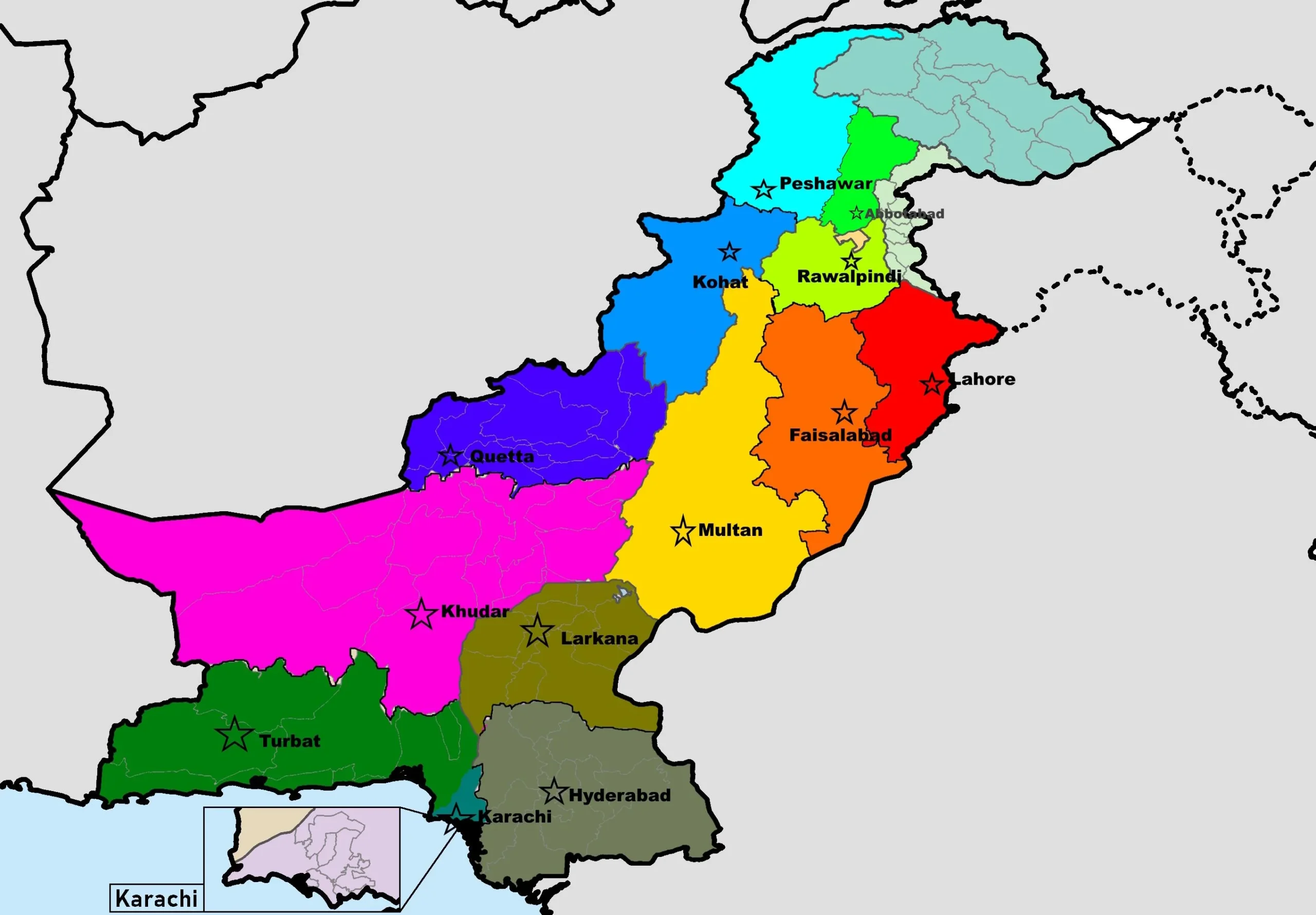
Moreover, this transformation does not find uniform geographical or ideological expression. Its manifestations vary across Pakistan, for the historical experiences, political grievances, and social structures of its constituent regions are not the same. In Balochistan, resistance has a close correlation with issues of political representation, distribution of resources, enforced disappearances, security practices, and the relationship between the federation and its peripheral populations. The activism around missing persons and figures such as Mahrang Baloch demonstrates how local grievances can take on national and international visibility. In Khyber Pakhtunkhwa, and particularly in Pashtun political discourse, demands for constitutional rights, civilian protection, security accountability, and political dignity have generated a distinct language of resistance.
They are not just acts of resistance; they are also acts of a more profound struggle over citizenship, recognition, and the meaning of the social contract. In Kashmir, political consciousness has been shaped by a different historical and constitutional experience, shaped by questions of political identity, representation, rights, and the unresolved nature of the political status of the region. However, Punjab has witnessed increasingly visible forms of political polarization, digital mobilization, and generational skepticism towards established political arrangements. Political expression in Sindh is still shaped by the issues of provincial autonomy, linguistic and cultural identity, the distribution of resources, and the historical relationship between the center and the periphery.
These developments should not be collapsed into one movement or understood through one ideological lens. Their importance lies precisely in their variety: different communities are voicing different grievances, but an important commonality is that they are refusing to accept political explanations uncritically. The state’s reaction to this changing environment is just as telling. Restrictions on digital platforms, internet shutdowns, surveillance, amendments to the cybercrime law, and pressure on journalists and civil society are all signs that the state prefers to contain dissent rather than address its root causes. In its 2025 evaluation, Freedom House pointed out that Pakistan still had limits on freedom of expression online, such as internet outages and increased censorship. Amnesty International has also raised serious concerns about surveillance, digital censorship, and restrictions on peaceful assembly. Such measures may disrupt mobilization for a time, but they cannot replace political legitimacy.
In fact, too much reliance on coercive tools can have the unintended effect of reinforcing the perception among younger citizens that their political concerns are being treated as security problems rather than legitimate questions of democratic citizenship. But intellectual independence should not be romanticized as a guaranty of democratic maturity. A generation that questions authority doesn’t necessarily have a coherent political program. Digital spaces can facilitate political awareness but can also reproduce misinformation, emotional polarization, personality cults, and fragmented identities. The capacity to reject an official narrative does not automatically imply the capacity to build a more democratic alternative. But not every act of resistance should be interpreted as an expression of progressive politics. Some forms of mobilization may reproduce exclusionary nationalism, intolerance, or political absolutism.
The challenge, then, is not only to celebrate resistance but also to understand whether it can develop into organized, rights-based, and institutionally meaningful democratic participation. There is also a fundamental distinction between the control of public behavior and the control of public consciousness. A state may be able to prevent demonstrations, control communication, arrest activists, or manage public meetings. But compliance through fear is not consent through legitimacy. The silence of the people is not to be taken as their consent any more than the absence of visible protest is to be mistaken for the absence of political discontent. The distinction is particularly salient in a society in which institutional distrust and political alienation have become more significant. Perhaps the most irreversible change in Pakistan is not the loss of state power but the change in the society on which that power operates.
Younger citizens are less and less willing to accept political assumptions simply because previous generations did. They challenge power, interrogate historical narratives, demand accountability, and negotiate their identities beyond the boundaries of conventional political institutions. This is not to say that the state has lost control of all institutions or that there is an inevitable democratic transition underway. That means the old ways of manufacturing unquestioning political consent are becoming less reliable. The Pakistani political establishment thus has to confront a reality that cannot be resolved by censorship, administrative restrictions, or management of public perception. You can’t tell a generation that has created its own ways of interpreting power to think differently. It should be treated as a political issue, not as a potential menace. The future stability of Pakistan will depend less on the state’s ability to silence dissent and more on its ability to respond seriously to the grievances that produce it. The state may still command institutions, but it can no longer assume that it commands the minds of the generation that will inherit the country.
Naimat Ullah Khan, a sociologist, independent researcher and political columnist writing on political sociology, ethnic nationalism, federalism and state-society relations in Pakistan. My research addresses questions of state legitimacy, ethnic identity, political mobilisation and centre-periphery relations. I have written scholarly research and analytical commentaries for leading national publications like Dawn and The Express Tribune. My current research is on how to re-imagine the Social Contract in Pakistan, and emergence and transformation of Baloch and Pashtun Neo-Ethnonationalism, especially in relation to political identity, state restructuring and ethnic mobilisation.