

Pedro Sánchez
The growing acceptance of war as an instrument of statecraft is undermining the international order established after 1945. Rising military expenditure, nuclear proliferation, technological competition and weakening multilateral institutions are creating a dangerous environment. Preventing another global catastrophe requires more than diplomatic declarations: it demands a renewed commitment to international law, institutional reform and collective security.
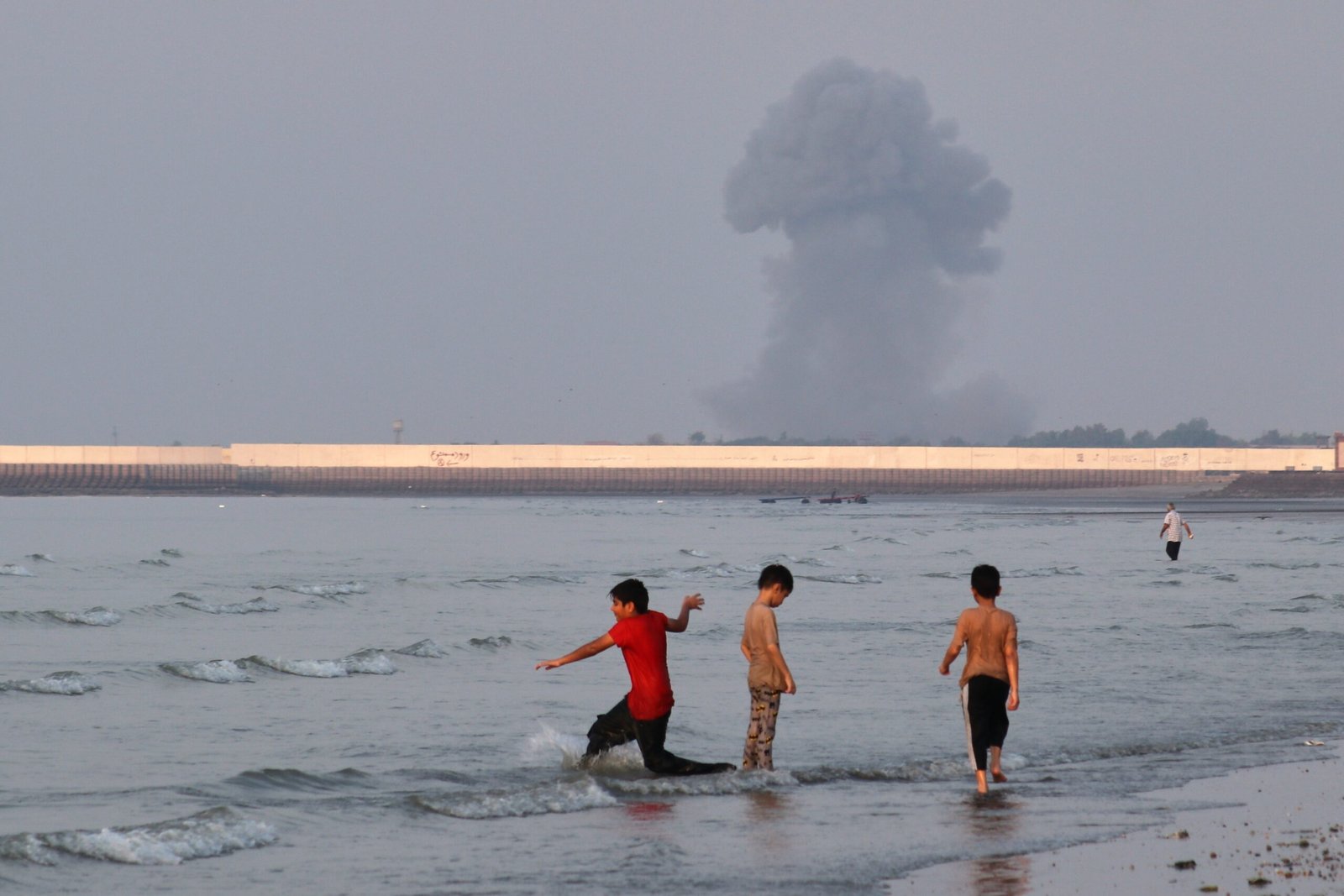
The world is gradually becoming accustomed to war. Conflicts that once provoked international outrage are increasingly treated as permanent features of global politics. Military aggression, territorial disputes and regional confrontations are shaping foreign policy calculations, while governments are expanding defence budgets and preparing their societies for the possibility of prolonged conflict. The language of diplomacy is increasingly giving way to the language of deterrence, military preparedness and strategic confrontation.
This normalisation of war represents one of the most dangerous developments in contemporary international politics. It is not merely the continuation of regional conflicts; it signals a weakening of the principles that were established after the two devastating world wars to prevent states from using force as an ordinary instrument of national policy.
The international order created after 1945 was founded on a fundamental recognition: peace cannot depend exclusively on the goodwill of powerful states. It requires rules, institutions and collective mechanisms capable of restraining aggression. The United Nations Charter prohibited the threat or use of force against the territorial integrity and political independence of states, establishing international law as a barrier against the arbitrary exercise of military power.
That system was never perfect. Wars continued, powerful countries frequently violated international norms, and the enforcement of international law remained deeply unequal. Nevertheless, the post-war institutional framework provided mechanisms for diplomacy, conflict management and cooperation. It helped prevent direct military confrontation between major powers and created a foundation for international stability.
Today, that foundation is under increasing pressure. The central question is no longer whether the existing international order requires reform. It is whether the world can reform it before another major conflict makes the consequences irreversible.
The return of war as an instrument of statecraft
The twentieth century demonstrated the catastrophic consequences of allowing military aggression to become an accepted means of resolving international disputes. The devastation of the First and Second World Wars encouraged governments to establish a system in which territorial conquest and the unilateral use of force would no longer be regarded as legitimate expressions of national power.
The Kellogg–Briand Pact of 1928 represented an early attempt to outlaw war as an instrument of national policy. Although it failed to prevent the Second World War, its principles influenced the development of the international legal order. The United Nations Charter subsequently gave those principles institutional form by prohibiting aggressive uses of force and establishing collective security mechanisms.
However, the political commitment that sustained this framework has weakened. The invasion of Iraq in 2003, despite widespread public opposition and serious questions about its legal justification, exposed the limitations of international institutions when confronted with the decisions of powerful states. The consequences extended far beyond Iraq, contributing to regional instability, institutional distrust and the growth of violent extremism.
The subsequent conflicts in Ukraine and the Middle East have further demonstrated how quickly military confrontation can become embedded in international politics. Wars of aggression are increasingly justified through competing narratives of national security, historical entitlement, liberation or pre-emptive defence.
The danger lies in the erosion of a common standard. If every state can invoke its own interpretation of security to justify the use of force, international law loses its restraining capacity. A system governed by rules gradually becomes a system governed by power.
Militarisation and the growing nuclear threat
The expansion of global military expenditure reflects the deterioration of international confidence. Governments are allocating increasing resources to defence, developing advanced weapons systems and reconsidering military policies that had previously emphasised restraint.
According to the figures presented in the source article, global defence spending has increased by more than 40 per cent over the past decade and approaches three trillion dollars annually. This represents an extraordinary allocation of public resources to military preparedness at a time when much of humanity continues to face poverty, inadequate healthcare, educational deprivation and climate vulnerability.
Defence spending is not inherently incompatible with peace. States have legitimate security requirements, and deterrence can play a role in preventing aggression. The problem emerges when military expansion becomes the dominant response to insecurity, while diplomatic engagement, arms control and international cooperation continue to deteriorate.
The nuclear dimension makes this trend particularly alarming. All nine nuclear-armed states are modernising their arsenals, while the international agreements that once constrained strategic competition are weakening. The breakdown of arms-control arrangements between major nuclear powers increases uncertainty and reduces the mechanisms available to prevent escalation.
Nuclear weapons do not provide an absolute guarantee of security. Their existence creates the possibility of catastrophic miscalculation, accidental launch and uncontrolled escalation. A regional confrontation involving nuclear-armed states could rapidly acquire global consequences.
The growing interest among non-nuclear countries in acquiring nuclear capabilities is another warning sign. If states increasingly regard nuclear weapons as essential instruments of national survival, the international non-proliferation system will face an even greater challenge.
The objective of international security should not be to make every country capable of destroying its adversaries. It should be to create an environment in which states have sufficient confidence in international institutions and diplomatic arrangements that they do not feel compelled to pursue increasingly destructive forms of deterrence.
Artificial intelligence is changing the nature of warfare
The technological transformation of warfare has introduced another dimension of risk. Artificial intelligence is increasingly being integrated into military planning, intelligence gathering, surveillance, cyber operations and weapons systems.
These developments may increase operational efficiency, but they also create new vulnerabilities. Automated systems can accelerate military decision-making, reduce the time available for human assessment and increase the possibility that an error will trigger an unintended escalation.
The integration of artificial intelligence into nuclear command and control is particularly concerning. Decisions involving nuclear weapons require extraordinary caution, independent verification and meaningful human judgment. Any technological system that compresses decision-making time or creates uncertainty about the accuracy of information could increase the danger of catastrophic miscalculation.
Cyberattacks on critical infrastructure, including electricity networks, hospitals and financial systems, can also turn technological competition into a direct threat to civilian populations. Deepfakes and automated disinformation campaigns may undermine public trust, distort political decision-making and create confusion during international crises.
The international community must therefore establish rules governing the military application of emerging technologies. Human control over decisions involving the use of nuclear weapons must remain indispensable. States should also develop mechanisms for transparency, verification and communication to reduce the risks associated with autonomous systems and cyber operations.
Technological innovation cannot be allowed to advance without corresponding progress in international regulation. The speed of weapons development must not exceed the capacity of diplomacy to control its consequences.
Why war cannot produce lasting security
Military aggression is frequently presented as a necessary response to insecurity. Governments claim that military action will eliminate threats, restore stability or establish conditions for a lasting settlement. History, however, demonstrates that wars rarely produce the security their architects promise.
Armed conflict destroys institutions, displaces populations, damages economic infrastructure and creates grievances that can survive for generations. It also generates consequences beyond the territories in which fighting occurs. Disruptions to maritime trade, energy supplies, aviation and international markets transmit the costs of war to countries that have no direct involvement in the conflict.
The economic consequences of contemporary conflicts illustrate this interdependence. Disruption in strategically important regions can increase energy and commodity prices, weaken supply chains and impose additional costs on developing economies already struggling with debt and fiscal constraints.
War also creates opportunities for new actors to enter an existing conflict. Regional confrontations can spread across borders, draw in neighbouring states and transform local disputes into wider geopolitical crises.
Perhaps most importantly, military victories do not automatically produce political reconciliation. Defeated societies may retain deep grievances, while civilian suffering can strengthen hostility towards the countries responsible. The result is often a cycle of retaliation, instability and renewed violence.
Security must therefore be understood in broader terms. It involves the protection of people, the stability of institutions, the preservation of economic opportunities and the existence of credible mechanisms for resolving disputes peacefully.
Rebuilding the credibility of international law
The international community cannot oppose the normalisation of war while applying international law selectively. The credibility of the rules-based order depends on whether the same legal principles apply to powerful and weaker states alike.
The United Nations Charter prohibits aggressive uses of force, while international humanitarian law establishes obligations towards civilians and other protected persons during armed conflict. These principles must not become instruments of political convenience, invoked against adversaries and ignored when allies violate them.
The International Court of Justice and the International Criminal Court have important roles in upholding international law. Their authority, however, depends on the willingness of states to respect judicial processes, comply with decisions and cooperate with investigations.
When governments disregard international legal obligations without meaningful consequences, the credibility of the entire system deteriorates. Selective accountability encourages further violations and reinforces the perception that international law is subordinate to geopolitical power.
The international community must therefore strengthen mechanisms of accountability. States should cooperate with international courts, respect their jurisdiction and ensure that serious violations of international humanitarian law are investigated through credible legal processes.
Peace cannot be secured through diplomatic statements alone. It requires an international environment in which the costs of aggression are real and the protection of civilian populations is treated as a legal and political obligation.
The United Nations needs institutional reform
The United Nations remains the most important universal institution for international peace and security, but its present structure reflects the political realities of 1945 rather than the distribution of power and population in the contemporary world.
The Security Council’s permanent membership is restricted to five states, each possessing veto power. This arrangement gives a small group of countries exceptional authority over decisions concerning international peace, including situations in which their own political interests are involved.
The result is a structural contradiction. An institution established to protect collective security can become paralysed when the interests of a permanent member conflict with the demands of international action.
Reforming the Security Council is therefore essential. Its membership should better represent contemporary political and demographic realities, particularly the underrepresentation of Africa and Latin America. Emerging powers and regional organisations should have a more meaningful role in global decision-making.
The veto mechanism also requires serious reconsideration. At a minimum, its use should be constrained in situations involving genocide, crimes against humanity, war crimes and mass atrocities. The broader objective should be to prevent a single state’s political objections from indefinitely blocking action in the face of grave international crimes.
Institutional legitimacy depends not only on representation but also on effectiveness. Countries are more likely to support international rules when they have a meaningful role in shaping them.
Reform must also extend to international financial institutions. The International Monetary Fund and the World Bank continue to reflect historical arrangements in their voting structures and leadership conventions. Developing economies require a greater voice in decisions that directly affect their economic futures.
Global peace cannot be separated from economic justice. Financial exclusion, unsustainable debt and unequal development opportunities can deepen political instability and create conditions in which conflict becomes more likely.
From minilateralism to inclusive multilateralism
One of the central arguments in the original article is the need to move beyond narrow diplomatic arrangements towards what Pedro Sánchez describes as “maxilateralism”: cooperation that includes the largest possible number of countries rather than relying exclusively on small, selective coalitions.
This distinction is important. Smaller groups of countries can sometimes respond more quickly to specific challenges, particularly when universal institutions are paralysed. But exclusive arrangements cannot replace a genuinely multilateral system.
Peace is not sustainable when decisions about international security are made by a limited group of powerful states while the countries and populations affected by those decisions remain excluded.
Unilateral agreements and transactional ceasefires may temporarily stop fighting, but they often fail to address the underlying political disputes. Durable peace requires legitimate negotiations, the participation of affected communities and arrangements grounded in international law.
Inclusive multilateralism does not mean that every country must agree on every issue. It means preserving institutions through which disagreements can be managed without resorting to military confrontation.
The international system needs more diplomacy, not less; more representation, not exclusion; and stronger institutions, not competing arrangements that further fragment global governance.
Development is also an instrument of peace
A narrow understanding of security places military capabilities at the centre of national and international stability. A broader understanding recognises that poverty, inequality, weak institutions, social exclusion and economic insecurity can also undermine peace.
Countries cannot build sustainable security while leaving large sections of their populations without education, healthcare, employment opportunities and basic economic protection.
Investment in human development is therefore not separate from international peacebuilding. It addresses some of the conditions that generate instability and strengthens the resilience of societies against political and economic shocks.
Developing countries are particularly vulnerable to this relationship. Debt burdens, climate disasters, food insecurity and inadequate public services can weaken institutional capacity and intensify social pressures.
International financial institutions must provide developing economies with access to affordable and timely financing. No country should be forced to choose between servicing unsustainable debt and investing in the education, health and infrastructure of its population.
Climate finance, public health cooperation, food security and sustainable development should be understood as components of the international peace agenda. A world in which countries compete over increasingly scarce resources and struggle to finance basic development will remain vulnerable to conflict.
The Sustainable Development Goals provide an important framework for this broader understanding of security. Their implementation requires stronger international cooperation, fairer financial arrangements and a willingness to treat development as a shared global responsibility.
Pakistan and the challenge of a changing world order
For Pakistan, the weakening of international law and multilateral institutions presents a particularly serious challenge. As a developing country with significant economic and security constraints, Pakistan has a direct interest in an international system where sovereignty, territorial integrity and the peaceful resolution of disputes are protected by credible rules.
A world governed increasingly by military power would disadvantage states that lack the economic and strategic capacity of major powers. The weakening of multilateral institutions would also reduce the diplomatic space available to countries seeking peaceful solutions to regional disputes.
Pakistan should therefore consistently support the principles of the United Nations Charter, the peaceful settlement of disputes, non-aggression and the protection of civilian populations. Its foreign policy should recognise that international law is not merely a diplomatic instrument but an essential safeguard for states that cannot rely exclusively on military power.
This position also requires consistency. Pakistan’s advocacy of international law must be reflected in its diplomatic conduct, its engagement with international institutions and its approach to regional stability. Selective positions weaken the very principles that smaller and developing states need to defend.
The country should also support meaningful reform of global governance institutions. A more representative Security Council, stronger international accountability and fairer financial governance would provide developing countries with a greater voice in decisions affecting their security and prosperity.
At the same time, Pakistan must invest in the domestic foundations of peace: democratic institutions, economic resilience, education, social cohesion and effective governance. International stability cannot be sustained independently of the condition of national institutions.
Making peace a political priority
The most important challenge is to restore peace as an active political objective rather than treating it as the temporary absence of fighting.
This requires governments to resist the temptation of militaristic nationalism, reject the normalisation of aggression and invest in the diplomatic mechanisms that prevent disputes from escalating. It also requires citizens, political parties, civil society and intellectual communities to hold governments accountable for decisions that increase the risk of war.
Military preparedness may remain necessary for national defence, but it cannot become a substitute for political wisdom. A country is not necessarily more secure because it spends more on weapons. Its security also depends on the strength of its institutions, the resilience of its economy and the credibility of the international arrangements within which it operates.
The world has already experienced the consequences of a failed international order. The destruction of the first half of the twentieth century forced governments to recognise that unchecked military competition could threaten the survival of civilisation itself. The institutions established after 1945 were an attempt to prevent that catastrophe from recurring.
Those institutions now require reform, but their weaknesses should not become an excuse for abandoning multilateralism. The answer to institutional failure is not the return of unrestricted power politics. It is to make international institutions more representative, accountable and capable of enforcing the principles on which they were founded.
The choice before the international community is increasingly stark: a world in which states resolve disputes through law, negotiation and cooperation, or one in which military strength becomes the final measure of political authority.
Another world war is not inevitable. But preventing it will require more than expressions of concern after every new conflict. It will require political courage to oppose aggression, institutional commitment to uphold international law and a collective willingness to address the inequalities and insecurities that undermine peace.
The greatest achievement of international politics should not be the ability to win wars, but the ability to prevent them. Peace must once again become the organising principle of the international order—not an aspiration invoked after destruction, but a responsibility exercised before it begins.