
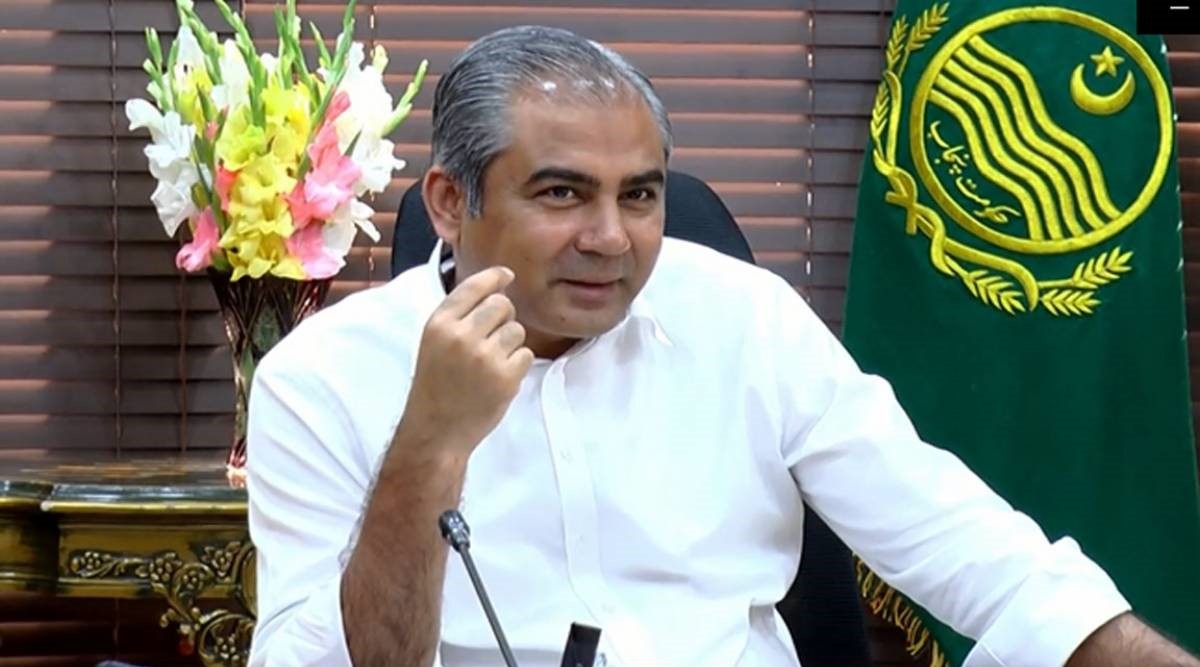

Interior Minister Mohsin Naqvi’s unscheduled visit to Nawabshah and reported meeting with President Asif Ali Zardari have renewed speculation about a possible political and administrative restructuring of Pakistan. Behind the discussion of new provinces and a proposed referendum lies a much larger question: can the country reform its governance system without addressing the concentration of power at the centre and the persistent weakness of local government?
Interior Minister Mohsin Naqvi’s surprise visit to Nawabshah on Thursday night has added a new dimension to Pakistan’s evolving debate over political restructuring and the future of its governance system. Naqvi reportedly travelled from Islamabad on a special aircraft to meet President Asif Ali Zardari at Zardari House, where the two held a meeting lasting approximately 59 minutes.
According to sources cited in media reports, the meeting involved discussions on the creation of new provinces, the possibility of holding a referendum on the issue and potential action against the Jamiat Ulema-e-Islam-Fazl (JUI-F). Naqvi was also reportedly carrying an important message from a senior national figure and sought to take the president into confidence. Neither the alleged message nor the reported agenda has been officially confirmed.
The significance of the meeting, therefore, lies not in any established policy decision but in the political context surrounding it. Pakistan is witnessing renewed debate over a possible restructuring of its administrative framework, with senior political figures increasingly acknowledging that the existing governance arrangements are failing to deliver effective public services.
The Nawabshah meeting has consequently raised questions about whether discussions on a broader political settlement are progressing behind the scenes and whether the creation of new provinces could become part of a wider reform agenda.
A political reset or an administrative restructuring?
The meeting came shortly after Naqvi publicly expressed agreement with Pakistan Peoples Party Chairman Bilawal Bhutto-Zardari on the need for a reset of the existing system.
Bilawal had argued that Pakistan’s political and economic challenges required a fundamental reconsideration of how the country was governed. He called for a system in which public interests, rather than the preferences of traders and powerful business interests, determined national priorities. He also emphasised political unity as an essential condition for addressing the country’s economic difficulties.
Naqvi subsequently clarified that Bilawal was referring primarily to a reset of the political system, whereas his own proposal concerned a broader restructuring of the overall governance framework. He maintained that no decision would be taken without the consent of the political parties concerned and rejected speculation that disagreements would necessarily emerge among coalition partners.
This distinction deserves attention. Political reform and administrative reform are related, but they are not interchangeable. A change in political leadership or coalition arrangements does not automatically improve the institutions responsible for public service delivery. Similarly, creating additional administrative units does not guarantee better governance unless authority, resources and accountability are properly redistributed.
Pakistan’s governance crisis is fundamentally institutional. It concerns the concentration of decision-making powers, weak administrative accountability, limited fiscal autonomy at the grassroots and the inability of public institutions to respond effectively to citizens’ needs.
A genuine system reset must therefore address the architecture of the state rather than remain confined to political negotiations.
The renewed debate over new provinces
Naqvi’s proposal for additional provinces or administrative units first gained significant political attention on July 31, when he described the existing governance model as having effectively collapsed after decades of poor performance.
Speaking at the Pakistan Economic Summit in Islamabad, he argued that decentralisation was essential for improving public services, ensuring timely justice and creating opportunities for young people. His intervention brought the question of administrative restructuring back into national political debate.
The proposal received a mixed response. Several Pakistan Muslim League-Nawaz leaders criticised Naqvi, questioning his authority to challenge a system through which he had himself risen to a senior federal position. Prime Minister’s aide Rana Sanaullah argued that reform should begin within Naqvi’s own ministry, while Defence Minister Khawaja Asif expressed support for the broader idea of restructuring the system.
More recently, reports have suggested that the possibility of reorganising Pakistan into as many as twelve provinces is being discussed, potentially in connection with a proposed nationwide referendum and a possible 28th Constitutional Amendment. However, the precise contours of any such proposal remain unclear, and no confirmed constitutional plan has been announced.
The political implications are particularly significant in Sindh, where the PPP has consistently opposed any division of the province. On September 4, the Sindh Assembly passed a resolution rejecting attempts to divide Sindh or create new administrative units within its existing territory. Chief Minister Murad Ali Shah reiterated that there would be no compromise on the province’s geographical unity.
At the same time, MQM-P leader Mustafa Kamal has continued to advocate the creation of additional provinces, particularly in Sindh. The disagreement reflects a deeper conflict between competing understandings of provincial identity, administrative efficiency and the distribution of political power.
A referendum cannot replace the Constitution
The suggestion that a referendum could determine public opinion on the creation of new provinces has introduced another dimension to the debate. A referendum may provide an opportunity for citizens to express their preferences, but it cannot independently alter the constitutional structure of the federation.
Pakistan’s Constitution establishes a specific procedure for changing provincial boundaries. Under Article 239, a constitutional amendment requires approval by at least two-thirds of the total membership of each House of Parliament. Where an amendment seeks to alter the limits of a province, it must also be approved by the provincial assembly concerned through a two-thirds majority of its total membership.
Consequently, a public vote cannot bypass the constitutional requirements governing the creation of a new province. Nor can an executive announcement or political agreement substitute for the parliamentary and provincial approvals required by the Constitution.
A referendum could contribute democratic legitimacy to a restructuring proposal, but its legal and political role would need to be clearly defined. The constitutional process must remain central to any decision affecting the federation’s territorial structure.
The question is not simply whether citizens support additional provinces. It is whether the proposed arrangements would improve governance, strengthen representation and produce a more accountable distribution of public authority.
The missing question: where are the local governments?
Pakistan’s debate over new provinces risks becoming another exercise in administrative restructuring without addressing the most important weakness in its governance system: the absence of genuinely empowered local governments.
The country currently operates through a federal structure in constitutional design, but the actual distribution of political, administrative and financial authority remains heavily centralised. Even where provincial governments possess substantial constitutional powers, they have often been reluctant to transfer meaningful authority to elected local institutions.
This creates a fundamental contradiction. Political leaders argue that Pakistan needs smaller administrative units because existing provinces are too large to govern effectively. Yet the same political system has repeatedly failed to establish stable, autonomous and accountable local governments within those provinces.
If the objective is to bring government closer to citizens, why should the debate begin and end with the creation of new provinces?
A province may be smaller in geographical size, but it can reproduce the same concentration of power that exists at the federal and provincial levels. A new provincial capital, secretariat and administrative hierarchy do not automatically bring decision-making closer to ordinary citizens.
The real test of decentralisation is whether elected representatives at the local level have meaningful authority over municipal services, education, primary healthcare, local infrastructure, land use, sanitation and other functions that directly affect everyday life.
Article 140-A of the Constitution provides for the establishment of local governments and requires political, administrative and financial responsibility and authority to be devolved to elected local representatives. Its promise, however, remains incompletely realised.
Pakistan cannot credibly claim to be pursuing a governance reset while leaving the constitutional principle of local autonomy largely unfulfilled.
Provinces alone cannot resolve the governance crisis
The argument for additional provinces should not be dismissed outright. Pakistan’s population has grown substantially, urban centres have expanded and the administrative demands placed on existing provincial governments have become increasingly complex. Smaller provinces could potentially improve representation, administrative accessibility and the delivery of public services.
However, these benefits are not automatic. New provinces would require substantial institutional, financial and administrative arrangements. Questions concerning provincial boundaries, revenue distribution, public-sector employment, infrastructure, natural resources, legislative representation and the division of existing assets would have to be resolved.
There is also a danger that the creation of new provinces could produce additional layers of government without reducing bureaucratic centralisation. If the same administrative culture, political patronage and institutional weaknesses are reproduced in smaller units, the result may be a more expensive state rather than a more effective one.
The central issue is therefore the design of government. Pakistan needs a clear distribution of responsibilities among the federation, provinces and local governments, supported by fiscal arrangements that allow each tier to perform its constitutional functions.
A well-designed federal system should not force every administrative and political decision through provincial capitals. It should allow local institutions to exercise authority within their jurisdictions while remaining accountable to elected citizens and subject to constitutional oversight.
The political test of a system reset
The reported meeting between Naqvi and Zardari is politically significant because any proposal to reorganise the federation would require an unusually broad political consensus. The PPP’s position on Sindh’s territorial integrity, the demands of MQM-P, the differing views within PML-N and the interests of other political parties make the issue particularly sensitive.
A constitutional restructuring cannot succeed through closed-door negotiations alone. It requires public deliberation, transparent proposals, institutional consultation and a clear explanation of the intended benefits.
Political parties must move beyond slogans and answer fundamental questions. What governance failures would new provinces address? How would financial resources be distributed? What powers would be transferred to local governments? How would administrative accountability improve? And how would citizens participate in decisions affecting their political and economic future?
The reported discussion of possible action against JUI-F also indicates that the meeting may have covered matters beyond administrative restructuring. However, in the absence of an official account, it would be premature to draw conclusions about the nature or implications of those discussions.
The broader political environment makes transparency even more important. A national reform agenda cannot be built on speculation, competing political narratives or arrangements that citizens are expected to accept after decisions have already been made.
From political negotiations to democratic governance
Pakistan has repeatedly announced plans to reform its governance system, but the central weakness has been the gap between political declarations and institutional implementation.
A genuine reset requires more than new provinces, constitutional amendments or changes in political leadership. It requires a democratic governance model in which power is distributed across all levels of government, public institutions are accountable and citizens have meaningful influence over decisions that affect their lives.
The federation must retain responsibility for national coordination and matters of common interest. Provincial governments must exercise their constitutional authority without unnecessarily centralising functions that can be performed locally. Elected local governments must receive stable tenure, predictable financial resources and meaningful administrative powers.
This is the institutional question that should guide the current debate.
Naqvi’s reported meeting with Zardari may or may not lead to concrete political developments. Its importance will ultimately depend on whether the discussion produces a transparent and constitutionally sound reform process. Pakistan does not need another political slogan about resetting the system. It needs a serious reconsideration of how the state distributes authority, delivers services and remains accountable to its citizens.
The creation of new provinces may be one component of administrative reform, but it cannot become a substitute for democratic decentralisation. Pakistan will not achieve better governance merely by dividing its territory into smaller units. It will achieve it when political, administrative and financial power reaches the people through autonomous yet accountable institutions of local government.