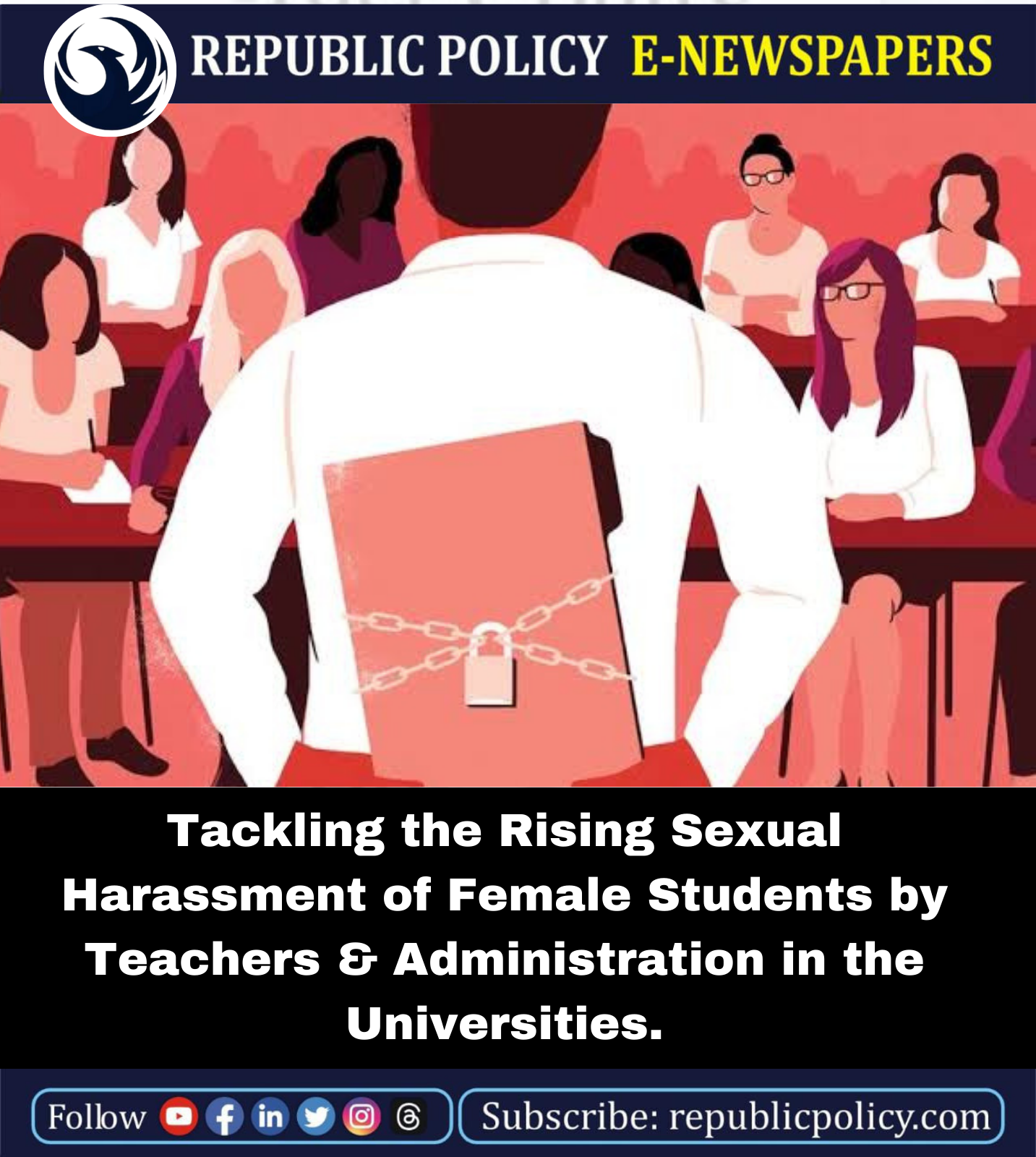

Women harassment in Pakistani universities is a serious and widespread issue that affects the academic performance, mental health, and safety of female students and staff. According to a report by Eduvision, 82% of female harassment reported cases are by university students against teachers. Some of the factors that contribute to this problem are the patriarchal culture, the lack of awareness and education, the power imbalance between teachers and students, and the inadequate policies and mechanisms to prevent and address harassment.
There are several administrative and other strategies that can be implemented to control women harassment in Pakistani universities. There is a need to adopt a clear and comprehensive policy on harassment, sexual harassment, discrimination and abuse of authority that applies to all staff, students, contractors and visitors. The policy should define the prohibited conduct, the reporting procedures, the investigation process, the protection measures, and the sanctions for perpetrators.
Then, establishing a dedicated unit or office to deal with harassment complaints, provide support and counseling to survivors, conduct awareness-raising and training activities, and monitor the implementation of the policy is essential.
Creating a safe and confidential reporting mechanism that allows survivors to report harassment without fear of retaliation or stigma is also important to control women harassment. The mechanism should also ensure that complaints are handled promptly, impartially and sensitively by trained personnel.
It is also critical to provide essential services for survivors of harassment, such as medical care, legal aid, psychological counseling, and emergency shelter. These services should be accessible, affordable, and responsive to the needs and preferences of survivors.Then, engaging in prevention efforts that aim to change the attitudes, norms and behaviors that enable harassment is also vital. This can include conducting campaigns, workshops, seminars, dialogues, and other activities that raise awareness about harassment, promote gender equality and respect, and challenge stereotypes and myths.
There is also a need to strengthening the accountability and oversight mechanisms that ensure that the policy is enforced effectively and consistently. This can include conducting regular audits, reviews, surveys, and evaluations of the policy implementation, as well as publishing reports on the progress and challenges.
These are some of the possible strategies that can help reduce women harassment in Pakistani universities. However, it is important to note that these strategies require the commitment and collaboration of all stakeholders, including the government, the university administration, the faculty, the students, the civil society, and the media. Only by working together can we create a safe and conducive environment for women’s education.