
By Dr Imtiaz
In a medical odyssey that baffled even the experts, a squirming worm was plucked from the brain of an Australian woman. Neurosurgeon Hari Priya Bandi found herself embroiled in this mysterious case while investigating the woman’s perplexing symptoms.
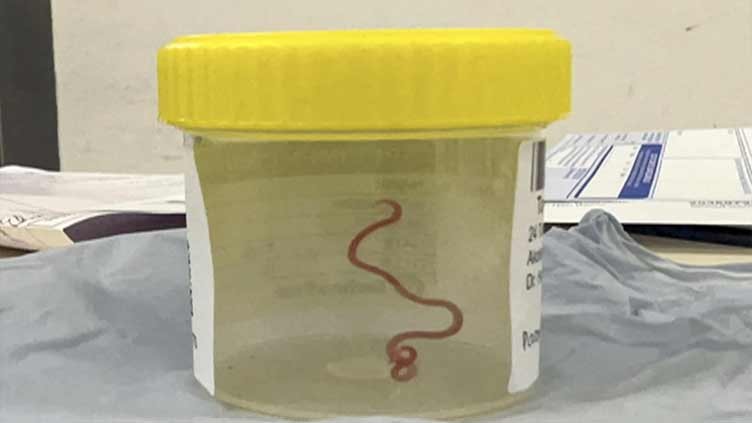
This extraordinary episode unfolded at Canberra Hospital last year. Surgeon Hari Priya Bandi was in the midst of performing a biopsy, probing through a hole in the skull of a 64-year-old patient. To her astonishment, she employed forceps to extract a parasite, which stretched an astounding 8 centimeters (or approximately 3 inches) in length.
One can only imagine the surreal moment as Bandi articulated her thoughts, “What is that? It doesn’t make any sense. But it’s alive and moving.” Her discovery, narrated in The Canberra Times newspaper, sent shockwaves through the operating room. The enigmatic creature’s vitality was undeniable, continuing to writhe and squirm in her grasp, an unnerving sight that left her entire team feeling queasy.
This creature, as it turns out, was the larva of an Australian native roundworm, a species previously unknown to parasitize humans. Identified as Ophidascaris robertsi, these worms are typically found in the company of carpet pythons, not nestled within the human brain.
The saga of this unexpected brain-dwelling worm has now been immortalized in an article authored by Bandi and Canberra’s infectious diseases physician, Sanjaya Senanayake. Their findings, a testament to the extraordinary nature of the case, have been featured in the latest edition of the journal Emerging Infectious Diseases.
Senanayake, recalling the fateful day when the worm made its appearance, recounted his bewilderment, “I got a call saying: ‘We’ve got a patient with an infection problem. We’ve just removed a live worm from this patient’s brain.'” The shockwaves from this discovery reverberated not only in the operating room but across the medical community.
The story of this patient begins with a troubling descent into forgetfulness and worsening depression over the course of three months. Her journey led her to the hospital, where scans of her brain revealed troubling alterations.
The enigma deepens as we grapple with the questions that arise from this bizarre case. How did this peculiar worm find its way into her brain, and what could have triggered such an invasion? These queries hang in the air, awaiting answers that might shed light on this peculiar medical conundrum.
As the medical world endeavors to comprehend the inexplicable, one can’t help but marvel at the mysteries that continue to unfold within the realm of human health. The tale of the brain-dwelling worm serves as a poignant reminder that even in the age of advanced medicine, nature occasionally springs surprises that challenge our understanding and leave us in awe of the intricate complexities of life.
In a curious tale that unfolded over the past year, the medical world has been grappling with a perplexing mystery involving an Australian woman. Her journey began with a series of troubling symptoms that eventually led to a brain biopsy. What doctors anticipated was either cancer or an abscess turned into an astonishing discovery that left even seasoned medical professionals astounded.
It all started a year ago when this woman sought help at her local hospital in the southeastern region of New South Wales. Her complaints were diverse: abdominal pain, bouts of diarrhea, an unrelenting dry cough, and nights plagued by uncomfortable sweats. The litany of symptoms painted a grim picture, and her condition remained an enigma that baffled medical practitioners.
As the medical team delved into her case, they leaned towards an immunological condition as the most likely culprit. Despite exhaustive efforts, the cause remained elusive, and the patient’s condition continued to deteriorate. What they couldn’t fathom at the time was that an extraordinary revelation lay in store, one that would challenge the boundaries of medical understanding.
The turning point arrived when the decision was made to conduct a brain biopsy. It was a measure of last resort, a desperate attempt to uncover the underlying cause of this woman’s deteriorating health. The medical community held its breath as the biopsy commenced, expecting either a cancerous growth or a deeply concerning abscess.
However, fate had other plans. In a dramatic twist of events, the biopsy yielded an outcome that defied all logic. Rather than a tumor or abscess, a bizarre and unprecedented discovery was made. The operating neurosurgeon, Hari Priya Bandi, found herself facing an inconceivable scenario. As she deftly wielded her forceps, what she extracted from the patient’s brain left her and the entire surgical team dumbfounded. A living, wriggling creature, measuring a substantial 8 centimeters (approximately 3 inches) in length, had taken up residence in the frontal region of the woman’s brain.
The creature in question, as it turns out, was the larva of a native Australian roundworm that had hitherto never been documented as a human parasite. This peculiar worm, identified as Ophidascaris robertsi, is typically associated with carpet pythons.
The saga of this brain-invading worm has now been immortalized in an article authored by Dr. Bandi and Dr. Sanjaya Senanayake, an infectious diseases physician from Canberra. Their findings, published in the journal Emerging Infectious Diseases, are nothing short of extraordinary.
Dr. Senanayake, recalling the moment of revelation, described the collective shock in the operating theater. “Suddenly, with her (Bandi’s) forceps, she’s picking up this thing that’s wriggling. She and everyone in that operating theater were absolutely stunned.”
The enigma deepens as we ponder how this bizarre intruder could have found its way into the most unexpected of homes—the human brain. The patient’s perplexing symptoms, coupled with the brain biopsy results, have left medical professionals grappling with a series of questions. How did this alien visitor reach her brain, and what prompted its sudden appearance?
Scientists have pieced together a tentative theory. The eggs of these peculiar worms are typically shed in snake droppings. These droppings are often consumed by small mammals, thereby continuing the life cycle. Subsequently, when snakes feast on these mammals, the cycle perpetuates.
Here’s where the pieces of the puzzle start to fall into place. The woman, residing in proximity to a carpet python habitat, forages for warrigal greens, a type of native vegetation. It is surmised that during this process, she either ingested the eggs from the vegetation itself or encountered contaminated hands, leading to an inadvertent transmission into her system.
This medical enigma serves as a stark reminder of the unpredictability and intricacy of the natural world. It reminds us that even in the age of advanced medicine and scientific discovery, nature continues to spring surprises that test the boundaries of our understanding. The tale of the brain-invading worm, a saga that left seasoned medical professionals flabbergasted, serves as an ode to the complexity of life and the mysteries that continue to unravel within the human body.
In a curious tale that unfolded over the past year, the medical world has been grappling with a perplexing mystery involving an Australian woman. Her journey began with a series of troubling symptoms that eventually led to a brain biopsy. What doctors anticipated was either cancer or an abscess turned into an astonishing discovery that left even seasoned medical professionals astounded.
It all started a year ago when this woman sought help at her local hospital in the southeastern region of New South Wales. Her complaints were diverse: abdominal pain, bouts of diarrhea, an unrelenting dry cough, and nights plagued by uncomfortable sweats. The litany of symptoms painted a grim picture, and her condition remained an enigma that baffled medical practitioners.
As the medical team delved into her case, they leaned towards an immunological condition as the most likely culprit. Despite exhaustive efforts, the cause remained elusive, and the patient’s condition continued to deteriorate. What they couldn’t fathom at the time was that an extraordinary revelation lay in store, one that would challenge the boundaries of medical understanding.
The turning point arrived when the decision was made to conduct a brain biopsy. It was a measure of last resort, a desperate attempt to uncover the underlying cause of this woman’s deteriorating health. The medical community held its breath as the biopsy commenced, expecting either a cancerous growth or a deeply concerning abscess.
However, fate had other plans. In a dramatic twist of events, the biopsy yielded an outcome that defied all logic. Rather than a tumor or abscess, a bizarre and unprecedented discovery was made. The operating neurosurgeon, Hari Priya Bandi, found herself facing an inconceivable scenario. As she deftly wielded her forceps, what she extracted from the patient’s brain left her and the entire surgical team dumbfounded. A living, wriggling creature, measuring a substantial 8 centimeters (approximately 3 inches) in length, had taken up residence in the frontal region of the woman’s brain.
The creature in question, as it turns out, was the larva of a native Australian roundworm that had hitherto never been documented as a human parasite. This peculiar worm, identified as Ophidascaris robertsi, is typically associated with carpet pythons.

Check out our monthly English and Urdu magazines on Homepage
The saga of this brain-invading worm has now been immortalized in an article authored by Dr. Bandi and Dr. Sanjaya Senanayake, an infectious diseases physician from Canberra. Their findings, published in the journal Emerging Infectious Diseases, are nothing short of extraordinary.
Dr. Senanayake, recalling the moment of revelation, described the collective shock in the operating theater. “Suddenly, with her (Bandi’s) forceps, she’s picking up this thing that’s wriggling. She and everyone in that operating theater were absolutely stunned.”
The enigma deepens as we ponder how this bizarre intruder could have found its way into the most unexpected of homes—the human brain. The patient’s perplexing symptoms, coupled with the brain biopsy results, have left medical professionals grappling with a series of questions. How did this alien visitor reach her brain, and what prompted its sudden appearance?
Scientists have pieced together a tentative theory. The eggs of these peculiar worms are typically shed in snake droppings. These droppings are often consumed by small mammals, thereby continuing the life cycle. Subsequently, when snakes feast on these mammals, the cycle perpetuates.
Here’s where the pieces of the puzzle start to fall into place. The woman, residing in proximity to a carpet python habitat, forages for warrigal greens, a type of native vegetation. It is surmised that during this process, she either ingested the eggs from the vegetation itself or encountered contaminated hands, leading to an inadvertent transmission into her system.
This medical enigma serves as a stark reminder of the unpredictability and intricacy of the natural world. It reminds us that even in the age of advanced medicine and scientific discovery, nature continues to spring surprises that test the boundaries of our understanding. The tale of the brain-invading worm, a saga that left seasoned medical professionals flabbergasted, serves as an ode to the complexity of life and the mysteries that continue to unravel within the human body.
Intriguing and unusual medical cases like the discovery of a wriggling worm in a woman’s brain remind us of the endless mysteries the human body can present. This extraordinary incident underscores the importance of continuous medical research and vigilance, pushing the boundaries of our understanding. As we ponder this remarkable story, let us remain curious and committed to exploring the marvels and complexities of the human body, seeking answers to questions that challenge our knowledge.
Subscribe our website for latest updates:
https://republicpolicy.com/shop/
Read More