
By Misbah
As the automobile industry hurtles into the electric age, European car manufacturers find themselves at a pivotal juncture. They must demonstrate their mettle in competing with the fresh entrants from Asia. This challenge spans an array of aspects, from product innovation and financial strategies to asserting control over the supply chain. Insights from industry analysts and executives, presented at Munich’s IAA mobility show, illuminate the road ahead.
A striking statistic underscores the shifting dynamics: approximately 41% of exhibitors in this year’s event are Asia-based. Within this statistic, Chinese companies have surged, more than doubling their representation. Among these Asian luminaries are BYD, CATL, and XPeng, each making waves in the realms of batteries and electric vehicle (EV) production.
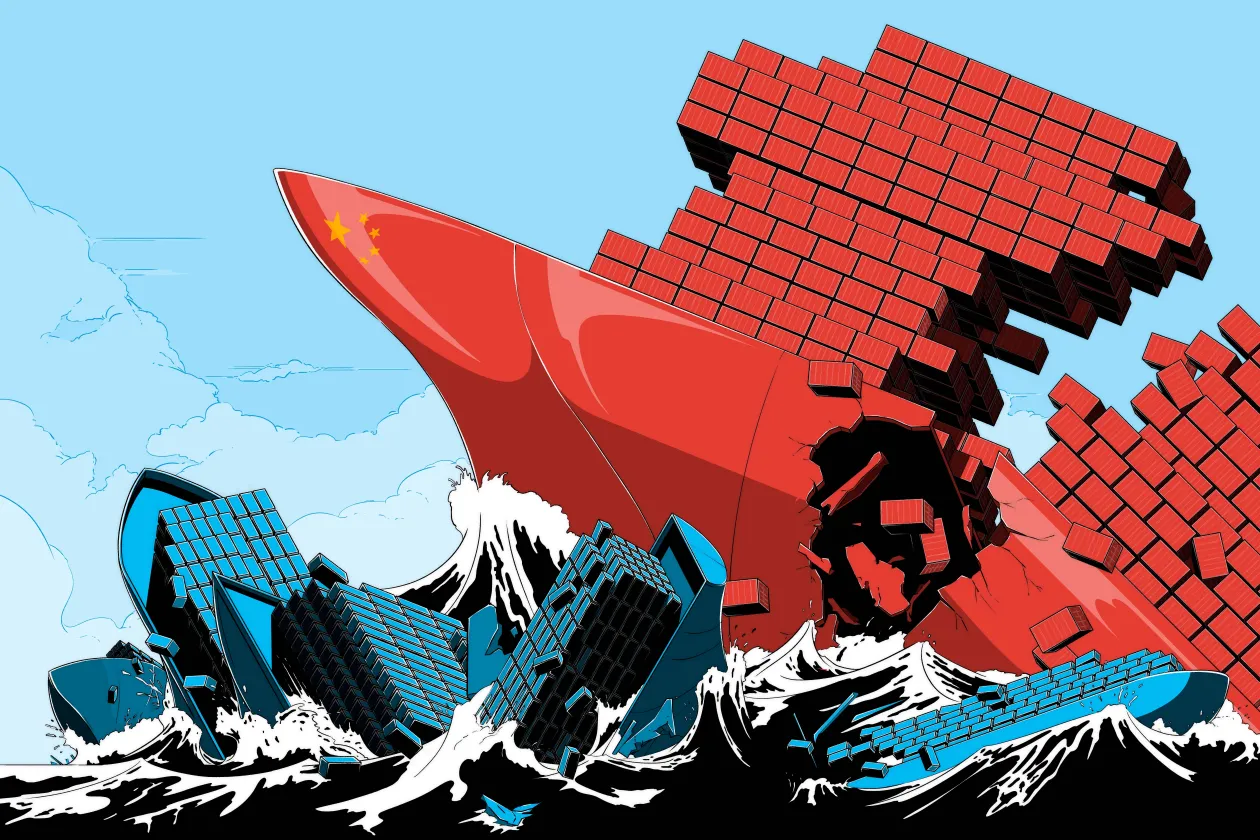
In the midst of this transformation, a resounding message echoes through the halls of industry wisdom: Europe must shed its lingering naivety on the macroeconomic front, particularly in its dealings with China. Gilles Le Borgne, the engineering chief at Renault, leaves no room for ambiguity. He emphatically points to China’s stranglehold over the entire battery supply chain, a formidable position that demands Europe’s immediate attention.
Yet, this gathering of automotive titans is not confined to the confines of Munich alone. A groundbreaking development is on the horizon. Chinese and German stalwarts, alongside top German automakers and suppliers, are set to join forces with China’s LeapMotors and Horizon Robotics. Together, they will take the stage for a Chinese EV conference, a historic first, to be held outside China. This momentous event, scheduled for Wednesday and Thursday as part of the IAA, promises to reshape the automotive landscape on a global scale.
In this electrifying showdown, the European carmakers must unveil their strategies, both in terms of products and finances, that will enable them to stand toe-to-toe with their Asian counterparts. The challenge is multifaceted, encompassing not only the creation of cutting-edge electric vehicles but also the financial prowess to navigate this transformative era successfully.
The Asian influence on the automotive landscape is undeniable, as is evident from the significant representation at this year’s IAA mobility show. Asia, particularly China, has surged to the forefront of the electric vehicle revolution. Companies like BYD, CATL, and XPeng are not just players; they are setting the pace and defining the rules of the game.
Europe, traditionally a stronghold of automotive innovation, must adapt rapidly to this evolving landscape. The continent cannot afford to rest on its laurels, as the competition is fierce, and the stakes are higher than ever. Gilles Le Borgne, the engineering head at Renault, delivered a stark wake-up call. He urged Europe to shed any lingering naivety and confront the economic realities of competing with China.
Central to this competition is the control over the supply chain, particularly the battery supply chain. China’s dominance in this crucial aspect is undeniable. The full battery supply chain is firmly within China’s grasp, giving it a distinct advantage in the electric vehicle race.
In this transformative period, Europe must demonstrate not only its technical prowess but also its financial acumen. The development of cutting-edge electric vehicles requires significant investments, and European manufacturers must navigate the financial intricacies of this new era effectively.
Beyond product innovation and financial strategy, Europe must assert control over its supply chain. The supply chain is the lifeblood of any industry, and the automotive sector is no exception. The ability to secure a stable supply of critical components, particularly batteries, is paramount.
China’s remarkable ascent in the electric vehicle sector is underscored by its formidable presence at Munich’s IAA mobility show. The number of Chinese companies participating has more than doubled, a testament to the nation’s commitment to leading the electric vehicle revolution.
This global gathering of automotive leaders is poised to redefine the industry. Chinese and German players, along with top German automakers and suppliers, are joining forces for a historic event—the first-ever Chinese EV conference to be held outside China. This momentous occasion, integrated into the IAA, symbolizes the changing tides of the automotive industry.
As Europe stands on the precipice of this electrifying future, it must rise to the occasion. The challenges are substantial, from product innovation and financial strategy to supply chain control. However, they are not insurmountable. With determination and innovation, Europe can navigate this transformative era and emerge as a formidable force in the electric age.
The electric vehicle revolution is not just a technological shift; it’s a financial one too. European carmakers must ensure their financial strategies are as robust as their product innovation. Investment in research and development, production facilities, and infrastructure is essential to compete effectively in this new era.
China’s role in this revolution cannot be underestimated. The nation’s influence spans the entire electric vehicle ecosystem, from battery production to vehicle manufacturing. European carmakers must acknowledge China’s dominance and find ways to collaborate and compete effectively.
Don’t forget to Subscribe our channel & Press Bell Icon.
Control over the supply chain is crucial in the electric age. The ability to secure a stable supply of key components, especially batteries, is a strategic advantage. Europe must control over the supply chain is crucial in the electric age. The ability to secure a stable supply of key components, especially batteries, is a strategic advantage. Europe must take proactive steps to ensure it doesn’t become overly reliant on external sources for critical components. This includes fostering domestic production, investing in research and development, and forming strategic partnerships with key suppliers. By doing so, Europe can strengthen its position in the electric vehicle market and remain competitive on the global stage.
The upcoming conference promises a battleground where price wars will take center stage. Tesla is gearing up to unveil its enhanced Model 3, poised to hit the European market in October with a price tag of 42,990 euros ($46,400). This move is set to intensify competition and ignite consumer interest.
Mercedes-Benz is not one to be left behind in this fierce competition. It will showcase its CLA compact class, while BMW will present its Neue Klasse. Both giants have set their sights on achieving greater range and efficiency while dramatically reducing production costs. This dual approach signifies a strategic shift, with cost-conscious consumers poised to benefit.
Volkswagen, a major player in the automotive arena, has taken a different route. The company unveiled a showcar for its CUPRA brand, offering a glimpse into its new design-oriented strategy. Notably, the company’s chief designers are poised to work closely with its 10 brand CEOs. This collaboration aims to create distinctive identities for each brand under the Volkswagen umbrella, fostering stronger differentiation in an increasingly competitive landscape.
The dynamics of the automotive industry have evolved significantly. What was once a platform for the German car industry to flaunt its formidable position has now transformed into a global stage where progressive players from around the world converge. China, in particular, has emerged as a formidable contender, reshaping the landscape and driving innovation.
As the automotive landscape undergoes a profound transformation, competition in the industry is heating up. Price has become a focal point, and companies are vying to offer the most competitive options to consumers. Tesla, renowned for its electric vehicles, is set to make waves with its upgraded Model 3. This sleek and efficient car is slated to hit European markets in October, with a price point that is sure to turn heads at 42,990 euros ($46,400). The battle for affordability and value is well and truly underway.
Mercedes-Benz, a name synonymous with luxury and innovation, is also stepping up to the plate. The company is poised to unveil its CLA compact class, a vehicle that promises to redefine efficiency and range. Likewise, BMW is entering the arena with its Neue Klasse, signaling a significant shift in its production strategy. Both companies are committed to enhancing efficiency while simultaneously reducing production costs. This strategic move is designed to capture the attention of cost-conscious consumers, setting the stage for an exciting showdown in the automotive market.

Check out our monthly English and Urdu magazines on Homepage
Volkswagen, a heavyweight in the automotive industry, is taking a different approach. The company recently introduced a showcar for its CUPRA brand, offering a glimpse into its future direction. Volkswagen is embracing a design-oriented strategy that emphasizes collaboration between its chief designers and the CEOs of its 10 brands. This approach aims to create distinct identities for each brand within the Volkswagen family, fostering greater differentiation and innovation.
However, the automotive landscape is no longer dominated solely by German manufacturers showcasing their prowess. It has evolved into a global arena where progressive players from across the globe converge. China, in particular, has emerged as a powerful force, reshaping industry dynamics and pushing the boundaries of innovation.
Fabian Brandt, a consultant from Oliver Wyman, aptly summarizes the shift in dynamics. He notes that what was once a stage for the German car industry to flex its muscles has now evolved into a meeting ground for equals, with forward-thinking players from around the world, notably China, driving the industry’s transformation. This transformation brings new opportunities and challenges, propelling the automotive industry into an era of unprecedented competition and innovation.
As the curtain rises on this electrifying conference, the automotive industry braces itself for a battle of wits and innovation. Price competitiveness is the name of the game, with Tesla’s upgraded Model 3 poised to make a grand entrance in the European market. Mercedes-Benz and BMW are not to be outdone, unveiling their respective offerings designed to redefine efficiency while curbing production costs. Volkswagen, on the other hand, takes a design-centric approach, emphasizing collaboration to create unique brand identities.
The transformation of the automotive landscape is undeniable. It is no longer the exclusive domain of German automakers showcasing their dominance. Instead, it has become a global platform where progressive players, especially those from China, are shaping the industry’s future. This shift brings with it a sense of equality, where innovation and competition know no boundaries. The automotive industry is in for an exhilarating ride, with new contenders and fresh perspectives driving its evolution.
In conclusion, the Munich IAA mobility show underscores the intense competition in the electric vehicle industry. European carmakers face a formidable challenge from their Asian counterparts, particularly from China, which dominates the EV supply chain. To thrive in this new era, European automakers must innovate not only in their product offerings but also in their financial strategies and supply chain management. The electric age has ushered in a new global landscape, where adaptability and forward-thinking are the keys to success.
Subscribe our website for latest updates:
https://republicpolicy.com/shop/
Read More