
Tariq Mahmood Awan
Is justice divine? Justice is a quality that is often associated with Divinity, as many religions and traditions believe that the supreme source of law and morality is God or gods. However, justice is a complex concept, and different interpretations may lead to varying renditions of Divinity. In this article, I will briefly explore some aspects and challenges relating justice to Divinity in a polite argument.
One aspect of relating justice to Divinity is the source and authority of justice. Some may argue that justice is the will or command of God or gods and that divine law is superior to human law. This view may imply that Divinity is infallible, immutable, and incomprehensible and that humans should obey and submit to the divine will without question. However, others may contend that justice is based on the nature or reason of God or gods and that divine law is compatible with natural law and human reason. This view may suggest that Divinity is rational, consistent, and accessible and that humans can discover and apply the divine law through their faculties.
Another aspect of relating justice to Divinity is the content and scope of justice. Some claim that justice is universal, absolute, and objective and equally applies to all beings and situations. This view may imply that Divinity is impartial, fair, and consistent, and it rewards the good and punishes the evil according to a corrected standard. However, others may assert that justice is relative, contextual, and subjective and depends on the circumstances and perspectives of the parties involved. This view may suggest that Divinity is compassionate, flexible, and diverse and accommodates the needs and preferences of different individuals and groups.
A third aspect of relating justice to Divinity is the purpose and outcome of justice. A few may maintain that justice is retributive, punitive, and corrective and aims to restore the balance and order disrupted by wrongdoing. This view may imply that Divinity is powerful, strict, and demanding and that it enforces the law and imposes consequences for violations. However, others may argue that justice is restorative, healing, and transformative and seeks to repair the harm and reconcile the relationships damaged by wrongdoing. This view may suggest that Divinity is merciful, forgiving, and generous and offers grace and redemption for repentance.
Please, subscribe to the official website of republicpolicy.com
Of course, these are not exhaustive or mutually exclusive views and may require more nuances and complexities. Then, the main point is that justice is not a monolithic or static concept but a dynamic and contested one and that different views of justice may reflect different views of Divinity. Therefore, it may be wise to be humble, respectful, and open-minded when discussing or applying justice about Divinity. Hence, the majority believe that justice is divine. It is a delegated divine value to humanity and, thus, is a sacred trust. Therefore, Divinity has incarnated a sense of justice in humans, an ordained command to dispense justice.
Does it extend a fundamental question? When humans have a sense of justice, why do they not implement it? This is a complex and challenging question that requires a lot of reflection and analysis. I will provide some possible answers but cannot claim a definitive or comprehensive explanation. Cultural reasons are the primary reasons to dissect the sense of justice that evolved among humans. Different cultures may have different conceptions of what justice means and how it should be applied. For example, some cultures may value collective rights and responsibilities over individual ones or vice versa. Some cultures may emphasize harmony and forgiveness over retribution and punishment. Some cultures may have a more hierarchical or egalitarian structure that affects how power and authority are distributed and exercised. These cultural differences may lead to conflicts or misunderstandings when people from different backgrounds interact or cooperate on justice issues.
Economic reasons are always vital. Economic factors may create incentives or constraints that affect how people pursue or implement justice. For instance, poverty, inequality, and scarcity may increase the competition for resources and opportunities, leading to more conflicts and grievances. People who are disadvantaged or marginalized may face barriers to accessing justice or may resort to violence or corruption to survive or improve their situation. People who are privileged or powerful may use their influence or wealth to manipulate or evade justice or to exploit others for their benefit. Economic systems also shape how people perceive and value justice, such as prioritizing efficiency, equity, or growth.
Please, subscribe to the monthly magazines of republicpolicy.com
Political reasons play a significant role in shaping the law and its implementation. Political factors may influence how society defines, enforces, and challenges justice. For example, political institutions may provide the legal framework and the mechanisms for delivering justice, such as constitutions, laws, courts, police, and prisons. However, these institutions may also be subject to corruption, bias, capture, or abuse by political actors seeking to advance their interests or agendas. Political processes may also enable or constrain the participation and representation of different groups and individuals in decision-making and policy-making on justice issues. Political conflicts may also generate violence or instability that undermines the rule of law and the protection of human rights.
Administrative reasons shape the sense of justice in a society. Administrative factors may affect the quality and effectiveness of justice delivery and implementation. For instance, administrative capacity may determine how well justice institutions can perform their functions, such as investigating, prosecuting, adjudicating, and enforcing cases. Administrative efficiency may influence how timely and accessible justice services are for the public, such as reducing delays, costs, and bureaucracy. Administrative accountability may ensure how transparent and responsive justice institutions are to the needs and expectations of the people they serve, such as providing feedback, redress, and oversight.
Personal reasons produce a subjective sense of justice. Individual factors shape how people understand and act on justice issues. For example, personal values may guide what people consider right or wrong, fair or unfair, moral or immoral. Personal emotions may affect how people react to situations of injustice, such as anger, resentment, guilt, shame, empathy, or compassion. Personal motivations such as self-interest, altruism, revenge, forgiveness, or recognition may drive how people pursue or implement justice. Personal experiences may also influence how people relate to justice issues, such as being a victim, a perpetrator, a witness, or a bystander.
Accordingly, dispensing justice is the ultimate divine challenge for humans. Apart from the reasons assessed earlier, there are multiple reasons why humans do not implement the sense of justice that Divinity endowed them with. However, these reasons are not mutually exclusive or exhaustive. They may interact with each other in complex and dynamic ways that vary across contexts and cases. Moreover, these reasons are not deterministic or fatalistic. They do not imply that humans are incapable or unwilling to implement justice. Instead, they suggest that humans face many challenges and dilemmas in doing so. Therefore, it is essential for humans to critically examine these reasons and seek ways to overcome the challenges. Because justice is divine and a delegated trust, humans must dispense it. Accordingly, they should pray that Divinity may not deprive them of the sense of justice.
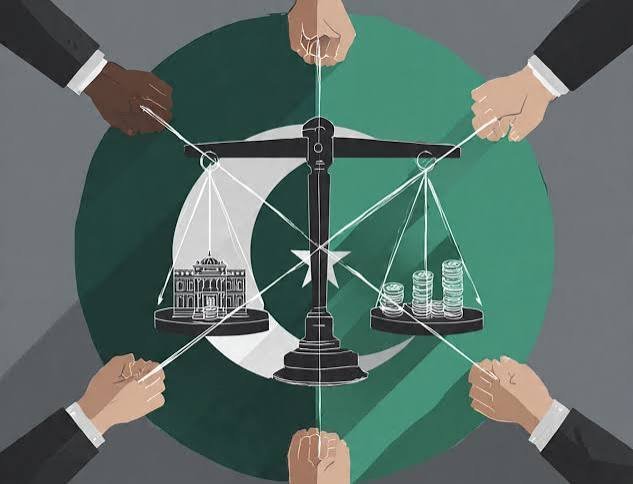
In the Pakistani context, the dispensation of justice is the most challenging task. Yet, there is no respite from evasion. Justice has to be served, what come may! Accordingly, Pakistani civil servants, judges, executives, institutional functionaries and others have no choice except to dispense justice. Justice is divine, and a delegated trust, thus, does not carry any weakness, concession, compromise or evasion.
Please, subscribe to the YouTube channel of republicpolicy.com