
Tariq Mahmood Awan
The novel Lord of the Flies always provokes me to know deeply about human nature because it has been the most contested topic in history.
Lord of the Flies, a novel by William Golding, was published in 1954 and talks in detail about the complexity of human nature. The book explores the dark side of human nature and underscores the implication of logic and intelligence as tools for trading with the hodgepodge of existence. However, I am not in total agreement with the harsh stance of William Golding. I believe human nature is inconsistent depending upon multiple factors and might be more tilted towards good. Let’s explore it further!
Human nature is a complex and controversial topic debated for centuries by philosophers, psychologists, biologists, and other scholars. There is no definitive or universal answer to human nature, as different perspectives may emphasize various aspects of human behaviour, cognition, emotion, and physiology. However, firstly, there is a need to evaluate human nature physiologically: One can evaluate human nature in terms of the biological and genetic factors that influence human traits and functions. For example, one can examine how the human brain, nervous system, hormones, genes, and evolution shape human abilities, preferences, instincts, and tendencies. One can also explore how human physiology interacts with environmental factors, such as nutrition, disease, stress, and climate, to affect human health and well-being. One can also compare and contrast human physiology with that of other animals, especially primates, to identify the similarities and differences that make humans unique or not.
Please, subscribe to the official website of republicpolicy.com
Then, it requires dissecting human nature emotionally. There is a need to evaluate human nature in terms of the emotional and affective aspects of human experience. For example, one can analyze how humans express, regulate, and communicate their emotions, such as happiness, sadness, anger, fear, love, etc. One can also investigate how emotions influence human motivation, decision-making, behaviour, and social relationships. One can also explore how emotions are shaped by cultural norms, values, and expectations, as well as by individual personality and temperament.
Physically evaluating human nature in terms of human existence’s physical and material aspects is vital. For example, one can observe how humans use their bodies to perform various actions and activities, such as walking, running, dancing, playing, working, etc. One can also examine how humans manipulate and transform their physical environment to meet their needs and desires, such as building shelters, tools, weapons, art, etc. One can also study how humans relate to their physical surroundings and resources, such as land, water, plants, animals, etc.
It is significant to measure human nature psychologically. Human nature can be evaluated in terms of the mental and cognitive aspects of human thought and behaviour. For example, one can analyze how humans acquire, process, store, and use information, such as perception, attention, memory, learning, language, reasoning, problem-solving, creativity, etc. One can also investigate how humans develop and change throughout their lifespan, such as infancy, childhood, adolescence, adulthood, and old age. One can also explore how humans construct and maintain their sense of self and identity, such as personality, values, beliefs, attitudes, goals, etc.
Then, there are other perspectives which are equally important. One can evaluate human nature in terms of other perspectives that are relevant to one’s own interests or preferences. For example, one can apply different philosophical approaches to question the essence and purpose of human existence, such as existentialism, humanism, or nihilism. One can also use different sociological or anthropological frameworks to understand the social and cultural dimensions of human life, such as norms, roles, institutions, groups, networks, etc. One can also use different ethical or moral theories to evaluate the values and principles that guide human action and judgment, such as utilitarianism, deontology, or virtue ethics.
In conclusion, human nature is a multifaceted and contested concept that can be evaluated and dissected from various perspectives. However, these perspectives can only partially capture the whole or the truth of human nature, as human nature is not a fixed or simple entity but rather a dynamic and complex one that reflects the diversity and variability of human experience.
Please, subscribe to the monthly magazines of republicpolicy.com
Is human nature good or evil? There is no definitive answer to whether human nature is good or evil, as different theories have different perspectives and criteria for evaluating human behaviour and morality. Being a contested topic, therefore, there are multiple theories on the good and evil of human nature.
A 17th-century English philosopher, Thomas Hobbes, argued that human nature is inherently selfish, violent, and competitive. He believed that humans are driven by a constant fear of death and a desire for power, which leads them to conflict and war with each other. He claimed that without a strong and absolute government, human life would be “solitary, poor, nasty, brutish, and short”. Hobbes’s theory implies that human nature is evil and needs to be restrained by external laws and authority.
Jean-Jacques Rousseau, an 18th-century French philosopher, argued that human nature is inherently good, peaceful, and cooperative. He believed that humans are born with natural innocence and compassion, which the artificial and oppressive institutions of society corrupt. He claimed that humans can regain their original goodness by living in a state of nature, where they are free from the constraints of civilization and follow their natural impulses. Rousseau’s theory implies that human nature is good and needs to be liberated from external influences.
Aristotelian theory has been appreciated more for assessing human nature. Aristotle, a 4th-century BC Greek philosopher, argued that human nature is neither good nor evil but rather a potential for both. He believed that humans are rational animals who have the capacity to reason and choose their actions. He claimed that humans can achieve happiness and virtue by following the golden mean: a balance between extremes of excess and deficiency. Aristotle’s theory implies that human nature is amoral and needs to be cultivated by education and habit.
Lastly, the Freudian theory has been recognized as the most practical theory in determining human nature. Sigmund Freud, a 19th-century Austrian psychologist, argued that human nature is composed of three parts: the ID, the ego, and the superego. He believed that the ID is the primitive and instinctual part of the mind that seeks pleasure and avoids pain. The ego is the rational and realistic part of the mind that mediates between the id and reality. The superego is the moral and idealistic part of the mind that represents the values and norms of society. He claimed that humans are constantly in conflict between these three parts, which results in anxiety and neurosis. Freud’s theory implies that human nature is evil and needs to be controlled by internal mechanisms.
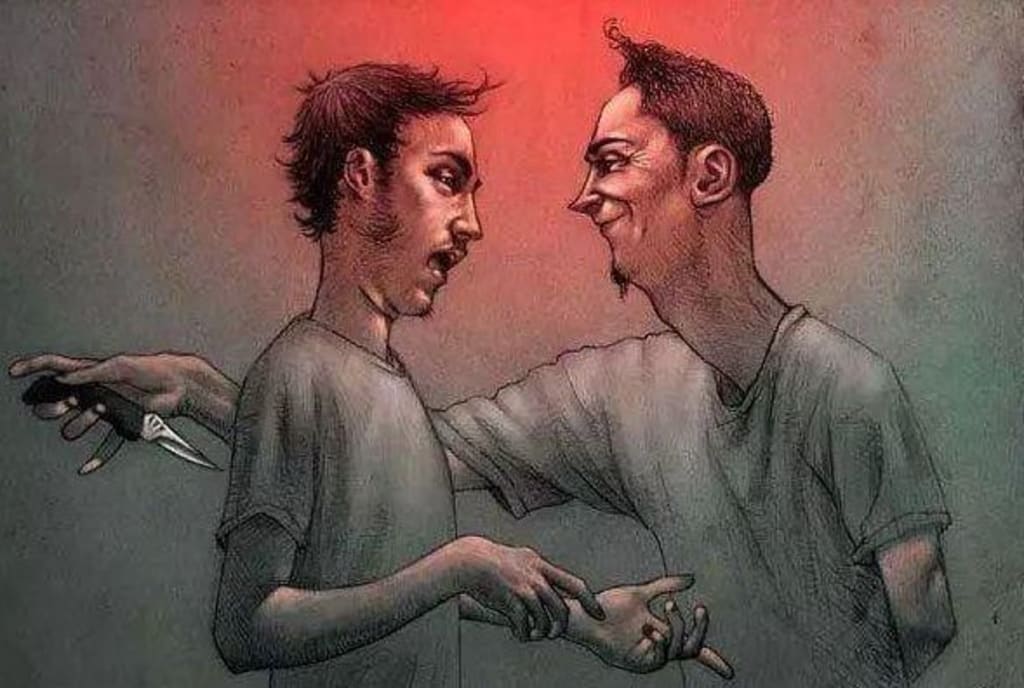
As one can see, there are various ways to approach the question of human nature. Each theory has its strengths and weaknesses, and none of them can fully capture the complexity and diversity of human beings. Therefore, it is essential to critically evaluate each theory and consider multiple perspectives when studying human nature. Hence, human nature is inconsistent, irregular and unreliable.
Can human nature evolve or change? The question of whether human nature can evolve or change is a complex and multifaceted one that involves various disciplines and perspectives.
Biologically, human nature is shaped by the genetic and environmental factors that influence the development and functioning of the human body and brain. Human evolution results from natural selection, genetic drift, gene flow, and mutation that occur over long periods of time and affect the physical and behavioural traits of human populations. Some of these traits are adaptive and beneficial for survival and reproduction, while others are neutral or detrimental. Human evolution is not a linear or deterministic process but rather a dynamic and contingent one that depends on the changing conditions and challenges that humans face in different environments.
Psychologically, human nature is influenced by the cognitive and emotional processes that underlie human perception, learning, memory, reasoning, decision-making, motivation, and personality. Human psychology is also affected by the social and cultural contexts that shape human interactions, communication, cooperation, competition, conflict, and identity. Human psychology is not a fixed or static entity but rather a flexible and malleable one that can adapt and change according to the situations and demands humans encounter.
Please, subscribe to the YouTube channel of republicpolicy.com
Culturally, human nature is expressed by the symbols, values, norms, beliefs, practices, institutions, and artefacts that humans create and transmit across generations. Human culture is not a passive or homogeneous phenomenon but rather an active and diverse one that reflects the creativity and diversity of human groups and individuals. Human culture is not a separate or independent domain from biology or psychology but rather an integral and interactive one that influences and is influenced by them.
Therefore, human nature can be seen as a complex and dynamic system that evolves and changes through the interplay of biological, psychological, and cultural factors. Human nature is not a fixed or predetermined essence that defines what it means to be human, but rather a potential or possibility that enables humans to be different things in different times and places. Accordingly, whatever the potential is for evolution or change, humankind should adopt the values to develop their natures for the better.