
By Miss Javeria
Researchers are embarking on a cosmic journey that envisions the creation of highways on the Moon, aimed at revolutionizing lunar transportation. A recent study, featured in the journal Nature, presents a groundbreaking concept, suggesting the possibility of carving out roads on the Moon’s surface.
Laying the Foundations on the Lunar Horizon
As we set our sights on expanding the human presence in the solar system, the Moon emerges as a vital frontier for the next steps in this cosmic endeavor. However, lunar missions encounter a unique challenge – the low lunar gravity generates suspended dust when lunar rovers traverse its surface. This lunar dust poses a significant risk to exploration vehicle systems.
Illuminating the Cosmic Road Ahead
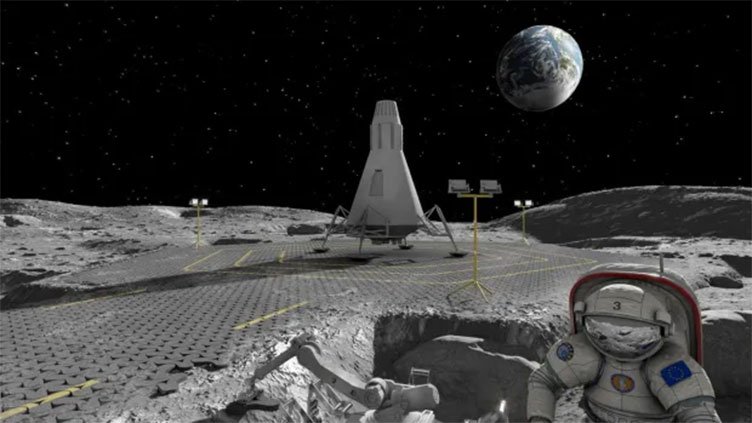
One ingenious solution emerges from the study’s findings: the construction of roads and landing pads on the lunar surface. The proposal hinges on the use of concentrated light as a paving mechanism for these lunar thoroughfares.
In a groundbreaking experiment, the research team harnessed the power of a high-energy CO2 laser, acting as a surrogate for the concentrated sunlight found on the Moon. They also used a lunar regolith analog, mimicking the composition of the lunar soil. (Regolith is another term for lunar soil, referring to the rocks and dust that constitute the Moon’s surface.)
Through meticulous testing and analysis, the researchers pinpointed a laser strength equivalent to lunar sunlight, marking a significant breakthrough in the quest to construct lunar roads.
A Cosmic Challenge: Lunar Rovers and Suspended Dust
Lunar missions come with their own set of cosmic challenges. The Moon’s unique conditions, particularly its low gravity, give rise to a peculiar phenomenon. When lunar rovers traverse the surface, they kick up suspended dust particles. These minuscule particles, in their hovering state, have the potential to disrupt the systems of exploration vehicles. This challenge necessitates innovative solutions that guarantee the safety and efficacy of lunar expeditions.
From Laser Beams to Lunar Highways
The ingenious proposal put forth in the research involves the use of concentrated light, in the form of lasers, to construct lunar roads. The central idea is to harness high-power CO2 lasers as a substitute for the concentrated sunlight found on the Moon. In conjunction with this, researchers employ a lunar regolith analog to replicate the lunar surface conditions accurately.
Mapping the Cosmic Pavement
The experiment, conducted by the research team, played a pivotal role in bringing this innovative concept to life. By using a high-energy CO2 laser as a stand-in for the Moon’s intense sunlight, researchers have taken a significant step forward in the development of lunar infrastructure. The lunar regolith analog, resembling the Moon’s surface composition, played a vital role in understanding the behavior of the proposed lunar roads under lunar conditions.
A Giant Leap for Lunar Transportation
This experiment’s results are nothing short of groundbreaking. Researchers have successfully identified a laser strength that replicates the intensity of lunar sunlight, a pivotal discovery that could change the course of lunar exploration. With the potential to pave the way for lunar highways and landing pads, this discovery could redefine how we navigate the Moon’s surface.
Cosmic Hurdles: The Lunar Environment
Navigating lunar terrain comes with a unique set of cosmic challenges. One of the most significant hurdles arises from the Moon’s low gravity, which results in the creation of suspended dust when lunar rovers are in motion. This seemingly innocuous dust can have far-reaching consequences as it has the potential to interfere with the functioning of exploration vehicles, posing a risk to lunar missions.
Shedding Light on the Lunar Solution
The ingenious solution proposed by the research involves the utilization of concentrated light for the construction of lunar roads. High-power CO2 lasers stand in for the intense lunar sunlight, while a lunar regolith analog replicates the lunar surface conditions.
A Quantum Leap in Lunar Infrastructure
The experiment conducted by the research team represents a significant stride in the development of lunar infrastructure. Through careful testing and analysis, they have identified a laser strength that mirrors the intensity of lunar sunlight, opening up exciting possibilities for the construction of lunar highways and landing pads.
Driving Towards the Cosmic Future
In the pursuit of expanding humanity’s presence in the solar system, the Moon takes center stage. However, with lunar gravity creating a challenge, the potential disruption caused by suspended dust poses a significant risk. The study’s innovative solution of constructing lunar roads using concentrated light offers a promising path forward. As we continue to push the boundaries of cosmic exploration, this discovery has the potential to redefine lunar transportation, making lunar highways a reality.
Lunar Roads Unveiled: A Revolutionary Leap in Cosmic Infrastructure
In a groundbreaking revelation, a recent study has demonstrated the potential for constructing colossal interlocking tiles on the Moon, paving the way for lunar roads and enhancing the maneuverability of lunar rovers.
A Lunar Vision Unveiled
The paper underscores the tremendous promise of this innovative technique, showcasing its ability to manufacture large interlocking tiles directly on the lunar surface, thereby revolutionizing the construction of lunar roads.
Unlocking the Lunar Secret
What’s the key insight from this study? It’s the possibility of crafting substantial tiles on the Moon that effortlessly interlock, akin to pieces of a cosmic puzzle. When seamlessly combined, these tiles form a road or pavement, laying the foundation for more efficient lunar rover mobility.
The Lunar Revolution: Tackling Cosmic Terrain
Picture this: lunar explorers with the ability to produce tiles approximately 250 millimeters (9.8 inches) in size. This leap in lunar infrastructure could significantly mitigate the ever-looming threat of harmful lunar dust wreaking havoc or obstructing vital equipment.
The Cosmic Odyssey Continues
With these pivotal findings, the research team embarks on the next phase of their cosmic journey. The focus now shifts towards refining the material composition of these revolutionary tiles, with an emphasis on bolstering their durability.
Piecing Together Cosmic Puzzles: Lunar Tiles on the Horizon
In an era of cosmic exploration, envisioning the creation of lunar roads was once a distant dream. However, the results of this study have transformed this dream into a tangible reality. The innovative technique showcased in this paper reveals a remarkable potential to manufacture large interlocking tiles directly on the lunar surface.
Unlocking Lunar Mysteries: The Heart of the Study
The study’s central revelation is profound: it introduces the concept of crafting sizeable lunar tiles that possess seamless interlocking capabilities. These tiles, when connected, form an intricate road or pavement structure, redefining lunar infrastructure.
A Cosmic Vision Realized: Lunar Mobility
Imagine the possibilities that come with this revolutionary technique. Lunar explorers could now fashion tiles, each approximately 250 millimeters (9.8 inches) in size. These interlocking pieces assemble to create functional lunar roads, a groundbreaking innovation set to reshape the way we navigate the Moon’s rugged terrain.
Defying Cosmic Challenges: Taming Lunar Dust
The lunar environment presents unique challenges, with one of the most prominent being the presence of disruptive lunar dust. This minuscule yet destructive force can compromise equipment and vehicles, making lunar exploration a risky endeavor. The introduction of these interlocking tiles promises to minimize the adverse effects of lunar dust, enhancing the resilience of lunar equipment.
A Cosmic Odyssey Continues: Beyond Lunar Roads
The discoveries made in this study are only the beginning of an ongoing cosmic odyssey. The research team’s next objective is to enhance the durability of these revolutionary lunar tiles. By perfecting the material composition, they are poised to usher in a new era of lunar infrastructure, advancing the frontiers of lunar exploration.
Cosmic Construction: Paving the Way on the Moon
In the realm of cosmic exploration, building lunar roads was once a distant aspiration. However, the groundbreaking findings of this study have transformed aspiration into reality. The innovative technique detailed in this paper unlocks the potential to create significant interlocking tiles directly on the lunar surface.
Lunar Legos: The Heart of the Discovery
At the core of this study lies a revolutionary revelation: the capacity to manufacture substantial lunar tiles with seamless interlocking capabilities. These tiles, when assembled, form intricate roadways and pavements, redefining lunar infrastructure as we know it.
A Cosmic Vision Unveiled: Mobility on the Moon
Envision the possibilities of this pioneering technique. Lunar pioneers can now fabricate tiles, each measuring around 250 millimeters (9.8 inches) in size. These interlocking pieces serve as the building blocks for functional lunar roads, introducing an innovative dimension to lunar exploration.
Defying Cosmic Adversity: Taming the Lunar Dust
The lunar landscape is fraught with unique challenges, most notably the ubiquitous lunar dust. While seemingly innocuous, this fine dust has the power to disrupt equipment and hinder exploration. The advent of interlocking tiles promises to combat the disruptive influence of lunar dust, strengthening the resilience of lunar mission equipment.
Continuing the Cosmic Odyssey: Advancing Lunar Infrastructure
The revelations stemming from this study mark the beginning of an ongoing cosmic odyssey. The research team’s next mission is to bolster the durability of these pioneering lunar tiles. Through material enhancements, they aim to usher in a new era of lunar infrastructure, driving the frontiers of lunar exploration.
In conclusion, the remarkable progress in lunar surface paving and road construction is a significant stride towards expanding human presence beyond our planet. The innovative approach of creating interlocking tiles directly on the lunar surface offers an exciting solution to the challenges posed by the Moon’s unique environment. This breakthrough not only enables easier mobility for lunar rovers but also mitigates the risks associated with suspended lunar dust. As we embark on the next phase of perfecting these lunar tiles and enhancing their durability, we also set our sights on the broader possibilities of constructing lunar infrastructure for future missions and exploration.
Suggestion: To realize the full potential of this pioneering technology, it is imperative that we continue to invest in research and development to ensure the durability and sustainability of lunar roads. Collaboration between space agencies, scientists, and engineers is vital to further refine this concept and turn it into a practical reality. As we look to establish a more permanent human presence on the Moon and beyond, such innovations play a crucial role in shaping the future of space exploration.
Subscribe our website for latest updates:
https://republicpolicy.com/shop/
Read More