
In 1984, months after the Reagan administration’s decision to deploy Pershing II intermediate-range nuclear missiles to Western Europe brought hundreds of thousands of protesters into the streets of Europe’s major cities, a clutch of senior French, German, and Italian officials cornered NATO Secretary-General Peter Carrington outside his Brussels office. Tensions were still running high, and the Americans, they complained, were rude, reckless, and dismissive of allied counsel. Carrington heard them out, shrugged, and offered his usual verdict on why American indispensability demanded allied forbearance: “Alas, they are the only Americans we have.”
Today, that forbearance is being severely tested. In less than two years, the second Trump administration has threatened to seize Greenland and leave NATO, withdrawn troops from Germany, meddled in allies’ elections, and levied tariffs on friends—all while lavishing summitry and flattery on Beijing and Moscow. Allies have responded with understandable alarm, with leaders across Europe and Asia declaring the old relationship over or mourning a deep rift in the West. In the United States, a growing consensus holds that the alliances are unlikely to recover, questioning whether partners will ever trust Washington again.
This pessimism is understandable but significantly overstated, as the grievance in allied capitals is not a lasting guide to what comes next. Dire as the moment appears, the United States’ alliances will survive the Trump shock for reasons the headlines miss. First, the alliance system has weathered forgotten shocks at least as serious as these, which owe more to presidential personality than to durable new politics. Second, the threats that gave rise to the alliances have not faded but intensified and converged, as allied perceptions of China and Russia align as never before. Third, powerful gravitational forces continue to pull allies together economically, technologically, and militarily, overcoming efforts to “de-risk” from Washington, while professional bureaucracies quietly advance cooperation far from the glare of politics.
Allowed to harden into conventional wisdom, pessimism risks becoming a self-fulfilling prophecy if policymakers stop doing the work to ensure alliances endure. Together, these uniting forces will carry the alliances through the Trump moment and set them up for the transformation required to meet the challenge of a China backed by an aggressive Russia. The current anxieties may even strengthen the alliance system by spurring reforms that transform dependents into co-creators of power, pooling capacity into allied scale. While there is no returning to the past, the current moment signifies the reforging of the alliance system for a new era rather than its end.
The damage done to U.S. alliances so far in this term exceeds that of the previous four years, driven by a belief that longer-standing corrosive forces are eroding the system beyond salvation. Within the United States, a generation of failed interventions, economic challenges, and inward-looking politics have left Americans more reluctant to underwrite global order. Within allied capitals, gutted American credibility is prompting partners to elevate strategic autonomy, revisit extended nuclear deterrence, and form new middle-power coalitions to reduce reliance on Washington. However, alliances are sustained by hard material realities that pull harder now than before, rather than just sentiment or shared values.
The current pessimism juxtaposes today’s challenges against an alliance golden age that never existed, ignoring a real history of recurring crises, expelled troops, and blindsided partners. Public opinion data in both the United States and Europe shows sustained support for cooperation, with majorities viewing current political strains as temporary. Today’s challenges pale in comparison to past historical crises, such as financial threats during Suez, France’s withdrawal from NATO’s unified command, major troop cut proposals, or the Guam Doctrine’s sudden strategic shifts. Current economic friction similarly echoes past disruptions like the Nixon shock or the Plaza Accord, proving that alliance systems routinely adapt because underlying incentives remain compelling.
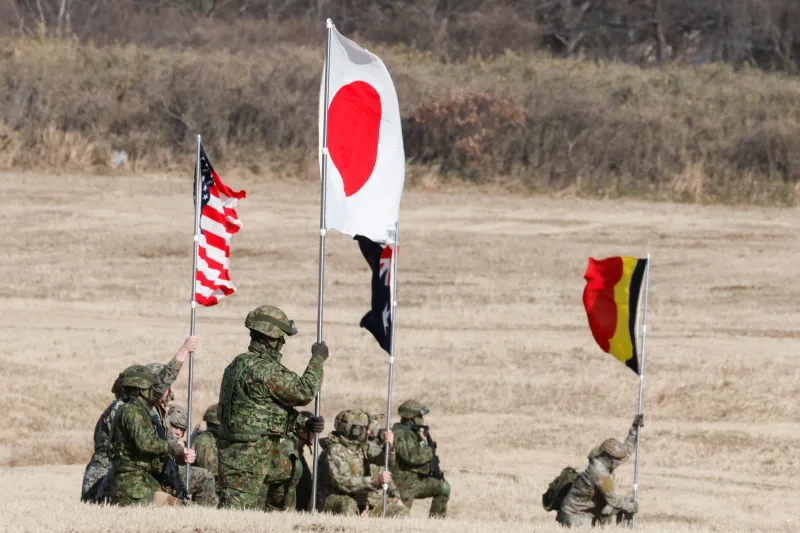
Today, threat perceptions are converging around a shared challenge from Beijing and Moscow, creating unprecedented alignment between Atlantic and Pacific security. Russia’s invasion of Ukraine shattered European illusions about Beijing, leading NATO to brand China a decisive enabler of Russia’s war effort, while Asian states see Russian aggression as a crucial test for restraining Chinese ambition. Furthermore, European and Asian governments increasingly view China as a mercantilist power targeting their industrial foundations, driving a common diagnosis on global trade and technological competition.
Surging Chinese exports, the AI revolution, and expanding defense spending are creating new linkages with Washington faster than middle-power hedging can break them. The U.S. market absorbs a growing share of allied exports, while reindustrialization deepens mutual economic reliance. In technology, European sovereign initiatives cannot match the massive capital investments of U.S. hyperscalers in cloud and AI infrastructure. In defense, major rearmament efforts across Europe and Asia remain heavily tied to U.S. weapons systems, intelligence, and command substructures, ensuring long-term military interdependence.
Beyond high-level political rhetoric, career military planners, intelligence officers, trade experts, and diplomats continue daily cooperation, providing structural stability through political cycles. Key frameworks like AUKUS and expanded regional exercises continue to advance, supported by strong bipartisan legislative guardrails in Congress. Allied leaders recognize that alternative global orders—unrestrained multipolarity, spheres of influence, or Chinese preeminence—are far less favorable than an alliance architecture that pools collective power. Realizing allied scale offers the only effective counterweight to China’s mass, converting current tensions into a necessary evolution toward a stronger, shared security framework.