
Munib-ur-Rehman: The writer is a civil servant
In 1963, the Pakistan-China border agreement laid the foundation of the unique and compact journey of bilateral relationships standing by each other in difficult periods of time. Although the relationship is very proportionate, China is a giant and much stronger in all aspects, but both countries have shown and reposed mutual trust, and hopefully, trust shall continue in the future.
In 2005, China and Pakistan signed a ‘Treaty of Friendship and Cooperation’ whereby it was agreed upon that neither party would join any alliance, which would result in infringement upon the sovereignty, security and territorial integrity of either nation. Further, it is decided that neither leadership in either China or Pakistan nor the continued shifts in the global foreign policy contours brings any visible change in the bilateral relationship between these two neighbouring countries. CPEC is the ultimate fruit of mutual trust between both countries. It is a crucial addition to bilateral relations between the countries.
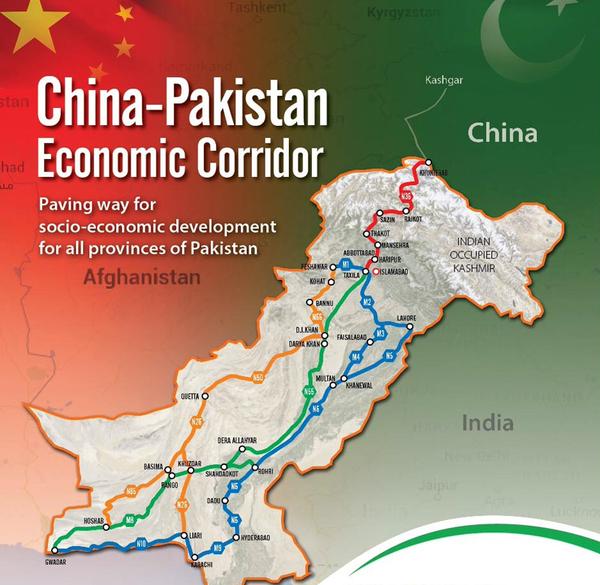
The China-Pakistan Economic Corridor (CPEC) is the flagship project of the ‘Belt and Road Initiative’. CPEC enters through the territory of Gilgit Baltistan, which India claims to be part of Jammu and Kashmir. This is one of the issues with India. India believes that CPEC is violating territorial sovereignty. Due to some of these reasons, CPEC has become a bone of contention between India and Pakistan. India strongly believes that it is unfavourable to India’s geographical supremacy in South Asia. India has expressed several concerns regarding the China-Pakistan Economic Corridor (CPEC). Some of the key concerns include:
Sovereignty Issues: India opposes CPEC because it passes through the Pakistan-administered territory of Gilgit-Baltistan, which India claims to be a part of the erstwhile princely state of Jammu and Kashmir. India views this as a violation of its sovereignty and territorial integrity.
Security Concerns: India has raised concerns about the security implications of CPEC. The route passes through regions that have experienced insurgent activities and terrorism. India worries that these security challenges could spill over into Indian-administered Kashmir and create further instability in the region.
Impact on Regional Balance: India is concerned that CPEC could tilt the strategic balance in the region in favour of Pakistan and China. The development of Gwadar Port, a key component of CPEC, could enhance Pakistan’s naval capabilities, potentially affecting the balance of power in the Arabian Sea.
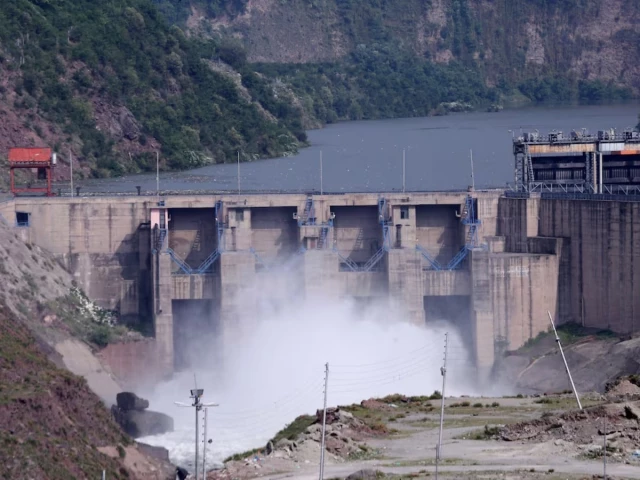
Environmental Impact: India has expressed concerns about the environmental impact of CPEC projects, especially those related to infrastructure development and the construction of dams. Environmental degradation in the region could have implications for the entire ecosystem, including water resources that flow into India.
Violation of Indus Waters Treaty: India has raised concerns about certain CPEC projects, such as dams and hydropower facilities, which it believes could violate the Indus Waters Treaty, an agreement between India and Pakistan governing the use of the Indus River system. Any alteration of the river’s flow could affect water distribution between the two countries.
Bypassing India: India has expressed dissatisfaction over needing to be included in the planning and implementation of CPEC projects. India perceives this as a deliberate attempt to undermine and bypass its regional influence economically.
Economic Imbalance: India is concerned that CPEC could exacerbate the existing trade imbalance between India and China. By providing a more efficient trade route between China and the Arabian Sea, CPEC might encourage Chinese exports to India’s detriment. Traditionally, India sees South Asia as her exclusive space. The new entrants like China will ultimately shrink her space in South Asia.
Please, subscribe to the monthly magazines of republicpolicy.com
The fear of militarization of Gwadar port is also one of India’s major concerns. India claims that China is building a naval base in Gwadar and can use it as a blockade of India and for offensive purposes.
Pakistan absolutely holds a different view and perspective. Pakistan believes that India’s claims on Gilgit-Baltistan do not have United Nations Organization’s ratification. Pakistan also asserts that the Security Council has accepted the right of self-determination of the Kashmiri people. At the same time, India has denied this right, which the UN Security Council has accepted.
Pakistan is of the view that CPEC cannot make Pakistan economic power as against India in the region. Pakistan’s trade volume could be better than China’s and India’s. CPEC can provide a fresh breadth for Pakistan’s ailing economy. No one can deny the fact that China-India trade volume is far greater than that of Pakistan. Pakistan further believes that a stronger Pakistan is in the benefit and favour of India.
India’s concerns over CPEC are ill-founded and unfounded, having no solid foundation at all. Indian calculations revolve around the point that China is expanding relations with small states of South Asia in order to undermine its power. China’s normal trade with small states of the region is viewed as China encircling India. On the other hand, China considers US-India relations to be a challenge to its economic expansion. CPEC has become a sore point for India. Sarmad Ashfaq writes that the smooth functioning of CPEC and BRI soar point, particularly for India as a stable and prosperous Pakistan under CPEC, would challenge India’s hegemony. India’s propaganda on CPEC shows that India is more interested in subservient, politically fragile and economically weak Pakistan. It means that India’s CPEC approach is more oriented towards geopolitics rather than development and progress. India also does not like China’s involvement in Sri Lanka, Nepal, Bangladesh and Maldives.
Suppose India is interested in maintaining its traditional status in South Asia. In that case, it will have to present an equal amount to small South Asian states for development and an economic model as per excellence with China. However, India needs to improve so far to address such issues. India is required to come out of its traditional thinking for the sake of connectivity in fragile South Asia.
CPEC is a series of projects which shall not only connect China with Pakistan through roads but also railways, fibre-optic cables, and energy projects, and the most important is the operationalization of the Gwadar deep-sea Port under the CPEC project but larger connectivity at the regional and global level.
Since 2015, CPEC has been said to be the game changer. If it is so, then why is the progress on the project very slow, which is ultimately our dream? This is the big question mark. It also shows our seriousness in putting the economy on the right track. If CPEC is a game changer, then why is it not our first priority?
Please, subscribe to the YouTube channel of republicpolicy.com