
Zafar Iqbal
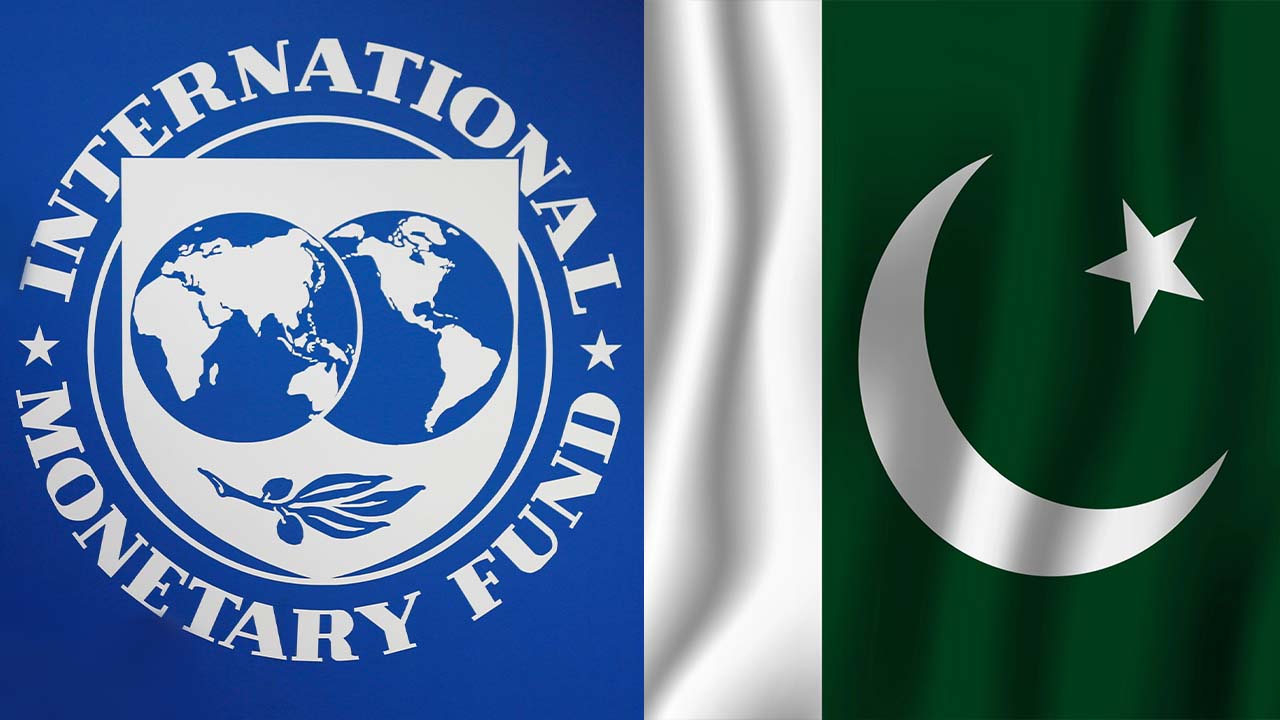
The International Monetary Fund (IMF) has cast a cautious shadow over Pakistan’s economic prospects, revising its growth estimates for the current fiscal year downwards. While acknowledging the government’s ambitious target of 3.5%, the IMF paints a picture of a sluggish 2% growth, highlighting the need for strategic maneuvering to unlock Pakistan’s true potential.
This downward revision, from 2.5% in October 2023, reflects the complex interplay of internal and external factors challenging Pakistan’s economic trajectory. Domestically, political uncertainty, rising inflation, and a widening current account deficit cast a shadow of stagnation. Geopolitical tensions and the ongoing global slowdown further exacerbate these challenges, creating a headwind for Pakistan’s economic sails.
However, amidst the gloom, there are flickers of hope. The IMF’s projection of a 3.5% rebound in the next fiscal year suggests that Pakistan possesses the underlying ingredients for growth. A stable government, coupled with prudent fiscal and monetary policies, could unlock these latent potentials.
To navigate this economic tightrope, Pakistan needs a multi-pronged approach:
Fiscal Consolidation: Bridging the widening budget deficit is crucial. A combination of targeted subsidies, improved tax collection, and prudent spending can create fiscal space for critical investments in infrastructure, education, and healthcare.
Export Diversification: Pakistan’s reliance on a few primary exports exposes it to external shocks. Diversifying into high-value added sectors like textiles, pharmaceuticals, and technology can boost its resilience and export earnings.
Foreign Direct Investment (FDI): Creating a conducive environment for FDI is essential. Streamlining regulations, improving transparency, and addressing security concerns can attract foreign capital and boost technological transfer.
Human Capital Development: Investing in education and skills development is crucial for unlocking Pakistan’s demographic dividend. A skilled workforce can attract investment, increase productivity, and drive sustainable growth.
Regional Cooperation: Leveraging its strategic location, Pakistan can benefit from stronger regional trade ties. Investing in connectivity and trade facilitation initiatives can unlock new markets and boost economic activity.
The road ahead for Pakistan’s economy is paved with both challenges and opportunities. By adopting prudent policies, fostering a conducive business environment, and investing in its people, Pakistan can navigate the current headwinds and translate its economic potential into tangible results. The upcoming year will be a crucial test, demanding agility, resilience, and a spirit of collective action to unlock a brighter economic future for all Pakistanis.
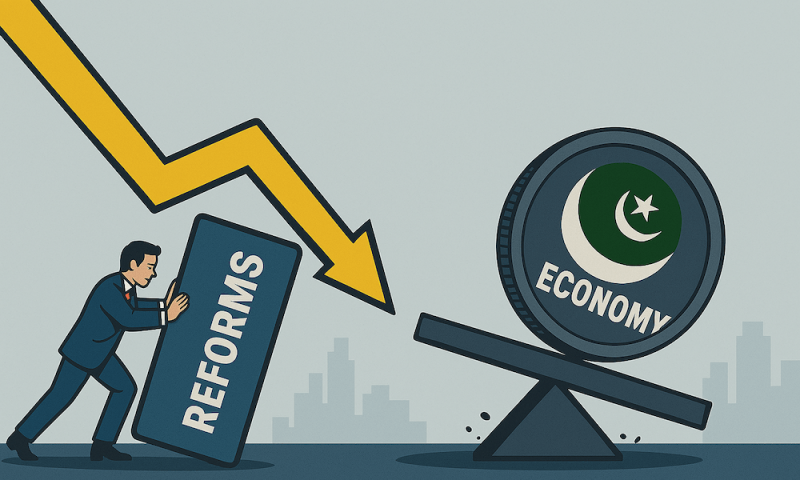
Pakistan’s economic outlook is undoubtedly challenging, but not insurmountable. By addressing the underlying issues and implementing strategic measures, Pakistan can navigate the current slowdown and pave the way for a sustainable and inclusive economic rebound. The government, in collaboration with the IMF and other stakeholders, needs to walk a tightrope, balancing fiscal prudence with growth-oriented policies to secure a brighter economic future for the nation.
Please, subscribe to the YouTube channel of republicpolicy.com