
Team Republic Policy
Baluchistan’s political landscape is a tapestry woven from diverse threads of ethnicity, tradition, and national aspirations. Understanding these intricacies is crucial to navigating the upcoming National Assembly elections in the province. Baluchistan’s political landscape is a complex tapestry woven with diverse threads of ethnicity, tradition, and popular sentiment. The province is divided into three regions: the Pashtun belt, the Baloch belt, and the multi-ethnic capital, Quetta. Each region has a distinct political atmosphere that is shaped by its unique cultural and linguistic identities.
The Pashtun belt is a confluence of religious, ethnic, and national sentiments. Parties like JUIF cater to the religious segment, while ANP and PKMAP represent ethnic aspirations. However, PTI’s national appeal also finds resonance here.
Quetta, the multi-ethnic and multi-lingual capital, sees a mix of parties like BNP, HDP, JUIF, and even PTI competing for votes. Each party aims to appeal to specific segments of the population based on their ethnicity or political leanings.
Traditionally, chieftains held sway in the Baloch belt. While their influence is waning, they still hold some power. In areas where chieftains are less powerful, national and federal parties like PTI struggle to find traction.
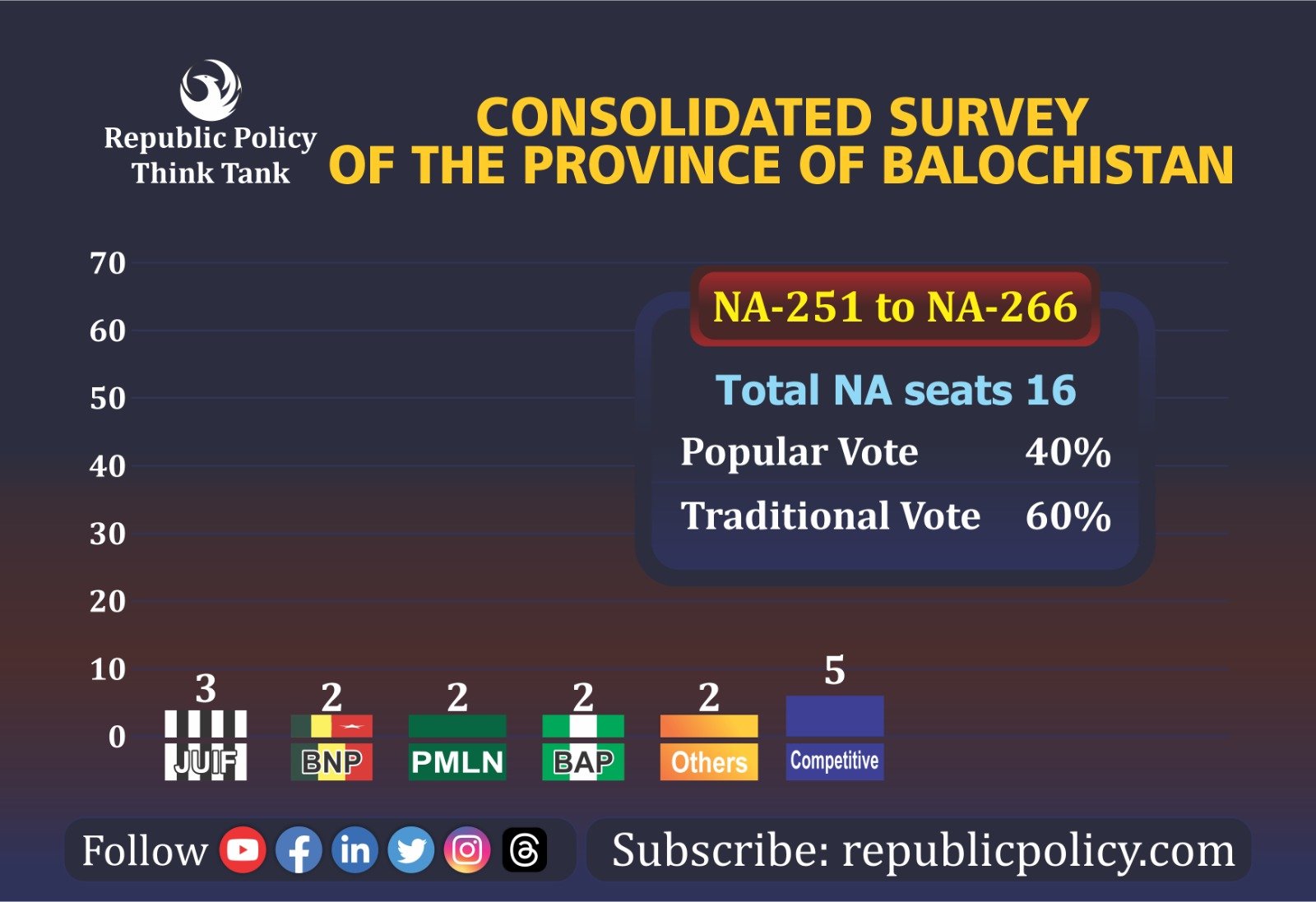
Unlike other provinces, where the popular vote dominates, Balochistan sees a unique equation: 40% popular vote and 60% traditional vote. This means the personal influence of political figures, often linked to tribal affiliations or family legacies, plays a significant role in swaying voters.
Ethnicity and language are deeply intertwined with political choices in Balochistan. Parties often align themselves with specific ethnic groups, catering to their cultural and linguistic identities. This creates a complex dynamic where national parties like PTI face challenges in connecting with certain communities.
Distinct Belts, Distinct Dynamics:
The province can be broadly divided into three main regions: the Pashtun belt, the Baloch belt, and the multi-ethnic capital, Quetta. Each region presents unique political dynamics:
- Pashtun Belt: This region witnesses a confluence of religious, ethnic, and national sentiments. Parties like JUIF (religious), ANP and PKMAP (ethnic), and even PTI (national) find resonance here.
- Quetta: This diverse city sees a mix of support for BNP (Baloch nationalist), HDP (Hazara), JUIF (religious), and PTI (national).
- Baloch Belt: Here, the influence of chieftains, traditional political figures, remains strong in some areas. However, pockets also exist where they hold less sway, and the connection to national politics is weaker.
Tradition vs. Popularity:
The interplay between tradition and popular vote further complicates the picture. Unlike other provinces, where popular vote might dominate, Baluchistan experiences a 60/40 split, with traditional loyalties holding significant weight. This means the personal influence of political figures can trump party affiliation, making predictions even more challenging.
Ethnic and Linguistic Undercurrents:
Ethnicity and language play a crucial role in shaping political choices. The Pashtun belt, with its distinct ethnic identity, favors parties catering to their specific concerns. Similarly, the Baloch belt witnesses a complex interplay between various Baloch factions and their political aspirations. In Quetta, the multi-ethnic composition leads to diverse political leanings.
The National Aspiration Factor:
Despite the strong presence of regional and ethnic identities, the national narrative also holds significance. PTI, with its focus on national issues and development, has found some appeal across the province. However, its success will depend on balancing this national message with addressing local concerns and navigating the complex regional dynamics.
Unpredictable Battleground:
Predicting the outcome in Baluchistan remains a challenging task. The interplay of tradition, ethnicity, and national aspirations, coupled with the influence of chieftains and the 60/40 vote split, creates a dynamic and unpredictable landscape. Staying informed about local developments, understanding the nuances of each region, and following the strategies of key players will be crucial for deciphering the results of the upcoming elections in this fascinating province.
Who will win how many NA seats in Baluchistan?
The upcoming National Assembly elections in Balochistan promise to be a fascinating, yet complex affair. Unlike other provinces, where popular vote reigns supreme, tradition holds a powerful sway in Balochistan, shaping the political landscape in unique ways. Let’s delve deeper into the key factors at play.
A Province Divided:
Balochistan’s 16 NA seats encompass two to three districts each, creating a diverse political arena. Unlike its homogenous counterparts, the province is divided into distinct regions with their own political inclinations.
Tradition Over Popularity:
A defining characteristic of Balochistan’s political landscape is the dominance of traditional vote over popular vote. With traditional vote accounting for 60% and popular vote for 40%, political figures with strong local ties and tribal affiliations hold significant sway. Understanding this dynamic is crucial to predicting poll outcomes.
The Contenders and Their Strongholds:
Several parties carve out their domains within this unique landscape:
- Jamiat ulma e Islam (JUIF): Strong on 3 seats, JUIF leverages its religious appeal and established network in specific regions.
- Baluchistan National Party (BNP): Holds a strong presence in 2 seats, representing Baloch nationalist aspirations.
- Pakistan Muslim League (N) (PMLN): Established in 2 seats, PMLN capitalizes on its traditional support base in certain areas through electable.
- Baluchistan Awami Party (BAP): Holds 2 seats, benefiting from its alliances and influence in specific demographics.
- Pakistan Tehreek-e-Insaf (PTI) & Pakistan People’s Party (PPP): Each holds 1 seat, navigating the complex political terrain with national outreach in Pashtun belt.
The Battleground of Remaining Seats:
The remaining 5 seats present a captivating scenario. These “competitive” seats see a blend of smaller parties, independents, and even established players vying for victory. Local issues, personal connections, and strategic alliances become paramount in these districts, making predictions challenging.
Factors Beyond Party Lines:
While parties play a role, understanding the nuances of each region is crucial. Tribal affiliations, local leaders, and historical relationships with specific groups can sway voters significantly.
The upcoming elections in Balochistan promise a dynamic contest. While understanding the traditional vote’s importance and party strongholds is essential, keeping a close eye on local dynamics and potential alliances will be key to deciphering the final outcome. The complex tapestry of Balochistan’s political landscape awaits to unfold, revealing a unique story of tradition, identity, and the fight for electoral power. Therefore, the upcoming elections in Balochistan promise to be a thrilling contest, with various parties vying for dominance in the 16 NA seats. Understanding the unique dynamics of the popular vote, traditional influence, and party loyalties across different districts will be crucial for predicting the outcome. Staying informed about developments on the ground, potential alliances, and local issues will be essential for gaining a clearer picture of this multifaceted political landscape.
Note: The methodology of the surveys is available at republicpolicy.com and the YouTube channel of Republic Policy
Please, subscribe to the YouTube channel of republicpolicy.com