
Looking into the future geopolitical landscape, we can see that the world will likely be shaped by three different orders: military, international economic, and digital or technological. Among these three orders, the digital or technological order will likely be the most crucial and impactful in shaping the world’s future. Whoever wins the technological race is believed to have a head start in the international order.
However, one must recognise the importance of the other two orders. The military order will continue, and the United States will likely dominate it. The US’s dominance in this order is supported by its spending the most on its military compared to other countries globally. It has the world’s most advanced military technology, a vast network of allies, and military bases worldwide. Therefore, it will likely remain the leading superpower in this order.
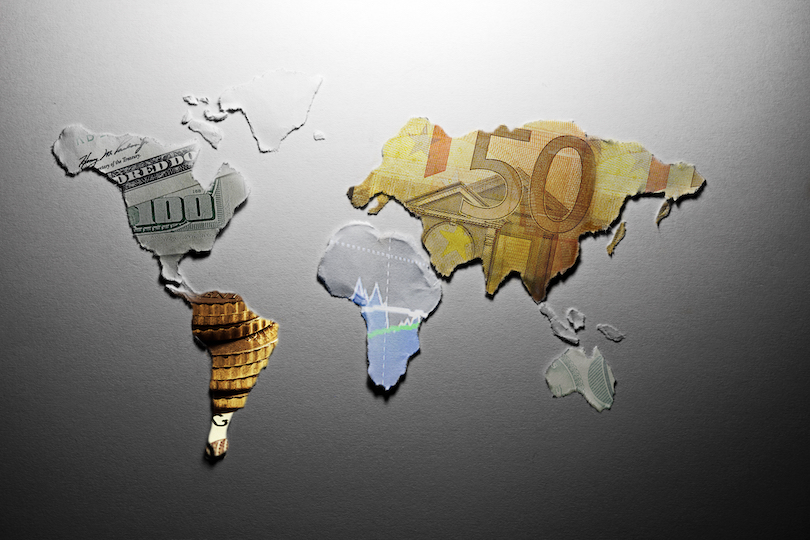
On the other hand, the international economic order is expected to be multipolar, with China and other countries contributing to it. China’s rise has been phenomenal in recent years, and it is projected to overtake the US as the world’s leading economy in the coming years. Countries like India, Brazil, and Russia also emerge as economic powerhouses. Therefore, the international economic order will likely be more balanced and multipolar, with more countries contributing.
However, the digital or technological order will likely be the most important. The world is rapidly moving towards digitalisation, and technology is increasingly becoming the backbone of many states. Whoever dominates the technological race will likely have a significant advantage in the international order. The US and China are currently in a tech war, and both countries are investing heavily in technology research and development. Therefore, the winner of this race is likely to have a better role in the international order.
Accordingly, the world will likely be shaped by three different orders: military, international economic, and digital or technological order. While the military order is likely to be dominated by the US, the international economic order is expected to be multipolar, with China and other countries contributing. However, the digital or technological order will likely be the most crucial and impactful. Whoever wins the technological race is believed to have a head start in the international order.
In the next decade, the world will undergo significant changes driven by geopolitical, geo-economic, and technological factors. Given the rapid pace of these changes, predicting the future is difficult. However, by examining trends and shifts in global geopolitics, we can gain insight into what the world might look like in 2035. Your understanding and navigation of these shifts are crucial in shaping the future of global politics.
Currently, the world is transitioning from a world order to disorder, a shift that will undoubtedly impact [reader’s country/region]. Major power rivalries are intensifying, global military expenditure is rising steeply, and xenophobia is taking root in many parts of the world. Unilateralism is on the rise, while multilateralism is declining. These trends are contributing to global disarray, which is being played out in four major theatres of contestation: Indo-Pacific (US-China competition), Europe (Russia-Ukraine war), Middle East (Palestine conflict, Israel-Iran tensions), and the Indian Ocean.
These theatres of contestation are leading to shifting alliances forming along three broad categories. The US, Europe, and Australia have an informal broad alignment against Russia, China, and Iran. Meanwhile, some countries like India, Saudi Arabia, Turkey, Pakistan, and other middle powers prefer to exercise strategic autonomy. Multi-alignments are also emerging across these two broad categories to pursue common interests, such as BRICS, which has expanded to include other countries, including Iran and Saudi Arabia; QUAD, created by the US, Australia, India, and Japan to contain China; and I2U2, bringing together India, Israel, the US, and UAE for economic cooperation.
These shifting alliances will be influenced by six cross-cutting trends: emerging technologies, climate change, de-dollarisation, rare earth elements, non-traditional security threats, and resurgent terrorism. Emerging technologies, such as AI platforms, multi-role drones, big data, and semiconductors, are playing a central role in the US-China tech war, a conflict that is reshaping global power dynamics and economic structures. Climate change will impact countries with low fiscal space through extreme weather and food insecurity. Many countries are exploring de-dollarisation as an alternative to the US dollar-dominated international monetary system. Rare earth elements are required for advancing technologies, and there is stiff competition between China and the US, Europe, and Japan to secure access to these elements. Non-traditional security threats, including energy politics, cyberwarfare, disinformation campaigns, and lawfare, will continue to cause concern. Finally, resurgent terrorism is likely to pose a threat as concerted international response wanes.
In terms of power potential, the US is a waning power. However, its national power instruments are largely intact and can sustain it through the next decade as a leading superpower. China is a rising power, but it is interested in continuing its peaceful rise to become fully industrialised. Russia is seeking to revive its lost glory, but its energies are likely to be consumed by the conflict in Europe. India is also a rising economic power, but its geopolitical profile will be constrained by ideological politics, the North-South divide (referring to the economic and political disparities between northern and southern states of India), restive minorities, and agitated farmers.
The UN is likely to remain sidelined in matters of peace and security but relevant for sustainable development and climate change. The Organisation of Islamic Cooperation (OIC), a collective voice of the Muslim world, is not likely to dent the future in any major way, while the Association of Southeast Asian Nations (ASEAN) will continue as a success story of regional integration, playing a significant role in shaping the geopolitical landscape of Southeast Asia. Europe is a resilient continent, but the focus of global attention will remain on Asia in the coming decade.
Accordingly, the world of 2035 will likely be a kaleidoscope of fragmentation and polarization, starkly different from the world we know today. The high-risk areas of potential global conflict, including the South China Sea, Ukraine, the Middle East, Afghanistan, and Kashmir, will be battlegrounds shaped by global contestations, shifting alliances, and the six trends discussed above. Countries that exhibit economic resilience and societal harmony will stand the best chance of weathering the storm of change.
Please, subscribe to the YouTube channel of republicpolicy.com