
Tahir Maqsood Chheena
The Baluchistan government’s recent decision to formally merge the century-old levies force into the provincial police marks a historic shift in the administration of law and order. By abolishing the distinction between ‘A’ and ‘B’ areas, the government has brought the entire province under police jurisdiction for the first time in decades. This move, aimed at strengthening security across Baluchistan, seeks to modernize policing, address administrative ambiguities, and provide a uniform approach to crime and counterterrorism.
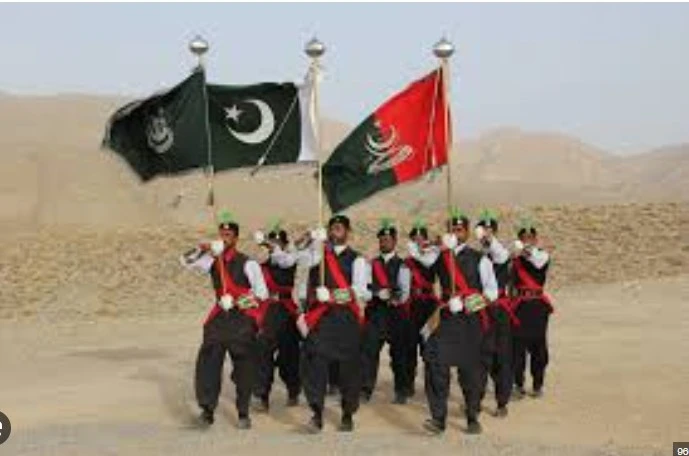
The levies force, historically tasked with maintaining law and order in rural areas under district administration, has long been recognized for its deep-rooted local knowledge and community ties. Covering nearly 90 percent of Balochistan’s territory, the levies have played an essential role in managing day-to-day security in remote and tribal regions. However, the force has often struggled to tackle contemporary security threats such as organized crime, militant networks, and the growing nexus between terrorism and criminal activities. Allegations of partiality, with levies personnel operating under the influence of tribal chiefs, have further undermined public confidence and limited the effectiveness of law enforcement in upholding the state’s writ.
By merging the levies into the police, the government aims to standardize law enforcement across the province, eliminate discretion-based policing, and establish a clear chain of command. The consolidation is expected to enhance accountability, ensure impartiality, and improve operational efficiency, particularly in counterterrorism efforts. With all areas now under a single police structure, administrative confusion surrounding jurisdictional boundaries and enforcement responsibilities is likely to be resolved, giving provincial authorities greater control over security planning and response.
Despite the potential benefits, the decision is likely to face criticism from several quarters. Some stakeholders, benefiting from the previous fragmented policing system, may resist the change. Others argue that Balochistan’s unique social, political, and geographic conditions necessitate a localized, community-oriented policing model like the levies. Historically, the levies’ connection to local populations allowed them to manage disputes, maintain order, and gather intelligence in ways that a centralized police force often struggles to replicate. Critics caution that simply merging personnel without integrating these community-based strengths may limit the effectiveness of the reform.
This is not the first attempt to unify Balochistan’s policing. In 2002, under General Pervez Musharraf, the levies were disbanded, merged with the police, and the entire province was declared an ‘A’ area under police control. However, the security situation did not improve significantly, leading to the restoration of the levies in 2010. Lessons from that experiment suggest that while institutional centralization can enhance command and operational capacity, success depends on careful integration of local knowledge, community trust, and the human resources that form the backbone of law enforcement in tribal and rural areas.
Balochistan has been grappling with terrorist violence and insurgency for over two decades. The province’s security landscape is complex, involving a combination of separatist militancy, sectarian violence, cross-border infiltration, and organized criminal networks. In such a challenging environment, the police-levies merger could provide a more cohesive and coordinated response, enabling intelligence-driven operations and uniform enforcement standards. Yet, this potential can only be realized if the reform goes beyond administrative restructuring to address systemic issues such as training, resource allocation, modern equipment, and community engagement.
The levies’ personnel, while sometimes criticized for lack of modern law enforcement skills, bring invaluable advantages in the form of local familiarity, cultural understanding, and trusted community networks. Incorporating these elements into the police structure could create a hybrid model that balances centralized authority with localized insight. For example, assigning former levies personnel to community liaison roles, intelligence gathering, and rural patrols could maintain public trust while strengthening operational capabilities. Such a strategy would mitigate fears that the merger will erase the community-oriented policing legacy of the levies.
Accountability is another crucial consideration. Centralization allows for clearer hierarchies and performance oversight, reducing the likelihood of partisan or discretionary law enforcement. This is particularly important in countering insurgency and militant activity, where coordination, chain of command, and rapid response are vital. By bringing all areas under police jurisdiction, the government can implement standardized protocols for investigation, intelligence sharing, and tactical operations. This, combined with modern training and resources, can enhance the overall effectiveness of provincial law enforcement.
In conclusion, the merger of the levies into the Balochistan Police represents a strategic attempt to modernize policing and strengthen the state’s writ across the province. The move addresses long-standing administrative ambiguity, improves accountability, and equips authorities to better tackle organized crime and terrorism. However, the success of this reform will depend on more than just structural changes. Integrating the levies’ strengths—particularly community trust and local knowledge—into the new police framework will be essential. Careful planning, adequate resources, and a focus on capacity building are critical to ensure that Balochistan’s security challenges are addressed effectively and sustainably. If executed thoughtfully, the merger could redefine law enforcement in the province, providing a model for balancing centralized authority with localized engagement, ultimately enhancing stability and public confidence in the state.