
By
Saba Rafique
There are three main reasons why we need to think about our gut health.
Firstly, our intestinal tract (bowel) contains trillions of microbes. These are a hugely important part of our health: they produce different hormones and vitamins, and we couldn’t survive without them.
Secondly, the majority of the cells that make up our immune system are found in our digestive tract. Having good gut health is linked to fewer sick days and lower risk of allergies and autoimmune conditions.
Finally, even if you put the healthiest food into your body, if you don’t have a healthy intestinal lining to digest it, you won’t get all the benefits of what you are eating.
As Dr Maritexell Nus says,
“We can consider the gut microbiota as another organ in the body, but we don’t know a lot about it yet”
I keep reading about gut health. Should I eat fermented foods, and do I need a prebiotic or probiotic?
Prebiotics are essentially what feeds the bacteria in our gut. They are substances in food that can’t be digested but will be fermented by bacteria in your gut and encourage those bacteria to grow. Most are types of dietary fibre and therefore are found in a wide range of plant foods, such as garlic, onions, bananas, wheat, rye, barley, soya beans and tomatoes. If you are getting a diverse range of foods in your diet, you will be getting all the prebiotics that you need.
Probiotics are the microbes – bacteria and yeasts. These are available as supplements or may be added to foods. There isn’t strong evidence that we should be taking these for heart and circulatory health. There is beginning to be evidence that they may be useful in some situations, but if you are generally healthy you don’t need to spend your money on supplements that may not deliver what they promise.
Fermented foods include yogurt, miso, sauerkraut, kefir, kimchi and tempeh. There is limited clinical evidence to prove that they have a health benefit, but there are many potential mechanisms by which these foods may have a benefit. They’ve also been consumed by humans for thousands of years.
Although some of them can be expensive, depending on which ones you buy, you can often make your own more cheaply. Kefir, a fermented milk drink similar to yogurt, is fairly simple to make. If you want to try something new, fermented food can be a good place to start.
If you’re buying or making fermented pickles like sauerkraut and kimchi, bear in mind that they can be salty – check the nutrition labels and choose the one with the lowest salt per 100g. If you are choosing these products for their beneficial bacteria, you need to buy unpasteurised versions as pasteurisation will kill the beneficial bacteria. Look for the type that has to be stored in the fridge.
When it comes to yogurt, look for a low-fat or fat-free yogurt to reduce your intake of saturated fat and check that it includes ‘live’ bacteria. Greek-style yogurt in particular can be high in saturated fat.
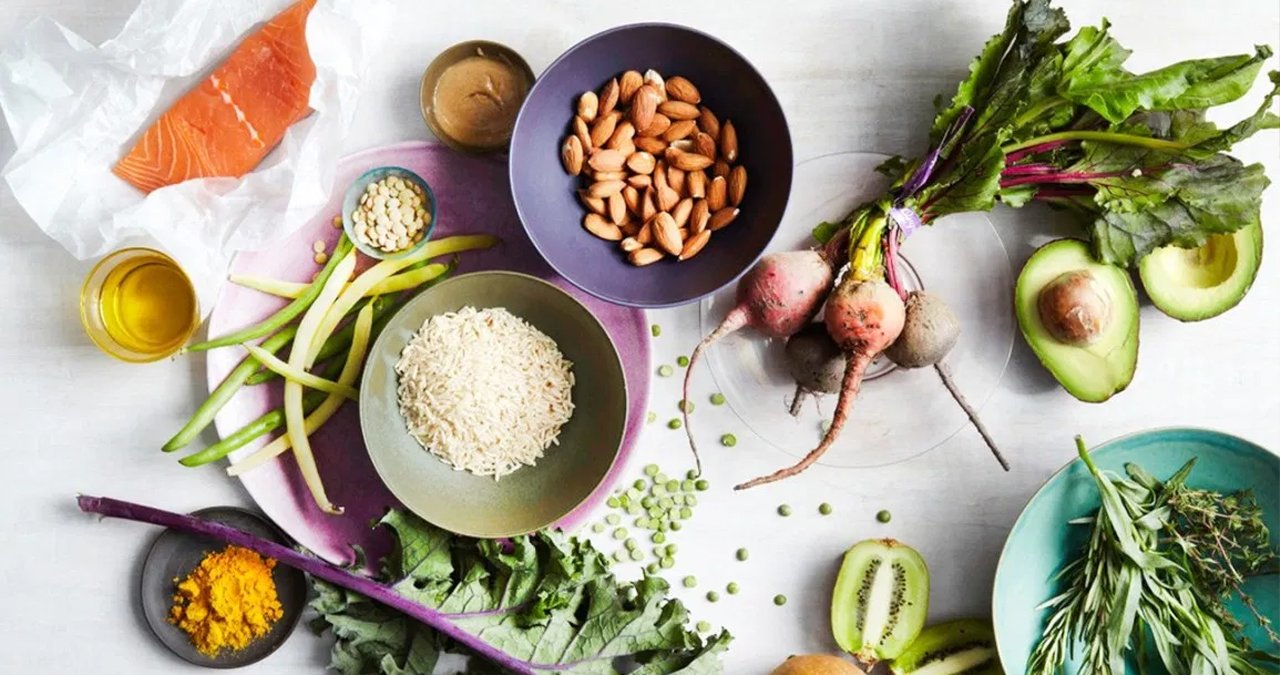
One of the strategies recommended by doctors and researchers is to eat 30 different plant foods every week. Diversity matters, because there are nearly 100 types of fibre and thousands of plant phytochemicals, which are thought to feed different bacteria. Thirty might sound intimidating, but it includes fruits and vegetables, whole grains, legumes (such as chickpeas, lentils or kidney beans), nuts and seeds. It could be as simple as adding mixed seeds to whatever you are eating in the morning.
Make small switches, such as buying different colours of peppers instead of a single one, or a pack of mixed vegetables. Try not to have the same meals every day. Even if you love routine, have different fruit on different days, or if you eat porridge every day, vary the toppings – banana one day, berries another, along with nuts and seeds
How long does it take for diet to make a difference?
Microbes in the gut can begin to change within days of changes to your diet, but the long-term benefits can take several years to show. Remember that if you go back to your old ways, you aren’t going to get much of a benefit – it’s about long-term changes.
Subscribe our website for latest updates:
https://republicpolicy.com/shop/
Read More