The government has approved 16 development projects worth Rs1.15 trillion, including the politically contentious Lahore-Bahawalnagar motorway and a steep 282% cost revision for the Tarbela fifth extension scheme, which has faced serious setbacks during construction.
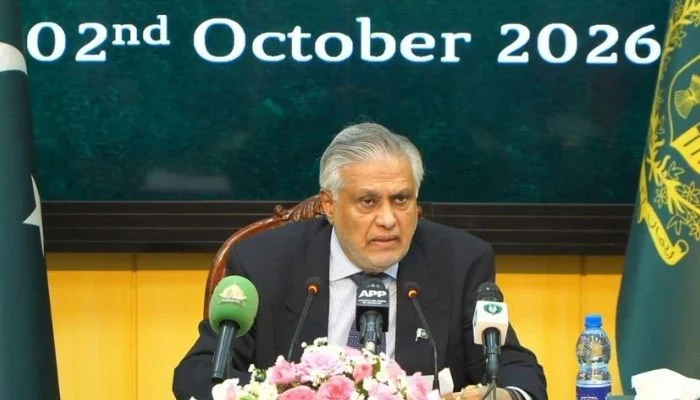
The Executive Committee of the National Economic Council (ECNEC), chaired by Deputy Prime Minister Ishaq Dar, cleared the projects at an estimated total cost of Rs1.15 trillion, including Rs320 billion in additional costs meant to offset delays and price escalation. Several of the schemes had come before the committee more than once, with significant cost increases along the way. Despite the scale of the approvals, the government did not release a detailed statement; the deputy prime minister’s office issued only a brief announcement that did not disclose the full list of projects and their costs, notably omitting mention of the Lahore-Sahiwal-Bahawalnagar motorway, a project opposed by the Pakistan Peoples Party (PPP).
Motorway and Tarbela Extension
ECNEC approved the Rs407 billion Lahore-Sahiwal-Bahawalnagar Motorway project, including Package-I, an 18.5km stretch from Lahore Ring Road to Raja Jang Interchange, to be financed by the federal government at a cost of Rs49 billion. The committee decided to retain the project’s original 295km alignment, in line with the prime minister’s directive from March. For the remaining sections, given the heavy backlog in the Public Sector Development Programme, the National Highway Authority (NHA) has been asked to explore Public-Private Partnership financing for viable segments, with the NHA covering its share through Viability Gap Funding drawn from its own revenue. For sections deemed non-viable, the NHA will explore alternative financing, including cost-sharing with the Punjab government, funding from international financial institutions, or federal financing where available.
The committee also approved the 5th Tarbela extension project at a revised cost of Rs316 billion, a 282% increase from its original Rs82 billion estimate. During the Central Development Working Party meeting that had earlier cleared the scheme, Planning Minister Ahsan Iqbal reportedly raised serious concerns over the project’s management, transparency, and oversight, questioning the professional capability of the staff involved and noting that the Ministry of Water Resources’ own inquiry had flagged shortcomings. That inquiry, examining the breach of the downstream cofferdam at the T5 project, found that the collapse was not caused by flooding but by a design change from roller-compacted concrete to a rock-fill dam, combined with inadequate supervision and delayed administrative action, resulting in structural failure, project delays, and financial losses. The Ministry of Finance had sought justification for the 282% cost escalation and asked WAPDA to explain the repayment mechanism, given the project’s financing through international financial institutions, but ECNEC approved it regardless.
Other Approvals
ECNEC also approved the Khwazakhela-Besham Expressway (48km) at a revised cost of Rs116.6 billion, 47% above its original estimate, and an interprovincial road project connecting Gilgit-Baltistan with Azad Kashmir at Rs29 billion, Rs10 billion higher than initial projections. The Rathoa Haryam bridge over the reservoir channel on Mirpur-Islamgarh Road was approved at Rs10.8 billion, up sharply from an original estimate of Rs1.4 billion, while a wastewater treatment plant in Lahore was approved at Rs56.6 billion, Rs4.2 billion above its original cost.
The committee approved the Southern Punjab Poverty Alleviation Project, covering ten districts, Bahawalnagar, Bahawalpur, Bhakkar, Dera Ghazi Khan, Khushab, Layyah, Mianwali, Muzaffargarh, Rahim Yar Khan, and Rajanpur, at Rs29.7 billion, including a Rs6.8 billion cost escalation.
Also approved was the Rs10.6 billion Fulbright scholarship programme, aimed at awarding 816 scholarships in total: 550 MS and 141 PhD scholarships through the United States Educational Foundation in Pakistan (USEFP), and 125 PhD scholarships funded by the Higher Education Commission through PSDP allocations.
On water infrastructure, ECNEC approved the Mazarani Dam in Qambar Shahdadkot, Sindh, at Rs16.1 billion, directing the province to launch Command Area Development alongside the main dam to realise project benefits during Phase II. It also approved the Winder Dam at Rs21.6 billion, with the federal government contributing Rs15.6 billion, and the Mashkel Dam in Washuk at Rs41 billion, to be financed by the Balochistan government, with a requirement that an environmental assessment report be included in the project documentation.
On the energy side, the committee approved a Rs24 billion project for the supply, installation, testing, and commissioning of Asset Performance Management Systems for the Lahore Electric Supply Company (LESCO), along with a Rs19 billion Electricity Distribution Efficiency Improvement Project for the Hyderabad Electric Supply Company (HESCO) and a similar Rs30.2 billion project for the Peshawar Electric Supply Company (PESCO).
Finally, ECNEC approved the Rs28 billion Improving Workforce Readiness in Punjab Project, aimed at modernising the province’s technical and vocational education and training (TVET) sector to support economic growth and youth employability.