
KARACHI: Overseas Pakistanis sent a record $41.6 billion in workers’ remittances during the fiscal year 2025-26, reflecting a 9 percent increase compared with $38.3 billion received in the previous fiscal year, according to data released by the State Bank of Pakistan (SBP) on Thursday.
During June 2026, remittance inflows reached $3.475 billion. Although this represented an 18 percent decline compared with May, it was 2 percent higher than the amount received in June last year.
Economic analysts attributed the annual growth in remittances to several structural and policy developments. These included the continued shift from informal money transfer networks to formal banking channels following reforms in exchange companies, stricter action against illegal hawala and hundi operations, exchange rate stability, and a growing number of Pakistani workers employed abroad, particularly in Gulf countries.
Saad Hanif, Head of Research at Ismail Iqbal Securities, said reforms targeting informal money transfer systems encouraged overseas Pakistanis to use regulated banking channels. He added that a relatively stable exchange rate, with the rupee trading near Rs278 against the US dollar, removed incentives to delay remittances or use unofficial channels.
Hanif also noted that remittance growth was supported by increased migration to Gulf Cooperation Council (GCC) countries over the past two years. Corridor-wise data showed strong growth in inflows from the United Arab Emirates, the European Union, and other regions, while government incentive schemes also contributed during the fiscal year.
JS Global Capital’s Head of Research, Waqas Ghani, said higher overseas employment, greater reliance on formal banking channels, and exchange rate stability remained the principal drivers of remittance inflows throughout the year.
Sana Tawfik, Head of Research at Arif Habib Limited, said the narrowing gap between interbank and open market exchange rates, combined with administrative measures against illegal money transfer channels, further encouraged expatriates to remit funds through banks. She added that the increasing number of Pakistanis working overseas also played a significant role.
Remittances continued to strengthen Pakistan’s external sector by supporting foreign exchange reserves, financing the country’s widening trade deficit, and boosting household incomes.
Hanif said record remittance inflows fully offset a 21.6 percent increase in Pakistan’s trade deficit, which reached $39.5 billion, while helping maintain a current account surplus. He added that foreign exchange reserves held by the SBP increased from $13 billion a year earlier to $18.4 billion, despite substantial external debt repayments, supporting exchange rate stability and creating room for possible monetary easing.
Waqas Ghani also described remittances as the foundation of Pakistan’s external account at a time of increasing trade pressures.
Looking ahead, Hanif said the SBP expects workers’ remittances to rise further to around $44 billion during fiscal year 2026-27. However, he cautioned that developments in Gulf labour markets amid regional tensions and the withdrawal of government remittance incentive programmes would remain important factors.
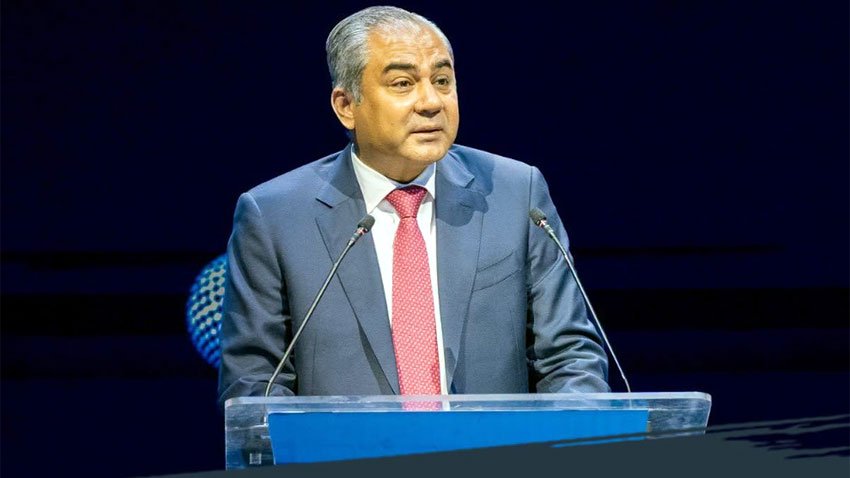
Adviser to the Finance Minister Khurram Schehzad described the record inflows as a reflection of overseas Pakistanis’ confidence in the country’s economy. He said the achievement had strengthened Pakistan’s external sector, improved foreign exchange reserves, and reinforced macroeconomic stability.
Earlier, SBP Governor Jameel Ahmad had projected that remittances would exceed $41.5 billion during FY2025-26 despite recent geopolitical challenges in the region.
Last week, the central bank discontinued the government-funded reimbursement scheme covering telegraphic transfer charges on remittances. It also ended the Sohni Dharti Remittance Program, which had rewarded overseas Pakistanis for sending money through formal banking channels.
Country-wise Remittance Inflows for June 2026
Saudi Arabia remained the largest source of remittances, with overseas Pakistanis sending $830 million during June. While this represented a 1 percent annual increase, it was 19 percent lower than the $1.025 billion received in May.
Remittances from the United Arab Emirates rose 10 percent year-on-year to $792 million, although they declined 21 percent compared with the previous month.
Pakistanis residing in the United Kingdom remitted $515 million during June, down 20 percent from May’s $645 million.
Workers in the United States sent $297 million, reflecting a 15 percent monthly decline.
Meanwhile, remittances from European Union countries totaled $415 million, decreasing 11 percent compared with May.