
Editorial
Pakistan’s FY2026-27 Budget Carries a Pro-Growth Promise, But the Fine Print Tells a Riskier Story Islamabad has pitched the FY2026-27 federal budget as the moment Pakistan finally turns the corner from years of grinding stabilisation toward genuine economic revival. Growth targets have been set with confidence, expenditure priorities have been realigned toward productive sectors, and officials have spoken of a decisive shift in tone after a long stretch of belt-tightening. Yet buried inside the very paperwork the finance ministry submitted to parliament lies a quieter, more sobering admission: the numbers behind this optimism are far from guaranteed, and a string of external and domestic shocks could unravel them quickly.
That admission comes in the form of the government’s statement of fiscal risks, tabled before parliament on June 14 in compliance with the Public Finance Management Act 2019. It is a document that rarely makes headlines but deserves close reading, because it lays out, in the finance ministry’s own words, exactly where the budget’s assumptions are most fragile. The risks span macroeconomic shocks, revenue shortfalls, the rising cost of servicing debt, the financial drag of loss-making state enterprises, and the increasingly unavoidable burden of climate-related disasters. Individually, each of these pressures is manageable. Together, they could push the fiscal deficit well beyond what has been budgeted.
Oil Prices and the Middle East Wildcard The most immediate threat singled out by the ministry is geopolitical, not economic in origin. Tensions in the Middle East carry the potential to send global oil prices spiking, and Pakistan, as a heavy net importer of energy, would feel that shock almost instantly. A jump of forty dollars a barrel, the ministry estimates, could widen the fiscal deficit by 0.8 percent of GDP, a substantial hit by any measure. The mechanism is straightforward but painful: to shield ordinary consumers from the full force of higher fuel costs, the government would likely have to expand energy subsidies while simultaneously giving up a chunk of petroleum levy revenue, since raising retail prices in step with global markets becomes politically untenable. The damage does not stop at the budget ledger either. Costlier fuel raises the cost of doing business across every sector, squeezes household budgets, and can choke off the very growth the budget is counting on, which in turn drags down tax collection.
There is a sliver of good news buried in this section. Renewed hope for a US-Iran peace settlement has eased some of the anxiety around oil markets in recent weeks. But the region’s history of sudden reversals means no one in the finance ministry is prepared to treat that optimism as a certainty, and rightly so.
Growth itself, the ministry notes, is a double-edged risk. A single percentage point of underperformance in real GDP growth would not just shrink tax receipts; it would simultaneously push up spending pressures, particularly on social safety nets meant to cushion the poor during downturns. The combined effect, by the ministry’s own reckoning, would widen the deficit by roughly 0.2 percent of GDP. Add in the familiar twin troubles of inflation and currency depreciation, and the picture becomes one where several modest shocks, arriving together rather than one at a time, could do outsized damage.
A Tax Base That Refuses to Widen If oil and growth represent the external risks, the domestic side of the ledger is no less concerning. Pakistan’s chronic struggle to widen its tax base shows up again in this year’s risk statement, with the ministry candidly acknowledging weak tax elasticity, underwhelming non-tax receipts, and structural barriers that keep the country’s tax gap stubbornly persistent. The budget itself offers little in the way of bold expansionary measures on this front, which means the existing fragility is likely to persist through the fiscal year. A shortfall of just ten percent in tax revenue growth relative to what has been projected, the ministry warns, would reduce revenues by approximately 0.7 percent of GDP, a figure that on its own could erase much of the fiscal space the budget claims to have created.
Debt servicing compounds the exposure. With a debt profile sensitive to interest rate movements, currency swings, and the terms on which the government can refinance maturing obligations, any tightening in domestic or international borrowing conditions, or a tilt toward more short-term financing to plug gaps, would push interest payments higher and eat further into the deficit target. State-owned enterprises add yet another layer of strain, as weak dividend payouts from public sector companies and the recurring need for government bailouts to cover losses or liquidity shortfalls continue to weigh on the public purse.
Climate Risk: Pay Now or Pay More Later Perhaps the most structurally difficult risk the ministry confronts is climate change, precisely because there is no comfortable choice available. Committing to an aggressive, low-emissions pathway in line with the RCP 2.6 scenario would demand significant upfront spending on adaptation and resilience, building flood defences, climate-proofing infrastructure, and similar measures that strengthen the country’s long-term position but cost money immediately and widen the deficit in the short run. The alternative, a higher-emissions trajectory that defers these costs, looks cheaper on paper today but stores up far larger fiscal risk for the future, as more frequent and more severe climate disasters translate directly into emergency spending. The ministry’s own estimate is stark: a single average natural disaster event could push the fiscal deficit up by as much as 1.5 percent of GDP, a number that dwarfs many of the other risks listed in the document.
Taken as a whole, the statement of fiscal risks is less an alarmist warning and more a sober reminder of how thin the margin for error actually is. The budget’s growth story depends on oil prices staying calm, GDP growth hitting its mark, tax collection improving without major new measures, borrowing costs staying manageable, loss-making state enterprises not requiring fresh bailouts, and the climate cooperating. Any one of these assumptions slipping even modestly could test the limits of what the budget has promised. Avoiding that outcome will require the kind of disciplined execution, credible and sustained revenue mobilisation, and deliberate buffer-building that Pakistan’s fiscal managers have too often promised and too rarely delivered.
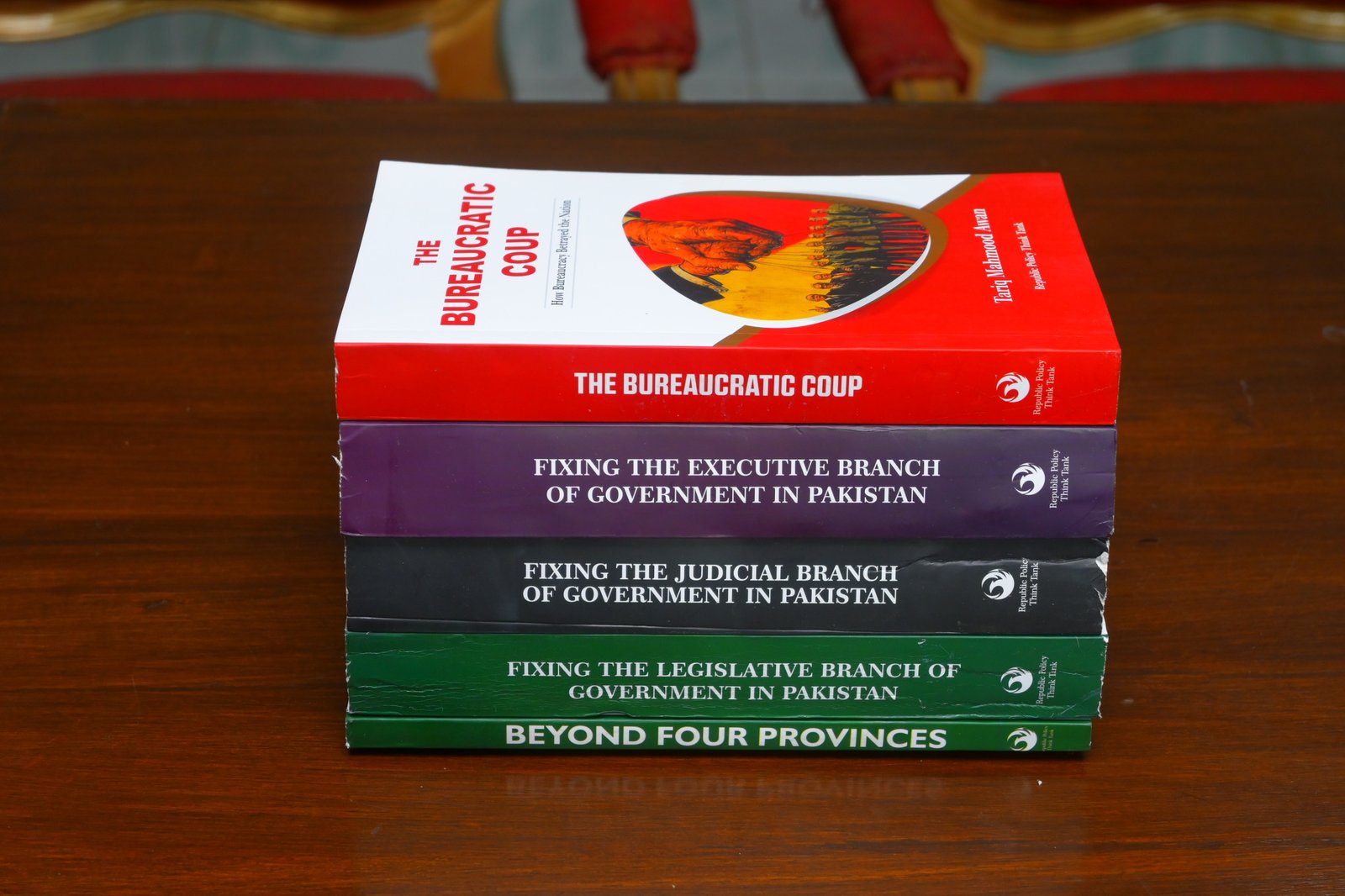
The best-selling books of Republic Policy Think Tank, including the landmark book The Bureaucratic Coup, are available at Vanguard Books, Liberty Books, Readings, Kitab Sarai, Sang-e-Meel, Saeed Book Stores, and others across Pakistan. Contact for home delivery: 0300 9552542.