
Ahmad Raza Nadeem
Pakistan’s internal debate over the proposed participation in the International Stabilisation Force in Gaza has intensified after Foreign Minister Ishaq Dar clarified that any Pakistani contingent would not take part in disarming Hamas, and this clarity has come late in a process that should never have moved forward without a full understanding of the political risks, the strategic consequences and the domestic sensitivities attached to the conflict. The Gaza theatre is unique because it involves a direct interface with Israel, a state Pakistan does not recognise, and it demands careful handling because public sentiment inside Pakistan is deeply tied to the Palestinian cause, creating a moral responsibility and a diplomatic challenge that cannot be ignored when taking positions on international deployments.
<a href=”http://republicpolicy.com”>Follow republicpolicy.com</a>
The Gaza Peace Plan itself created early complications because it marginalised Palestinian leadership and aligned too closely with Israeli objectives, making it difficult for many Muslim states to support the initiative without reservations, and Pakistan’s readiness to signal troop availability before fully assessing the mandate raised further questions about whether the government had underestimated the complexities of the situation. The plan, along with the related UN Security Council resolution, outlined a force drawn mainly from Muslim countries with the purpose of training Palestinian police and facilitating humanitarian movement, yet the same documents also assigned the force long term internal security responsibilities and the task of demilitarising Gaza, a function that directly implied the removal of weapons from Hamas, a step Hamas immediately rejected.
<a href=”https://www.youtube.com/@TheRepublicPolicy”>Follow Republic Policy YouTube</a>
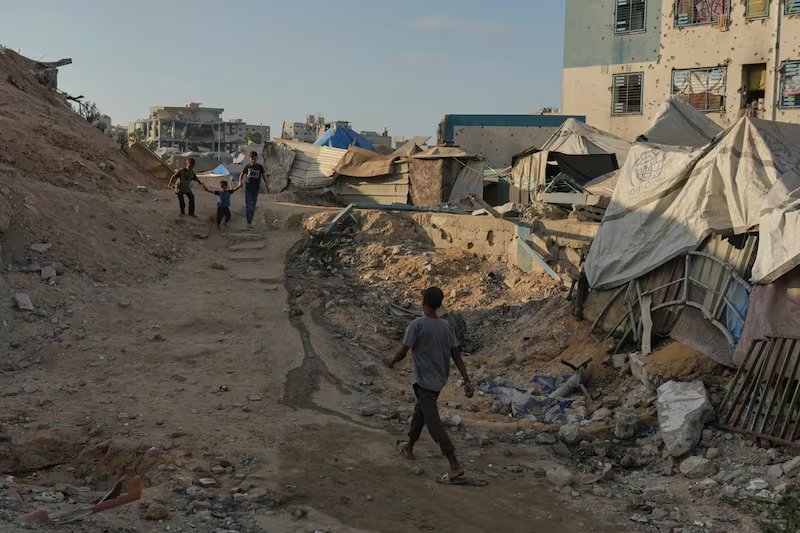
As more details surfaced, it became evident that countries that had initially expressed willingness to join the ISF began reevaluating their positions because they feared being involved in coercive actions against Palestinians, which would be politically unacceptable and morally impossible for any Muslim-majority nation. Washington is now struggling to move a core part of the Gaza Peace Plan forward, and anger across the Muslim world remains high because Israel continues its violent assaults, killing hundreds more in Gaza and maintaining repression in the occupied West Bank, creating an environment where any cooperation that appears to strengthen Israeli objectives becomes a domestic liability for governments across the region.
<a href=”https://twitter.com/RepublicPolicy”>Follow Republic Policy Twitter</a>
In Pakistan, the debate has taken a sharper tone after Defence Minister Khawaja Asif questioned the entire framework of the plan and urged Muslim countries to reassess their support, stating that Israel has shown no real commitment to a credible peace process, and this criticism signals a growing realisation among political leaders that the earlier enthusiasm for participation was premature. Many observers believe that the decision to signal readiness for troop deployment may not have been a miscalculation but rather a political gesture aimed at aligning with the preferences of a volatile US administration, without fully evaluating how such alignment might affect Pakistan’s long term diplomatic position and moral standing on the Palestinian issue.
<a href=”https://facebook.com/RepublicPolicy”>Follow Republic Policy Facebook</a>
This evolving situation highlights the importance of foreign policy decisions being grounded in wisdom, national interest and long term judgment rather than impulses driven by external approval or short term diplomatic signalling. Matters related to Palestine carry emotional, political and historical weight in Pakistan, and any step that appears to compromise moral responsibility or national sovereignty creates deep concern among citizens, lawmakers and institutions alike. Therefore, decisions about peacekeeping roles, troop deployments or involvement in politically sensitive missions must be taken with exceptional care, especially when they carry the potential to involve Pakistani personnel in confrontations that could harm Palestinians or contradict Pakistan’s principled position on the Palestine conflict.
<a href=”https://tiktok.com/@republic_policy”>Follow Republic Policy TikTok</a>
If Pakistan ultimately considers the option of sending troops, it must do so with absolute guarantees regarding the mandate and with clear assurances that Pakistani forces would serve strictly in a peacekeeping and humanitarian role, without any involvement in coercive security operations. There must also be certainty that such participation would align with the broader goal of establishing a viable Palestinian state rather than unintentionally reinforcing Israeli control or undermining Palestinian political agency, because Pakistan’s credibility on the issue rests on its consistent advocacy for justice, dignity and self determination for the Palestinian people.
<a href=”https://instagram.com/republicpolicy”>Follow Republic Policy Instagram</a>
Pakistan’s policymakers must therefore adopt a cautious, principled and interests driven approach that protects national dignity, respects public sentiment and upholds Pakistan’s long standing commitment to the Palestinian cause. This requires a sober understanding of the shifting regional dynamics, a clear-eyed assessment of US expectations, and above all a firm stance that Pakistan will not participate in any arrangement that pressures Palestinians or strengthens Israeli dominance under the guise of stabilisation. A responsible foreign policy demands not only clarity and caution but also moral consistency, and Pakistan must ensure that its choices reflect both national interest and historical responsibility.
<a href=”https://whatsapp.com/channel/0029VaYMzpX5Ui2WAdHrSg1G”>Follow Republic Policy WhatsApp Channel</a>