Danial Ahmed
Pakistan’s recent election has left the nation teetering on the edge of an economic precipice. The indecisive outcome, with no clear winner and a fractured parliament, casts a long shadow over the country’s ability to secure a critical new bailout program from the International Monetary Fund (IMF). This program, set to expire in March 2024, serves as a lifeline for Pakistan’s struggling economy, burdened by debt, inflation, and stagnant growth.
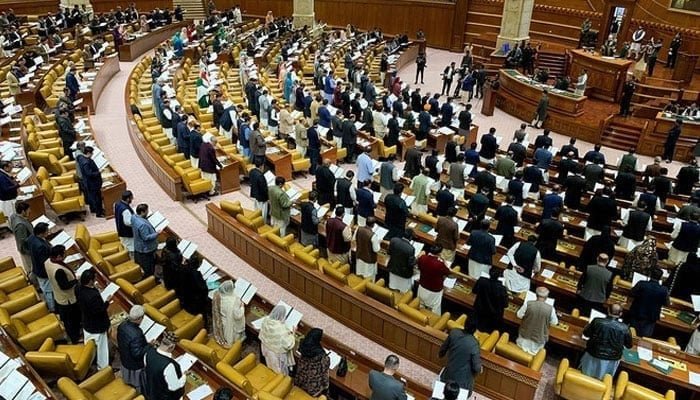
The February 8th election saw independent candidates, backed by former Prime Minister Imran Khan, emerge as the largest group in parliament. However, the absence of a majority has created a political stalemate, hindering the formation of a stable government. This uncertainty breeds hesitation among the IMF, which traditionally favors working with a clear and unified leadership capable of implementing tough economic reforms.
The consequences of delay are dire. A prolonged negotiation process or, worse, the failure to secure a new IMF program, could trigger a cascade of negative consequences. Firstly, Pakistan’s external liquidity stress could skyrocket, making it difficult to meet its foreign currency obligations and raising the specter of a default. Secondly, without the IMF’s backing, the risk of default on existing debts increases, further damaging Pakistan’s already fragile creditworthiness. Thirdly, other potential sources of financial aid, such as bilateral and multilateral partners, might shy away from a politically unstable environment. Finally, critical economic reforms necessary for long-term stability might be sidelined, further entrenching Pakistan’s economic woes.
Two scenarios present themselves. In the best-case scenario, a stable government quickly takes shape and engages constructively with the IMF. This swift action could pave the way for a new program within a few months, averting the worst-case economic outcomes. However, the current deadlock raises the specter of a more ominous scenario. Protracted negotiations and political instability could exacerbate the economic crisis, potentially leading to social unrest and further jeopardizing Pakistan’s future.
The coming weeks will be a crucial test for Pakistan’s political leadership. Overcoming the current gridlock and demonstrating a united front to the IMF is not just a political imperative, but an economic necessity. The nation’s fragile future hangs in the balance, waiting for its leaders to step up and bridge the divide, not only for political stability, but for the very survival of its struggling economy. In conclusion, Pakistan’s indecisive election has placed its economic future on a tightrope. The coming weeks will be critical, not only for determining the formation of a stable government, but also for its ability to navigate the treacherous terrain of securing a new IMF program. The stakes are high, and the nation’s economic well-being hangs in the balance.
Please, subscribe to the YouTube channel of republicpolicy.com