Abdul Latif
The February 8th elections in Pakistan unveiled a landscape far more intricate than anticipated. Despite a lackluster campaign, voters defied predictions with a high turnout, demonstrating their commitment to the democratic process. However, the results painted a picture of division, leaving a hung parliament and the task of government formation shrouded in complexity.
The Election Commission’s inexplicable delay in announcing results tarnished the process, leading to accusations of foul play and adding to the overall uncertainty. Despite PTI’s strong showing in KP and Punjab, and PML-N’s dominance in its traditional stronghold, neither party achieved a majority, necessitating challenging negotiations and horse-trading.
With coalition governments forming a long-standing tradition in Pakistan, the question remains: How long will it take to form a new administration, and who will lead it? PML-N, with its existing alliances, seems best positioned, but faces hurdles due to the poor performance of its partners. Meanwhile, PTI’s challenge lies in maintaining cohesion as efforts are made to lure its candidates into other coalitions.
The allocation of reserved seats adds another layer of complexity. Denying PTI recognition as a party will deprive them of these seats, creating an uneven distribution favoring other parties.
Whoever emerges victorious faces daunting challenges. A struggling economy plagued by inflation demands immediate attention. Negotiating a new IMF program is crucial to meet foreign debt obligations, but a weak coalition’s ability to implement necessary reforms remains questionable. Falling market indices and weakened bonds reflect the uncertainty surrounding political stability and economic improvement.
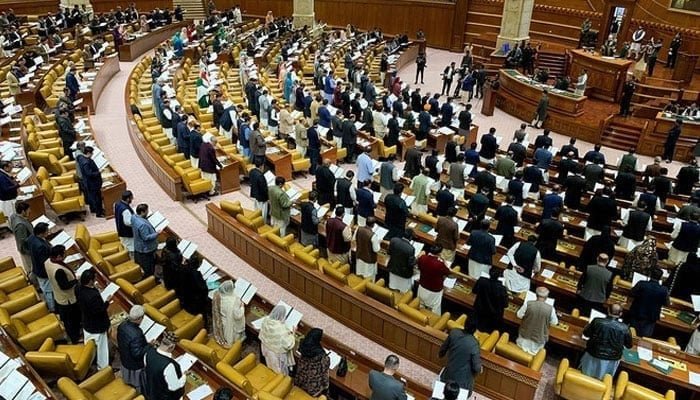
The new government will confront a vocal opposition and a parliament brimming with potential for gridlock. Furthermore, a regionally divided political landscape, with different parties controlling each province, creates additional administrative challenges. Managing relations with a politically influential military further complicates the equation.
Political challenges are equally demanding. A strong opposition in the National Assembly will hamper legislative work and potentially lead to a noisy parliament. The regionalized nature of the election results, with different parties controlling different provinces, adds another layer of complexity to central governance. Furthermore, managing relations with the military, whose influence has grown in recent years, will be a crucial factor in the government’s longevity.
While the election aimed to deliver stability, it has instead generated uncertainties and questions of legitimacy. The nation craves stability, achievable only through reconciliation and healing. Voters believe in democracy as the answer, but the question remains: can the leaders rise to the challenge of making it work for the public good, not just their own?
Pakistan’s pursuit of stability through democracy appears commendable, but the question of leadership persists. Can politicians rise above personal agendas and work collaboratively for the nation’s well-being? The answer hinges on a crucial choice: embracing reconciliation and healing, or succumbing to the quicksand of partisan bickering.
Please, subscribe to the YouTube channel of republicpolicy.com