
Fajar Rehman
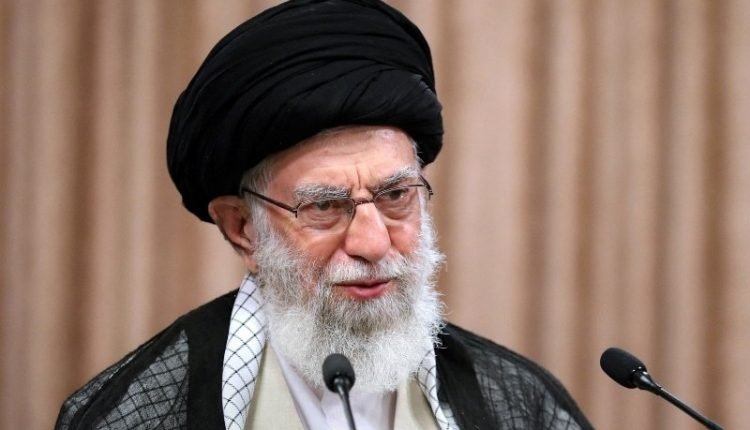
There is a particular kind of strategic error that does not merely fail but actively reverses the intended outcome. It is the error of impatience. It is the error of mistaking action for wisdom, and force for foresight. The killing of Ayatollah Khamenei belongs to this category of blunder, and history will record it as such with a clarity that no amount of official justification will obscure.
Consider first what nature itself was already delivering. Khamenei was eighty-six years old. He was not a man at the height of his powers. He was a man at the threshold of his final departure, carrying the weight of decades, presiding over a revolution that had long since exhausted its original energy. The Islamic Republic he led was not a confident empire projecting strength into the future. It was an aging system struggling to justify itself to a generation that had no memory of 1979, no reverence for founding myths, and no patience for economic stagnation dressed in theological language. The youth of Iran were not his admirers. They were his critics, his quiet rebellion, his most telling indictment.
History was doing the work. Slowly, unglamourously, but with absolute certainty, the passage of time was dismantling what armies and sanctions had failed to remove. The mullahs were losing the streets. The revolution was losing the next generation. Iran was buckling from within, under the accumulated pressure of mismanagement, isolation, and an ideological framework that could not answer the practical demands of twenty-first century life. A genuinely strategic power observes this process and does nothing. It waits. It lets the contradictions accumulate until the structure collapses under its own weight. This requires discipline. This requires the confidence to trust in time rather than in bombs.
Washington and Tel Aviv chose otherwise. They intervened at precisely the moment when intervention was least necessary and most costly. And in doing so, they committed an error of almost classical proportions: they transformed a fading old man into an immortal symbol.
This is where the calculus of force meets the reality of Shia civilization, and where those who ordered this act revealed a profound ignorance of what they were dealing with. Martyrdom in the Shia tradition is not merely a category of death. It is the foundational narrative of an entire civilizational identity. It is Karbala recited across centuries. It is the theological architecture through which suffering becomes sacred and resistance becomes eternal. When Imam Hussain fell in the seventh century, his death did not end a movement. It became the movement. It became the emotional core around which hundreds of millions have organised their spiritual and political consciousness ever since.
Khamenei dying quietly of old age in Tehran would have produced a succession crisis, an internal power struggle, perhaps a gradual and managed transformation of the Islamic Republic’s character. He would have been remembered, debated, and eventually reduced to a chapter in Iranian history. Khamenei killed by America and Israel is an entirely different matter. He is now a martyr. He is now Karbala rewritten in the present tense. He will be recited in prayers. He will be invoked in sermons. He will be the name on the lips of recruiters who need not fabricate grievance because Washington has supplied them with something far more powerful: a genuine one.
The consequences of this act will not remain confined to Tehran. They will radiate outward across a Muslim world in which anti-American sentiment was already a living and breathing political reality. From the streets of Karachi to the valleys of Kashmir, from the mosques of Hyderabad to the madrassas of Dhaka, a disposition that already existed will now harden into something qualitatively different. There is an important distinction between sentiment and conviction. Sentiment is flexible. It rises and falls with events and can be redirected by diplomacy, by economic interest, by shifting circumstances. Conviction is different. Conviction is what happens when a sentiment acquires a story, a martyr, a mythology that explains the world in terms of existential conflict. Washington has just handed that story to every extremist recruiter operating in every corner of the Muslim world.
Radicalisation does not fundamentally depend on weapons or financing, though these matter. It depends on narrative. It depends on the ability to tell a young man, already economically frustrated and spiritually adrift, that his humiliation has an author and that his resistance has a sacred precedent. The killing of Khamenei is that narrative made real. It is not an abstract accusation. It is a documented act. It is something that happened, that can be pointed to, that requires no embellishment because the facts themselves carry the weight of an indictment.
This was not bold strategy. Bold strategy produces outcomes that serve the actor’s long-term interests. This was impatience wearing the costume of strength. It was the refusal to trust in time when time was already working in the desired direction. It was the substitution of the dramatic for the effective, and this substitution has a long history of producing catastrophe.
The genuinely strategic powers in history have understood that the most durable victories come not from eliminating adversaries but from allowing them to exhaust themselves. Rome did not defeat every barbarian at the gates. The Cold War ended not through nuclear exchange but through the Soviet Union’s internal collapse under the accumulated weight of its own contradictions. Iran was already walking this path. The revolution was already dying the slow and quiet death of irrelevance. The youth were already choosing a different future.
Now they have been given a reason to choose differently. Now the revolution has been resurrected not by the mullahs but by its enemies. Now the succession crisis that would have fractured the Islamic Republic’s future has been replaced by a unifying grief, a clarifying anger, and a martyr whose name will outlast the men who ordered his death.
History will record this as a classic strategic blunder: the unnecessary act that created the very enemy it sought to eliminate.