
Pakistani bureaucracy suffers from a quiet but corrosive habit: it has built a culture of personality cult where institutional leadership should stand instead. A Secretary, a Commissioner, a Deputy Commissioner, or the head of any department settles into the chair of leadership and narrates his own achievements to the staff seated below him. “When I was Deputy Commissioner.” “I accomplished this in such a district.” “A revolution arrived during my tenure.” The conversation drifts away from policy and public service, and settles instead on the personality presiding over the room.
Organizational behaviour has a name for this: narcissistic leadership. Under it, the institution slowly reorganizes around one individual. Decisions and discussions, even the retelling of past successes, begin to orbit a single personality rather than the institution itself. Nearly fifteen years inside this system show how few officers genuinely grasp professional expertise or policy governance in any serious sense. Too many spend their energy on self-promotion rather than on strengthening performance.
The meeting culture compounds the damage. Meetings convened for oversight and coordination dissolve into lengthy introductions, personal anecdotes, and tributes to the head of the table. Much of the official calendar is consumed this way, with little bearing on actual institutional output.
The deeper cost is dissent itself. Subordinates learn to speak toward the leader’s expectations rather than the problem at hand, and critical thinking quietly disappears from the room.
Real leadership strengthens the institution, not the individual. Until Pakistani bureaucracy abandons this cult of personality, governance reform will remain a slogan rather than a fact.
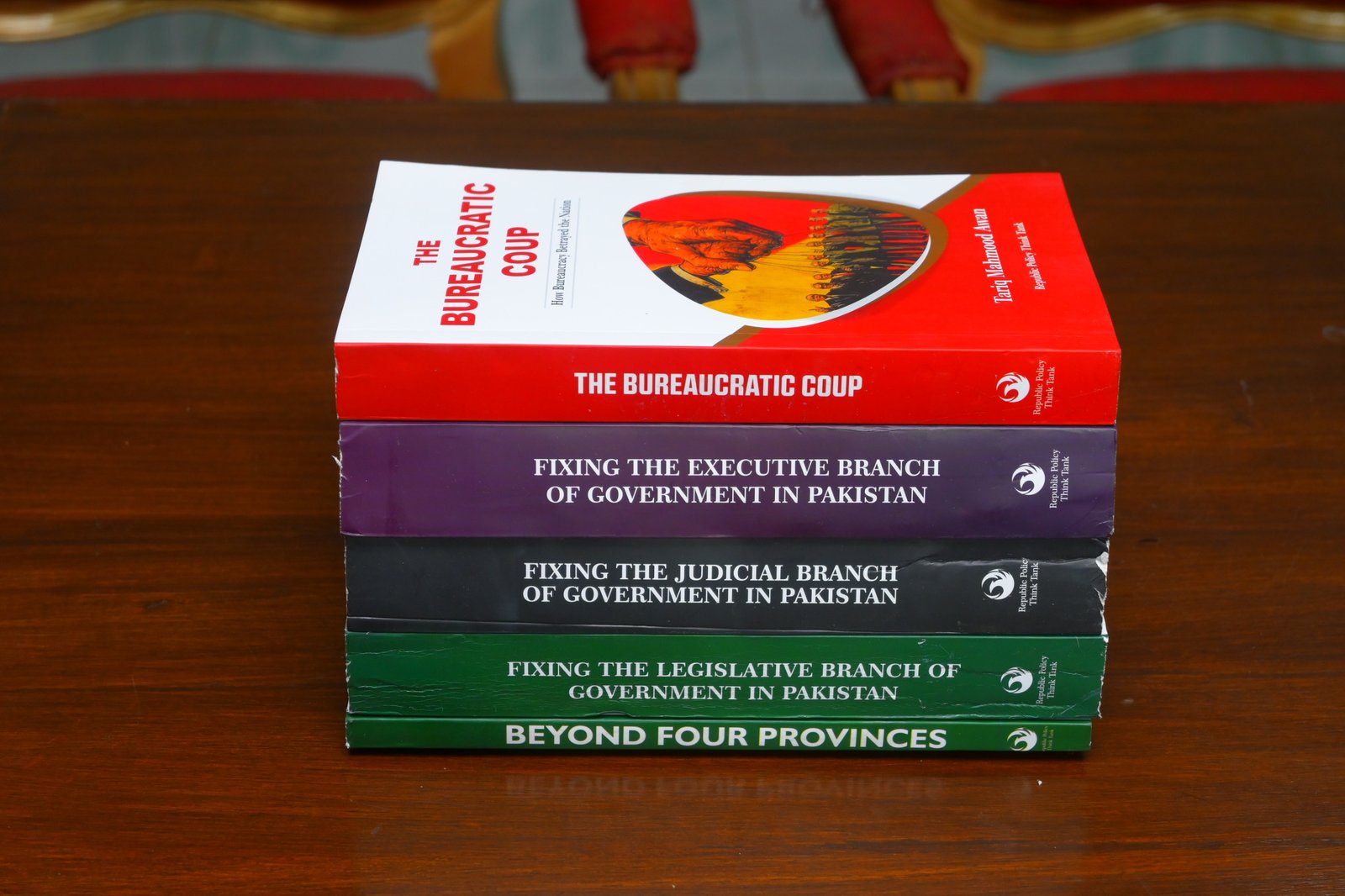
The best-selling books of Republic Policy Think Tank, including the landmark book The Bureaucratic Coup, are available at Vanguard Books, Liberty Books, Readings, Kitab Sarai, Sang-e-Meel, Saeed Book Stores, and others across Pakistan. Contact for home delivery: 0300 9552542.