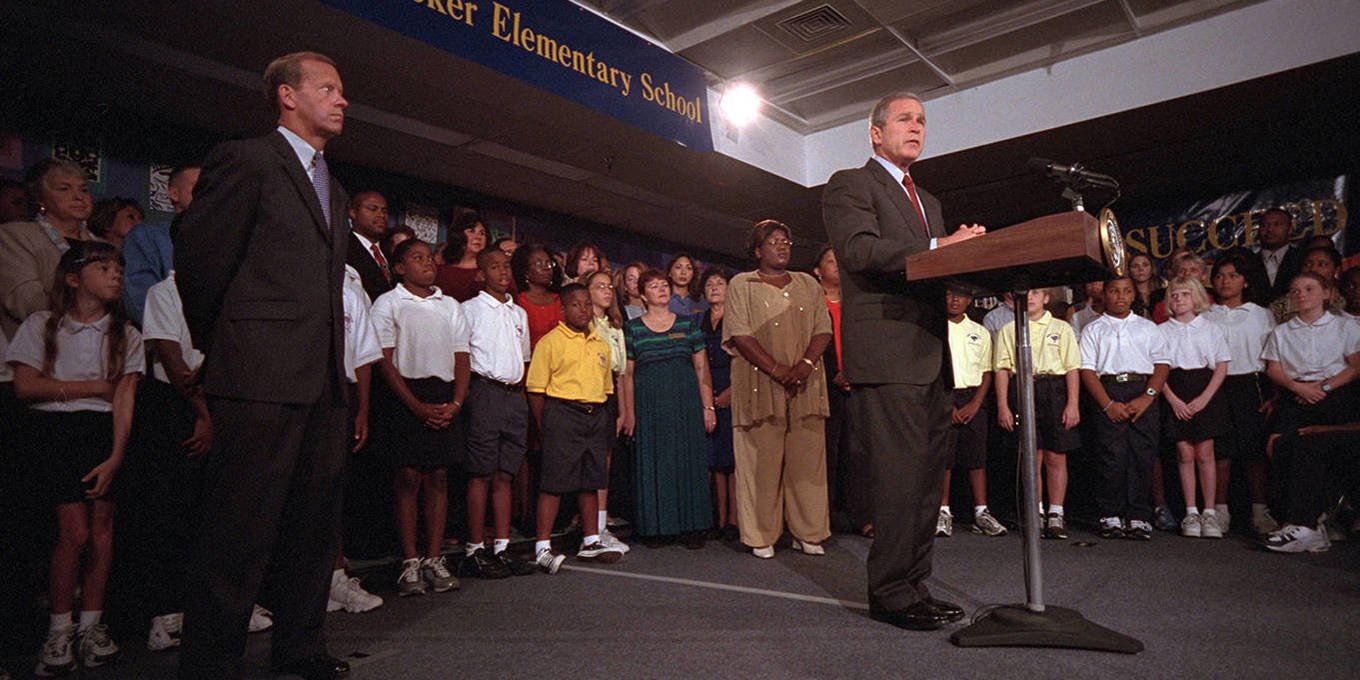

MADRID — On September 11, 2001, the international order changed direction. The United States stood at the height of its post-Cold War power, Vladimir Putin was still in the early years of his presidency in Russia, and China was emerging as an increasingly important economic power. Al-Qaeda’s attacks did not create all the forces that would later reshape the world, but they profoundly changed how the major powers used their time, resources and political attention.
For the United States, 9/11 transformed terrorism from one security challenge among many into the organising principle of foreign policy. Washington invaded Afghanistan within weeks, overthrew the Taliban government and began what became a global “war on terror.” NATO invoked its collective-defence provision for the first time in its history. Counterterrorism operations expanded across regions, while intelligence, surveillance and homeland-security institutions were transformed.
The initial response enjoyed considerable international sympathy. But the strategic consequences became much more complicated when the United States invaded Iraq in 2003. Iraq had not carried out the September 11 attacks, and the central justification for the invasion—the alleged existence of weapons of mass destruction—proved unfounded. What was expected to demonstrate American power instead became a prolonged conflict that consumed enormous military, financial and political resources. Afghanistan, too, evolved from a rapid intervention into a two-decade war that ended with the Taliban returning to power in 2021.
The result was a paradox. The United States remained the world’s strongest military power, but the wars launched in the shadow of 9/11 demonstrated the limits of what that power could achieve. Washington could overthrow governments quickly; building stable political orders proved far more difficult. Trillions of dollars were spent, thousands of American troops were killed, many more were wounded, and the human cost for Afghanistan and Iraq was vastly greater.
There was also a cost that cannot be measured simply in money or casualties: strategic attention.
While Washington concentrated on terrorism, insurgencies and political reconstruction in the Middle East and Afghanistan, the balance of power elsewhere was changing. China was becoming richer, technologically more capable and increasingly integrated into the world economy. It joined the World Trade Organization in December 2001 and spent much of the following two decades expanding its economic influence and military capabilities. During much of the early post-9/11 period, Washington still approached Beijing primarily through engagement rather than outright great-power competition.
This does not mean that 9/11 caused China’s rise. China’s economic transformation was already well underway. But the attacks altered American priorities at precisely the moment when China was accumulating the economic and technological foundations of greater global power. Washington spent years focused heavily on Afghanistan, Iraq and counterterrorism while Beijing concentrated on economic development, trade, infrastructure, industrial capacity and military modernisation.
Russia followed a different path.
Immediately after 9/11, Putin saw an opportunity for cooperation with the United States. Moscow possessed extensive experience in Afghanistan and relations with the Northern Alliance, and Russia supported aspects of the American campaign against the Taliban. Putin, then seeking closer economic and political relations with the West, initially regarded counterterrorism as an area where Russian and American interests could overlap.
For a brief period, therefore, 9/11 appeared capable of bringing former Cold War rivals closer together.
That opportunity did not last.
Disputes over NATO, American military involvement in Central Asia, Iraq, democratic movements in former Soviet states and the wider European security order gradually reopened the divide. Russia eventually adopted an increasingly confrontational posture toward the West, culminating in its seizure of Crimea in 2014 and, later, its full-scale invasion of Ukraine.
Here again, 9/11 should not be treated as the single cause. The deterioration of US-Russian relations had deeper roots. But the post-9/11 period mattered because it reordered priorities. Washington’s prolonged concentration on the Middle East coincided with Russia’s gradual reassertion of power in its neighbourhood and China’s emergence as a genuine strategic competitor. Analysts have consequently described Iraq and Afghanistan not only as costly wars but also as major strategic distractions from the changing balance of power in Europe and Asia.
The terrorist attacks therefore produced consequences that al-Qaeda itself could never have controlled.
Its objective was to strike the United States. Instead, the American response helped reshape the international system.
The wars weakened al-Qaeda’s original leadership and dramatically improved international counterterrorism capabilities. Osama bin Laden was killed in 2011, terrorist financing came under greater scrutiny, intelligence cooperation expanded, and governments developed far more sophisticated methods of tracking extremist networks. Yet terrorism did not disappear. Al-Qaeda became more decentralised, the invasion and collapse of order in Iraq contributed to conditions from which al-Qaeda in Iraq and eventually the Islamic State emerged, and extremist organisations adapted rather than simply vanished.
Meanwhile, the broader geopolitical environment moved away from the extraordinary American predominance that had characterised the 1990s.
China became Washington’s principal long-term strategic competitor. Russia again became a military adversary of the West. Middle Eastern conflicts remained unresolved. And American society itself became increasingly sceptical of large-scale foreign interventions after the experiences of Iraq and Afghanistan.
There was another lasting transformation. The boundary between national security and ordinary civilian life became less distinct. Airports changed. Surveillance expanded. Governments accumulated new counterterrorism powers. Intelligence agencies shared unprecedented amounts of information. Drones became central tools of surveillance and warfare, while mass digital data increasingly became part of modern security systems.
Twenty-five years later, the irony is striking. The international agenda has returned to many of the questions that appeared to have receded after September 11: competition among great powers, military deterrence, nuclear weapons, territorial wars, industrial capacity and control over strategic technologies. The United States is once again confronting Russia and China as central security challenges, even as terrorism remains a persistent threat.
The lesson is not that everything that followed was predetermined by the attacks. History rarely works so neatly. China would probably have continued rising, Russia would have pursued its own ambitions, and tensions in the Middle East would have persisted regardless of September 11.
The deeper lesson concerns how major powers respond to shocks.
Al-Qaeda possessed nothing remotely comparable to American economic or military power. Yet its attack induced the world’s dominant state to reorganise its foreign policy, fight two long wars and devote extraordinary resources to counterterrorism. Some of those measures made the United States safer and severely weakened terrorist networks. Others imposed enormous costs, damaged American credibility and diverted strategic attention from changes elsewhere in the international system.
That distinction matters even more today. Great powers are rarely weakened by a single external blow. They are weakened when shocks lead them into strategic commitments whose costs exceed their benefits.
The enduring geopolitical significance of 9/11, therefore, lies not only in what al-Qaeda did to the United States on that September morning, but in what the United States—and the other major powers responding to the world it created—did afterward. The attacks lasted hours. Their consequences helped shape a quarter-century.