At least 24 people have been killed and dozens more injured after gunmen opened fire on a group of Indian tourists visiting the scenic hill town of Pahalgam in Indian-administered Kashmir. The attack, which authorities are calling one of the deadliest against civilians in recent years, has shocked the country and reignited fears about safety in the already fragile Himalayan region.
The shooting occurred in Baisaran, a mountain meadow located about 5 kilometers from Pahalgam, a destination famously referred to as the “Switzerland of India” for its stunning landscapes. Known for its breathtaking views and popular with domestic and international tourists alike, Pahalgam is now at the center of a horrific tragedy.
According to police, the assailants targeted a group of tourists, reportedly firing indiscriminately. Multiple sources say that several victims are in critical condition, and the death toll may still rise. Many of the injured have been transported to nearby hospitals in Anantnag and Srinagar, with emergency services working around the clock.
Chaos and Terror in a Peaceful Tourist Spot
Eyewitnesses described a scene of chaos and terror. A tourist from Gujarat, who narrowly survived the attack, recounted how panic took over the group as gunfire rang out suddenly. “Everyone just ran. People were crying and shouting for help. It was pure chaos,” he said. Videos circulating on social media, though unverified, show bodies lying on the grass with people screaming for medical assistance. Other footage shared by Indian outlets shows army troops rushing to the area as the operation to locate the attackers began.
Inspector General of Police, Vidi Kumar Birdi, confirmed that the remote location of the attack made it difficult for emergency services to reach the site quickly, as vehicles cannot access the hilly terrain of Baisaran. Helicopters were reportedly used to airlift some of the severely wounded.
Political Response and Condemnation
India’s Prime Minister Narendra Modi strongly condemned the attack, calling it a “cowardly act” and vowing that the perpetrators would be brought to justice. “Our resolve to fight terrorism is unshakeable, and it will only grow stronger,” he posted on X (formerly Twitter). Modi has dispatched Home Minister Amit Shah to Srinagar for an urgent security review and to oversee the investigation.
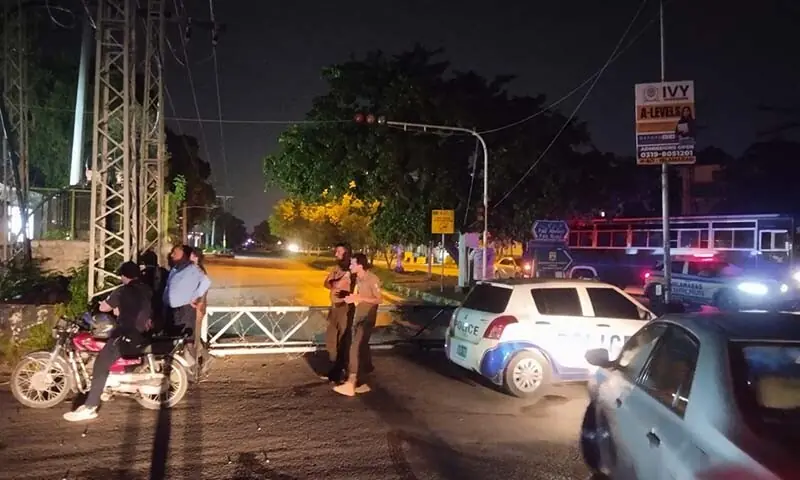
Lieutenant Governor Manoj Sinha also confirmed that both army and police personnel have been deployed in large numbers and that search operations are ongoing. The area has been sealed off, and checkpoints have been set up across the region as the hunt for those responsible intensifies.
So far, no group has claimed responsibility for the attack.
A Fragile Region With a Violent Past
This brutal assault has once again highlighted the volatile security situation in Jammu and Kashmir. Though violence had declined in recent years, incidents like this show that the region remains deeply unstable. Since the 1990s, Kashmir has been the center of an armed separatist movement, with tens of thousands of lives lost over the decades, including civilians, militants, and security personnel.
The roots of the conflict go back to 1947, when the region was divided between India and Pakistan following the end of British colonial rule. Both nuclear-armed nations claim the region in full and have fought multiple wars over it.
The situation escalated in 2019 when the Modi government revoked Kashmir’s partial autonomy under Article 370 of the Indian Constitution. The move was controversial both domestically and internationally and was followed by months of lockdown, increased military presence, and widespread crackdowns on dissent.
Despite government claims that normalcy has returned to the region and that tourism has surged—with over 3.5 million visitors recorded in 2024—attacks like this one remind the public that deep tensions persist beneath the surface.
Targeting Civilians: A Dangerous Escalation
What’s particularly alarming about this attack is the deliberate targeting of civilians, especially tourists, which is rare even in a conflict-prone area like Kashmir. A similar incident occurred in June 2024 when militants opened fire on a bus carrying Hindu pilgrims, killing nine and injuring more than 30. These patterns suggest a disturbing trend of soft-target attacks aimed at disrupting tourism, sowing fear, and deepening sectarian divisions.
Reports from local media and survivors indicate that the attackers may have intentionally targeted non-Muslim tourists, raising concerns about growing communal polarization. While these details are still under investigation, if confirmed, they would represent a dangerous new direction for violence in the region.
Implications for Tourism and Regional Stability
The attack could have far-reaching consequences for Kashmir’s tourism-dependent economy. Over the past few years, authorities have heavily promoted the region as a safe and attractive destination. Tour operators, hoteliers, and local businesses had begun to see signs of recovery. Now, with safety concerns back in the spotlight, many fear that visitor numbers will plummet again.
For locals, this is more than just a tragedy—it’s a devastating blow to livelihoods and the fragile peace they hoped was beginning to take root.
The Way Forward: Security vs. Dialogue
The government’s immediate response has, predictably, focused on intensifying security operations. But experts and activists warn that military crackdowns alone cannot solve the deeper issues fueling violence in the region. Human rights advocates stress the need for a more comprehensive approach that includes dialogue, political inclusion, and socio-economic investment.
As the search continues for the perpetrators, many in India and beyond are asking tough questions. How did such a high-profile tourist area lack adequate protection? Why does the region remain vulnerable to such attacks despite the massive military presence? And most importantly, when will the cycle of violence, retaliation, and impunity finally end?
Conclusion
The massacre in Pahalgam is a grim reminder that beneath Kashmir’s postcard-perfect beauty lies a decades-long story of conflict, mistrust, and unresolved political tensions. While the perpetrators must be held accountable, this incident also demands a serious rethink of how peace and stability are pursued in the region.
Until then, the people of Kashmir—along with the families of the victims—will continue to pay the price.