
Eight members of the Pakistan Bar Council on Saturday strongly condemned what they called the government’s “blatant, wilful and deliberate violation” of the Supreme Court’s August 18 order directing PTI founder Imran Khan’s transfer to Shifa International Hospital.
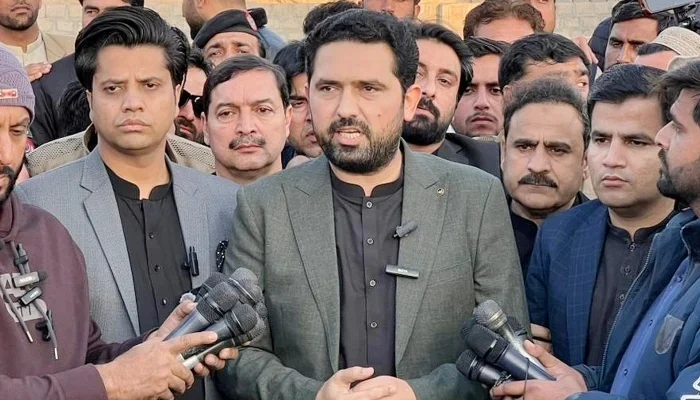
“The order of the SC was clear, unequivocal and binding yet the executive has chosen to disregard it and has acted in direct defiance of the court’s directions and violated the same,” the members said in a joint statement. The signatories included PTI Secretary General Salman Akram Raja, Abid Shahid Zuberi, Muhammad Maqsood Buttar, Shafqat Mehmood Chauhan, Munir Ahmed Kakar, Abdul Sattar Khan, Salahuddin Ahmed, and Qazi Muhammad Arshad.
“The executive has no authority to defy the directions and orders of the SC,” the statement said, describing the episode as “a serious assault on the independence, authority and dignity of the judiciary” that “undermined the rule of law and strikes at the very foundation of constitutional governance.” It added: “If the executive can simply disregard an order of the SC, then the constitutional separation of powers is rendered meaningless.”
The members also characterised the government’s conduct as “a direct threat to the fundamental rights of the people of Pakistan,” arguing that judicial orders serve as the principal constitutional safeguard against arbitrary state action, and that disregarding them undermines the authority of the courts, the rule of law, and the Constitution alike, placing every citizen’s rights at risk. They noted that the Supreme Court had already addressed the consequences of non-compliance in paragraph 14 of its August 18 order, and said the government was “fully aware of the binding nature of the directions and the consequences that follow from their disobedience.” They further clarified that filing a review petition neither suspends the order nor authorises the government to ignore it, and called for those responsible for the violation to be identified and face legal proceedings.
The signatories argued that the 26th and 27th Constitutional Amendments, which they said had already weakened the supremacy of the rule of law, judiciary, and Constitution, could not provide cover for disobeying a standing Supreme Court order. “No constitutional amendment, political consideration or executive decision can place the government above a binding judicial command. The Constitution does not permit the executive to decide for itself which judicial orders it will follow,” the statement said.
The members also called it “particularly disturbing” that Imran’s treatment stood in contrast to how former prime ministers and other political leaders facing criminal convictions have previously been treated. In an apparent reference to former Prime Minister Nawaz Sharif, they noted that a past political leader, despite conviction, “was permitted to travel abroad for medical treatment pursuant to court order and an undertaking executed on Rs50 stamp paper.” They asked whether constitutional protections around life, health, dignity, and access to medical treatment were being applied selectively depending on an individual’s political circumstances.
PBC Vice Chairman Condemns the Statements
Separately, Pakistan Bar Council Vice Chairman Pir Muhammad Masood Chistie clarified that the statement issued by eight of the council’s 23 members reflected only their individual views and could not be treated as the PBC’s collective position. “In an institution governed by democratic principles, the minority cannot dictate the position of the majority,” he said, adding that the PBC must remain above political interests and personal agendas, and that neither the council nor the superior judiciary should be politicised for ulterior motives.
The PBC formally distanced itself from both the eight members’ statement and a separate statement issued by the Lahore High Court Bar Association, saying neither reflected the collective views, position, or policy of the legal fraternity or the institution. The council reaffirmed its commitment to the rule of law, judicial independence, constitutional supremacy, and the sanctity of constitutional institutions, and said it expected all members to uphold those principles alongside the dignity and institutional independence of the Bar Council.
The Hospital Transfer Saga
The controversy traces back to Tuesday, when the Supreme Court ordered the government to transfer Imran to Shifa International Hospital within two days for examination and treatment by a multidisciplinary medical board. A three-member bench, headed by Justice Shahid Waheed and comprising Justices Naeem Akhtar Afghan and Ishtiaq Ibrahim, issued the interim directions on petitions seeking Imran’s hospitalisation, access to his personal physicians and family, and disclosure of his medical records to relatives. The court also ordered that Dr Uzma Khan and Dr Faisal Sultan, Imran’s personal physician, be present during the medical board’s examination, while barring his family, PTI members, and lawyers from disclosing his health condition or medical records publicly until the next hearing.
The following day, the government filed a review petition against the transfer order, arguing it was discriminatory and violated prison rules and principles of natural justice. The Supreme Court returned the plea on Thursday, citing procedural issues with the affidavit and an improperly prepared paper book.
That same night, extensive security arrangements were put in place around Shifa International Hospital, with all indications pointing toward Imran’s imminent arrival in compliance with the court order. By Friday morning, however, it emerged that he had instead been taken to PIMS for a check-up before being returned to prison. Information Minister Attaullah Tarar attributed the change to “the security situation created by PTI workers on the way to and outside Al Shifa Hospital.” In a post on X, he said the prisoner was taken to hospital under appropriate security arrangements overnight between August 20 and 21, and that a team of qualified doctors, including an ophthalmologist, cardiologist, and physician, examined him and declared him medically fit.
PIMS administration later said two specialists from Shifa International Hospital had participated in Imran’s eye assessment, while other examinations were conducted by PIMS’s own specialists. Imran has been taken to PIMS multiple times since his eye condition, right central retinal vein occlusion, came to light in late January. “The clinical input arising from the ophthalmological assessment was taken into account alongside findings of the investigations conducted at Pims,” the PIMS statement said.
Separately, the government filed a fresh review petition on Thursday against the Supreme Court’s August 18 order, with the Islamabad chief commissioner again submitting the plea, arguing that his office held a direct, substantial, and legally protected interest in the matter and that the order adversely affected its constitutional authority.