
Mudassir Rizwan
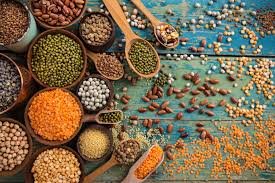
There is something deeply contradictory about a country built on agriculture that cannot feed itself from its own fields. Pakistan spends nearly one billion dollars every year importing pulses — lentils, chickpeas, beans — the most basic proteins that sustain millions of poor households across the country. This is not a minor trade imbalance or a seasonal shortfall. It is a structural failure, accumulated over decades of neglect, misplaced priorities, and the absence of serious agricultural thinking at the policy level.
The scale of this dependence ought to trouble every Pakistani who understands what the numbers actually mean. Pulses are not a luxury commodity. They are the dietary foundation of low-income families who cannot afford meat or more expensive sources of nutrition. When Pakistan imports these staples at such enormous cost, it is effectively exporting the nutritional sovereignty of its own poor. The foreign exchange drain is real and significant, but the deeper wound is the admission embedded within it: that a country with vast agricultural land, a large farming population, and centuries of cultivation tradition has failed to secure one of the most elementary elements of its own food supply.
These concerns came into sharp focus at a recent seminar titled “Developing Competitive and Inclusive Value Chains of Pulses in Pakistan,” jointly hosted by the Sustainable Development Policy Institute and the Australian Centre for International Agricultural Research. The discussions that took place at that gathering were illuminating, not only for what they revealed about the current condition of the sector, but for what they implied about the institutional failures that have brought it to this point. The findings deserve a far wider audience than a seminar room.
Begin with the most basic indicator. Pulses occupy barely five percent of Pakistan’s total cropped area. For a crop group of such nutritional and economic significance, this figure is remarkable. It reflects not a natural limitation of geography or climate, but a series of deliberate and often misguided choices about which crops deserve attention, investment, and institutional support. When policymakers have consistently directed resources toward wheat, rice, sugarcane, and cotton, it should surprise no one that pulse cultivation has withered to the margins.
The productivity data makes the picture even more troubling. Pakistan’s national average yield in pulse farming sits at approximately 553 kilograms per hectare. Yet progressive farmers working with improved inputs and practices are achieving yields of up to 1,500 kilograms per hectare on the same land. That gap of nearly three to one is not a mystery of nature. It is a measurement of institutional failure. It tells us that the potential exists, the soil can support it, and the farmers are capable of achieving it — but that the system surrounding them has not delivered the tools, knowledge, or incentives required to make it happen consistently and at scale.
The structural constraints holding the sector back are well understood, even if they remain poorly addressed. Farmers across pulse-growing regions continue to rely on poor-quality seeds that limit productivity from the very first stage of cultivation. Disease outbreaks and climate-related risks compound the difficulty, particularly in the rain-fed areas of Punjab and Khyber Pakhtunkhwa where pulses are traditionally grown. These are regions that receive irregular rainfall and face growing climate volatility, making them precisely the areas that need the strongest support from research institutions, extension workers, and government services. Instead, they have largely been left to manage on their own.
The market dimension of this failure is equally important. Weak market linkages and chronically low farm-gate prices have progressively eroded the incentive to grow pulses at all. When a farmer cannot secure a fair and predictable return on a crop, the rational response is to shift to something that offers better margins. That is exactly what has happened across Pakistan’s agricultural landscape, as farmers have moved toward more commercially attractive options and pulse cultivation has steadily contracted. The market has sent a signal, and in the absence of any countervailing policy intervention, farmers have responded to it. The result is the import bill Pakistan now carries.
Post-harvest systems represent another layer of the problem that deserves serious attention. Even the pulses that are successfully grown frequently lose value before reaching consumers, because processing facilities are inadequate and quality control at the farm level is weak. A crop that could command a fair price in a well-functioning market is degraded by poor handling, insufficient storage, and the absence of basic grading and processing infrastructure. Strengthening these links in the value chain would improve profitability, reduce waste, and give farmers a genuine reason to invest more seriously in pulse cultivation.
Perhaps the most persistent failure lies in the disconnect between research and policy. Field research has been conducted in areas such as Rawalpindi, Chakwal, and Bhakkar, where farmers have been testing improved production practices with encouraging results. But too often, these findings remain confined to pilot projects and academic reports rather than being translated into national agricultural policy. The gap between what researchers discover and what policymakers actually implement has cost Pakistan enormously across multiple sectors. In pulse agriculture, it has cost the country the benefit of a decade or more of potentially transformative innovation.
There is also a long-standing and deeply mistaken practice of relegating pulses to marginal, low-fertility lands, as though these crops require less care and deserve less investment than others. Pulses, like any crop, perform best with fertile soil, proper agronomic support, and consistent inputs. Placing them on the least productive land and then lamenting their low yields is a self-fulfilling policy failure. Reviving pulse cultivation on genuinely productive agricultural land would alter the calculus entirely.
The solutions are not unknown. They require coordinated policy reform, sustained investment in agricultural research and extension services, and market interventions that make pulse farming a commercially viable choice for ordinary farmers. None of this is beyond Pakistan’s capacity. What it requires is the political will to treat food security as a genuine national priority rather than a rhetorical one. Until that commitment is made and sustained, Pakistan will continue paying a billion dollars a year for a problem it has the resources to solve itself.