
Dr Shabana Safdar Khan
There is something deeply contradictory about a country that cannot feed its people while sitting on some of the most fertile agricultural land in the world. Pakistan is not a desert nation. It is not a small island state stripped of natural resources. It is a country with vast river systems, productive plains, and a farming tradition stretching back millennia. And yet, in 2026, the United Nations has placed it among the ten worst food crises on the planet. That contradiction is not accidental. It is the product of choices — or more precisely, the consistent failure to make the right ones.
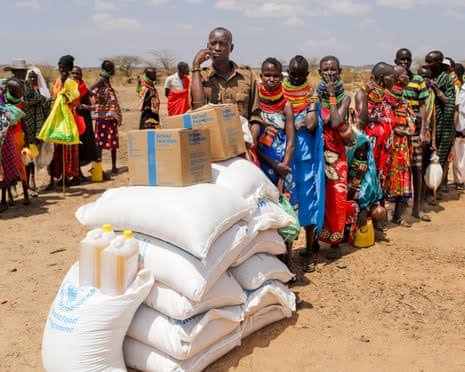
The UN’s Global Report on Food Crises uses a precise measurement tool: the Integrated Food Security Phase Classification, which categorises populations by the severity of their food deprivation and flags those requiring urgent intervention to prevent loss of life. By that standard, Pakistan’s numbers in 2025 were alarming. Eleven million people faced acute food insecurity. Of those, 9.3 million were classified in “crisis” and 1.7 million in “emergency” — the two most severe categories before famine is formally declared. These are not abstract statistics. They represent families skipping meals, children going to bed hungry, and mothers choosing between feeding themselves and feeding their children.
For a country with Pakistan’s agricultural inheritance, this should be impossible. It is not.
Climate Is a Factor. Governance Is the Deeper Problem.
The report points to climate change as a significant driver of worsening food insecurity, and that part of the story is real. In 2025, severe flooding struck Pakistan again. Heavy monsoon rains and flash floods affected more than six million people. Cropland was destroyed. Roads were washed away. Storage facilities collapsed. For farming communities already operating on thin margins, a single flood season can erase an entire year’s livelihood. Displaced families lose not just their homes but their capacity to buy food, creating a cycle that moves from environmental disaster to economic collapse to hunger in a matter of weeks.
But climate shocks do not explain everything. They explain why a crisis intensifies. They do not explain why a country with significant agricultural output ranks alongside conflict zones and failed states in food insecurity indices. For that, you have to look at governance.
The report’s nutrition data alone should compel serious reflection. Anaemia affects around 41 percent of Pakistani women. The maternal mortality rate stands at 186 deaths per 100,000 live births. Among children under five, 40 percent are stunted — meaning their physical and cognitive development has been permanently impaired by chronic malnutrition. Balochistan, Khyber Pakhtunkhwa, and Sindh are identified as provinces of particular concern, where overlapping vulnerabilities compound the risk: poor diets, limited healthcare, inadequate sanitation, and high disease burdens feeding into each other.
Stunting is not caused by a bad monsoon. It is caused by years of neglect.
The Paradox of the Producing Provinces
Perhaps the most damning observation in the entire report is this: Sindh and Balochistan, two provinces that are central to Pakistan’s agricultural output — producing staple crops, fruits, and commodities that feed the rest of the country — simultaneously record some of the highest levels of food insecurity and malnutrition in the nation. The provinces that grow the food cannot access it. The people who harvest the crops go hungry.
This is not an accident of geography. It is not even primarily an accident of poverty. It is the outcome of institutional failure at every level: in how land is distributed, how markets function, how supply chains are managed, and how government programmes are designed and delivered. The paradox of the producing provinces is the most honest summary of Pakistan’s food governance failure you will find anywhere.
Six Hundred Million Dollars and a Question
When the catastrophic 2022 floods struck, the international community responded. Pakistan received approximately 600 million US dollars in foreign assistance for flood recovery and food security. It was a substantial sum. It could have rebuilt infrastructure, restored livelihoods, and meaningfully reduced hunger in the most affected regions. What happened instead is documented in a report by Pakistan’s own Auditor General: serious financial irregularities, limited transparent accounting, and an absence of clear records showing how the money was actually used — particularly in Sindh.
This is not a story about donor fatigue. It is a story about what happens when resources arrive in systems that are not designed to absorb them honestly or efficiently. The money came. The crisis continued. And the gap between the two is filled with weak institutions, misallocation, and in some cases straightforward theft.
The report is careful in its language on this point, noting that where resources exist, weak governance and delivery systems dilute their impact. That is a polite way of saying that money sent into a broken governance system tends to disappear before it reaches hungry people.
What Aid Cannot Fix
The global aid environment is also tightening. Donor countries are facing their own fiscal pressures, and humanitarian budgets are shrinking even as needs grow. Pakistan cannot count on the international community to fill the gaps indefinitely. But even if it could, the structural roots of food insecurity would remain untouched. Funding is not the ceiling on Pakistan’s food security. Institutional capacity is.
What the country lacks is not diagnosis. Multiple reports, from multiple organisations, over multiple decades, have identified the same problems. What it lacks is the political will to convert diagnosis into coherent policy, and the institutional competence to implement that policy with consistency and accountability.
Agrarian reform, genuine devolution of agricultural management to local governments, transparent procurement and distribution systems, investment in rural infrastructure that survives flood seasons — these are not new ideas. They are recommendations that have sat in policy documents for years while the hunger figures have climbed.
The Harvest of Negligence
Pakistan’s food crisis is ultimately a political crisis dressed in the language of humanitarian emergency. The land is there. The water, despite mismanagement, is largely there. The farming knowledge is there. What is missing is a state that functions in the interest of its most vulnerable citizens rather than its most powerful ones.
Eleven million people facing acute food insecurity in an agricultural country is not a natural disaster. It is the harvest of decades of negligence, corruption, and institutional decay. And until Pakistan treats it as such — as a governance failure requiring structural repair rather than emergency charity — the numbers will not change. They will grow.