
Editorial
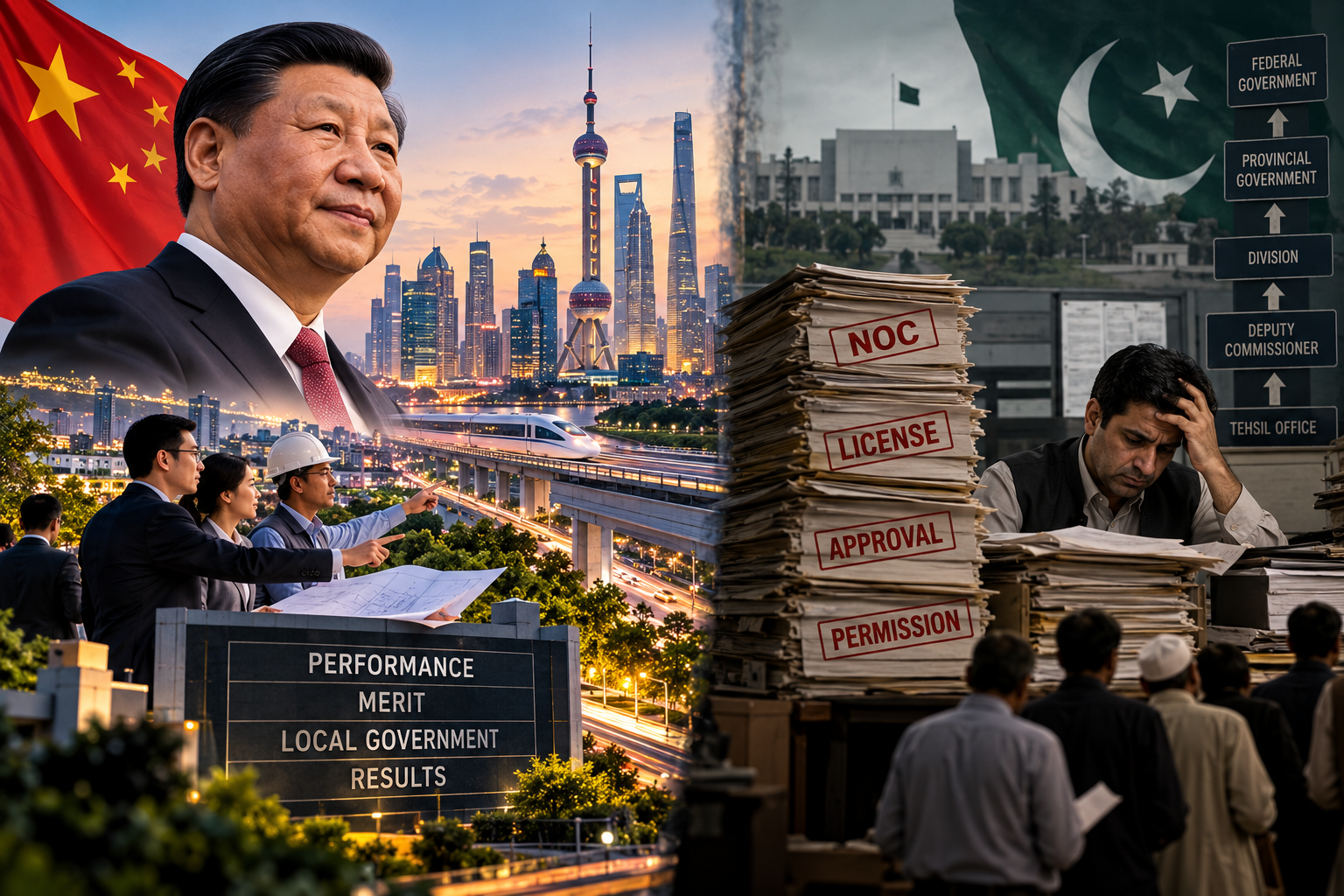
A state is nothing more than its institutions. Strip away the functioning legislature, the accountable executive, the independent judiciary, and what remains is not governance but theatre. Pakistan has perfected the theatre. It has mastered the art of the makeshift arrangement, the temporary fix, the stopgap solution dressed in official language. Structural reform makes it nervous. Institutions make it uncomfortable. Devolution terrifies it.
This is a country of 250 million people attempting to run itself from the top. That is not federalism. That is centralisation with a federal flag planted on it.
Pakistan’s Constitution is not silent on devolution. It demands it. The logic of a federal state rests on a simple, unbreakable principle: power must travel downward until it reaches the people it was always meant to serve. Political federalism, legislative federalism, fiscal federalism, administrative federalism — these are not academic categories. They are the load-bearing walls of any functioning federation. Remove them and the structure does not merely weaken. It collapses slowly, quietly, and then all at once.
Local government is where the state finally meets the citizen. It is where roads get built, drains get cleared, schools get monitored, and water reaches the house. Every country that governs itself seriously understands this. Pakistan understands it theoretically and ignores it practically. Provinces hold power they were never meant to permanently keep, guarding it from the districts and municipalities below with the same jealousy that the federal government once showed toward them.
The consequences are visible everywhere: unplanned cities choking on their own growth, rural communities invisible to any level of authority, and citizens with no representative closer than a provincial capital hundreds of miles away.
A federation that refuses devolution is not governing its people. It is simply ruling them from a greater distance.