Shazia Masood Khan
Every year, policymakers gather, reports are released, and urgent declarations are made about Pakistan’s climate future. This week, as the Breathe Pakistan conference brings together decision-makers, researchers, and advocates under one roof, the familiar rhythm is playing out again. The speeches will be passionate. The presentations will be alarming. And then, in all likelihood, the country will return to doing what it has always done — waiting for the next disaster before scrambling to respond.
That cycle has to end. The latest Jinnah Institute report on climate resilience makes this painfully clear. Pakistan is not suffering from a lack of knowledge about its climate vulnerabilities. It is suffering from a lack of will to act on that knowledge. The difference between a country that manages climate risk and one that is repeatedly broken by it is not information — it is decisions, funding, and sustained political commitment. Pakistan has the first. It desperately lacks the other two.
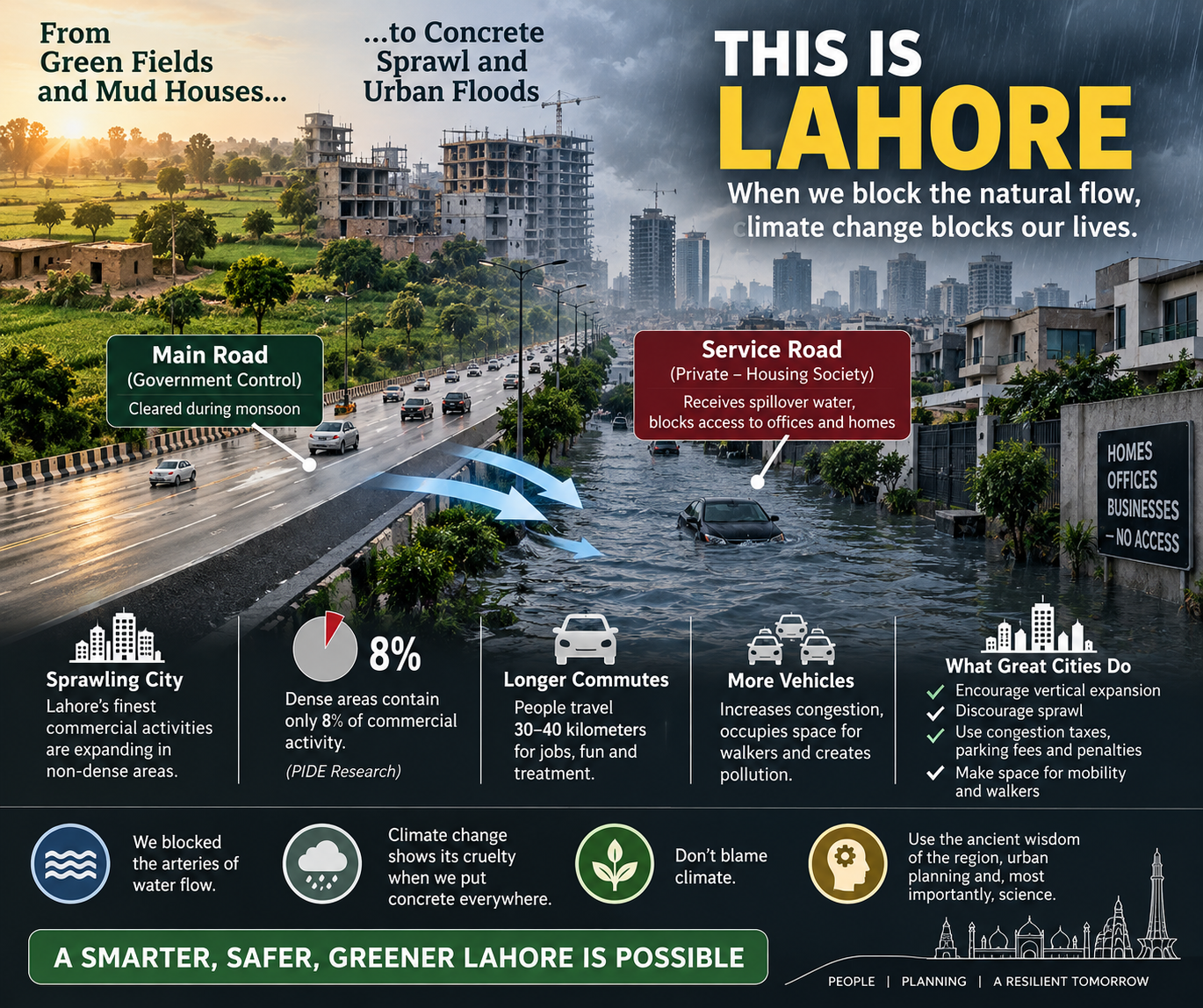
The 2025 floods were not just a natural disaster. They were a stress test that exposed everything wrong with how Pakistan manages climate risk. Millions of people were displaced. Livelihoods built over generations were wiped out in weeks. And when the floodwaters receded, what was left behind was not just destruction — it was evidence of systematic failure. Early warning systems that should have given communities time to prepare were too weak to be effective. Governance structures that should have coordinated emergency response were fragmented and slow. Natural buffers — wetlands, forests, riverbank ecosystems — that once absorbed some of the force of extreme weather had been steadily eroded over years of poor land management. Nature did not fail Pakistan in 2025. Pakistan’s institutions failed Pakistan.
This year offers little reason for comfort. Heatwaves have come earlier than expected. Rainfall patterns are becoming more erratic, raising the risk of drought in some areas and severe flooding in others simultaneously. Water stress is deepening across the country. Rivers that should be sources of life are increasingly polluted. Groundwater levels are falling in agricultural regions that depend on irrigation. In many Pakistani cities, access to safe drinking water — a basic human need — cannot be taken for granted. These are not isolated problems building toward some distant future crisis. They are happening now, compounding one another, and placing enormous strain on systems that were already stretched beyond comfortable limits.
The economic consequences are wide and deep. Farming, which remains the primary livelihood for a large portion of Pakistan’s rural population, is becoming dangerously unpredictable. Floods destroy crops. Water shortages stunt yields. Rising temperatures push harvests outside the windows that generations of farmers have relied upon. When crops fail, food supply chains break down, prices spike, and the burden falls most heavily on the households least able to absorb it. The poorest families spend the largest share of their income on food. When food becomes scarce and expensive, they are the first to go without. Climate change, in this sense, is not just an environmental challenge — it is an accelerator of poverty and inequality.
What does resilience actually look like for vulnerable communities? The Jinnah Institute report describes it honestly: it is incremental, hard-won progress. It is every small improvement in daily life that moves a household or a community slightly further from the edge. Education matters — it builds adaptive capacity and widens options. Asset ownership matters, particularly for women, whose economic empowerment directly strengthens household resilience. Access to technology, reliable social safety nets, and functional local governance all make a measurable difference. The challenge is that progress across these dimensions is deeply uneven. Some districts have invested in preparedness and are meaningfully better equipped to handle climate shocks. Many others have not, and the gap between them is widening.
Poor governance sits at the heart of this uneven progress. Local governments, which should be the first line of climate response, are often weak, underfunded, and disconnected from the provincial and federal structures that hold the resources. Provincial climate efforts are rarely coordinated with one another. Climate spending, where it exists at all, is treated as an emergency response line rather than a standing budget commitment. The result is a system that reacts expensively to disasters instead of investing modestly in prevention.
This is where the upcoming national budget becomes genuinely consequential. If climate resilience is treated as a peripheral concern — something to address once the more urgent economic fires are put out — Pakistan will keep paying for damage that could have been avoided. The cost of reconstruction consistently exceeds the cost of preparation. Every year of delay makes the eventual bill larger. Policymakers who present themselves as fiscally responsible while ignoring climate investment are not being cautious — they are being reckless.
The practical steps are not complicated. Invest in early warning systems that actually reach communities in time to save lives. Enforce stricter land-use regulations that protect natural buffers. Restore and preserve wetlands and forests that reduce flood intensity and maintain water cycles. Build smarter water management infrastructure that addresses both scarcity and excess. Strengthen local governments so that climate response is not always dependent on slow-moving federal machinery. Make climate spending a regular, predictable budget line rather than a crisis allocation.
None of these ideas are new. They have been discussed at every conference, recommended in every report, and outlined in every policy document for the better part of a decade. What is new is the cost of continuing to ignore them. Pakistan cannot afford another 2025. The Breathe Pakistan conference will generate attention. The Jinnah Institute report has mapped the gaps. The budget must now do the one thing that conferences and reports cannot — turn intent into action.