
Arshad Mahmood Awan
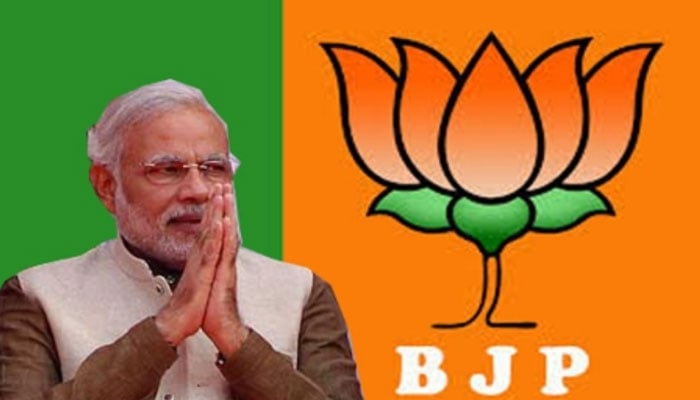
For nearly half a century, West Bengal stood as one of the most formidable bastions of regional political power in the Indian subcontinent. From 1977 onward, the state resisted the gravitational pull of national parties with remarkable consistency, first under the Left Front’s thirty-four-year dominance and then under the Trinamool Congress, which governed from 2011 until its defeat in May 2026. That resistance has now ended. The Bharatiya Janata Party’s victory in West Bengal is not merely an electoral result. It is a structural rupture in Indian politics whose consequences extend well beyond the state’s borders.
The scale of the BJP’s achievement deserves careful examination. West Bengal’s 294-seat assembly presented a formidable challenge. The state had developed an entrenched political culture rooted in regional identity, linguistic pride, and a tradition of ideological governance, first Marxist and then populist. The BJP has now won at least 124 seats with leads in 83 others, a margin that signals not a narrow victory but a decisive mandate. The era of regional insulation in West Bengal, by any analytical measure, is over.
Three Strategic Gains for the BJP
The first and most consequential advantage is strategic. India’s national opposition, already fragmented and structurally weak, has suffered a further blow to its credibility and its capacity to project a coherent alternative to BJP governance. West Bengal was the opposition’s strongest symbolic argument: proof that regional parties could hold national forces at bay through deep community roots and distinct political identities. That argument has now collapsed. The BJP has demonstrated that it possesses a replicable electoral model capable of penetrating states with powerful regional traditions. The alarm this sends to parties governing Tamil Nadu, Kerala, Karnataka, Telangana, and Andhra Pradesh is not hypothetical. It is strategic and immediate.
The second advantage is numerical. West Bengal contributes forty-two seats to the Lok Sabha, India’s 543-seat lower house of parliament. In the 2024 general elections, the BJP secured only twelve of those seats, while the TMC claimed twenty-nine. With state-level governance now in BJP hands, the structural advantage for the 2029 Lok Sabha elections shifts considerably. Conservative estimates suggest the BJP may target between twenty and twenty-five seats from West Bengal alone, a swing that could prove decisive in a closely contested national election. Electoral arithmetic in Indian politics is rarely dramatic in isolation, but marginal shifts across multiple states compound rapidly, and West Bengal represents a meaningful addition to the BJP’s parliamentary calculus.
The third advantage is narrative, and it may prove the most durable. The TMC’s trajectory from reformist movement to entrenched establishment mirrors a pattern seen repeatedly in post-colonial democracies. When the party came to power in 2011, it promised land reform, redistribution, and protection of farmers’ interests. What emerged instead was a centralised leadership structure, allegations of systemic corruption, limited job creation, and a bureaucratic apparatus increasingly insulated from public accountability. The BJP can now construct its governing narrative around this failure, positioning itself as the agent of renewal and efficient national governance against the backdrop of regional decline. Over the next three years leading to 2029, BJP governance in West Bengal is likely to be welfare-oriented and infrastructure-focused, designed to align the state’s political psychology with broader national trends rather than subnational exceptionalism.
The Electoral Roll Controversy
Any serious analysis of this election cannot ignore the controversy surrounding the voter roll revision. The Election Commission of India conducted a Special Intensive Revision exercise that resulted in the removal of approximately 12% of West Bengal’s 76 million registered voters from the electoral rolls. The Commission justified this as a necessary exercise to eliminate duplicate and outdated entries and to ensure electoral integrity. The TMC and allied voices have challenged this justification, raising concerns about the fairness of the process and its potential impact on the composition of the electorate. The matter is now before the courts. Whether the revision constituted legitimate administrative housekeeping or something more politically consequential is a question that independent judicial scrutiny must answer. Until it does, the legitimacy question will shadow the result, at least in the minds of those who voted for the defeated party.
The Risk of Communal Violence
The BJP’s victory carries strategic opportunities. It also carries serious risks, and intellectual honesty requires that both be assessed with equal rigour.
West Bengal is not simply another Indian state. It shares an extensive border with Bangladesh, with which it maintains deep cultural, linguistic, economic, and demographic ties. The Bengali identity that spans this border is one of the most complex and layered in the subcontinent. Since the ouster of Sheikh Hasina’s government in Bangladesh in 2024, India-Bangladesh relations have deteriorated sharply, marked by mutual suspicion, diplomatic friction, and unresolved disputes over border management and migration.
The BJP and the former TMC government in West Bengal were frequently at odds over these issues, particularly concerning illegal border crossings and citizenship questions. With the BJP now governing both the Centre and the state, that institutional friction disappears. What replaces it could determine the character of West Bengal’s social fabric for a generation.
If the BJP governs West Bengal through the lens of Hindutva identity politics, mobilising Hindu-Muslim polarisation as an electoral tool as it has done in other states, the consequences for a society built on cultural coexistence and shared Bengali heritage could be severe. West Bengal has historically maintained a form of communal equilibrium that the state’s unique cultural synthesis has sustained across decades of ideological governance. That equilibrium is not indestructible.
Conclusion
The BJP’s victory in West Bengal is the most significant political realignment in Indian state politics in recent memory. It demonstrates the party’s expanding pan-India capacity, strengthens its parliamentary position ahead of 2029, and offers a platform to redefine the political narrative of a state long defined by resistance to national forces. These are real and measurable gains. But governance in West Bengal will require restraint, inclusion, and a recognition that what distinguishes the state is precisely what makes it valuable. A BJP that governs with economic pragmatism and respects the state’s pluralist traditions will consolidate a historic opportunity. One that does not risks converting a political breakthrough into a communal crisis, and in doing so, may ultimately undermine the very electoral future it has just secured.