There is a crisis at the heart of Pakistani journalism, and it has little to do with censorship or press freedom, though those problems are real enough. The deeper crisis is professional. Too much of what passes for reporting in this country is built on rumour, unverified sources, and speculation dressed up as investigation. Stories break on the basis of whispers in corridors, anonymous tips with no documentary foundation, and conjecture that no editor with serious standards would permit to go to print. The public receives noise where it is owed facts. This is not journalism. It is a performance of journalism, and it does more damage to democratic accountability than silence would.
The standard in any serious democratic society is straightforward: a story is established through documentation first, and then presented to the public. The reporter’s job is not to broadcast what they have heard but to prove what they can demonstrate. This distinction between allegation and evidence is not a technicality. It is the entire basis on which journalism earns its authority to hold power to account. Without that foundation, reporting becomes indistinguishable from gossip, and the journalist becomes an instrument of rumour rather than a guardian of public interest.
Pakistan has a legal framework that makes documentary journalism not only possible but practically accessible. Federal and provincial Right to Information Acts exist precisely to give citizens, and journalists in particular, a legitimate pathway to government records. Public institutions are legally obligated to provide information that serves the public interest. These laws create an enforceable right to examine how power is exercised, how public money is spent, and whether decisions made in the name of the state were made lawfully and on merit. The tragedy is that most journalists in Pakistan either do not know these laws well enough to use them or do not consider documentary investigation worth the effort when a phone call to an unnamed source seems faster.
Consider the practical application. If a journalist suspects irregularities in a government project linked to a senior official, the professional approach is not to publish speculation sourced from a rival bureaucrat with an axe to grind. The professional approach is to file an RTI application and demand answers to specific, verifiable questions. Where was administrative approval for this project granted, and by which authority? What forum provided technical approval? Were the PC-I and PC-IV documents approved through the correct channels and at the correct stage? Did the project require cabinet approval, and if so, was it obtained? Under which specific law, rule, or policy was the decision made? Is there any conflict of interest that should have disqualified any party from involvement? What are the financial costs, the sources of funding, the details of payments made? Were contracts awarded through a transparent, merit-based process consistent with procurement law? What do the audit reports say?
These are not complicated questions. They are the basic questions of accountability journalism. When answered through official documentation, they produce reporting that cannot be easily dismissed, denied, or discredited. A government official can refuse to comment on a rumour. No institution can lawfully refuse a properly filed RTI request without providing a legal justification for that refusal, which is itself a story. The RTI process creates a paper trail that strengthens every subsequent step of reporting and, ultimately, strengthens the public’s trust in what they read.
The deeper argument here is about what journalism is actually for. In a country where institutions are weak, where the courts move slowly, where parliament too often fails to scrutinise the executive, and where the bureaucracy operates with considerable opacity, journalism is one of the few remaining instruments of real-time accountability. But that instrument only works if it is wielded with precision and integrity. Accusation without evidence does not expose the powerful. It gives them a defence. It allows them to dismiss coverage as politically motivated, as the product of rival interests, as irresponsible sensationalism. Documentary journalism denies them that exit. When the evidence is in writing, stamped and filed by the institution itself, there is no room for dismissal.
This is also why an understanding of how the bureaucracy actually functions is indispensable for any journalist covering governance, public policy, or state accountability. The bureaucratic structure in Pakistan is not transparent by design. Decisions pass through multiple administrative and legal stages, each with its own language, its own procedural logic, and its own paper trail. Without understanding that structure, even a journalist armed with RTI cannot ask the right questions, because they do not know where the decisions were actually made, which authority held the relevant power, or which document would reveal the truth.
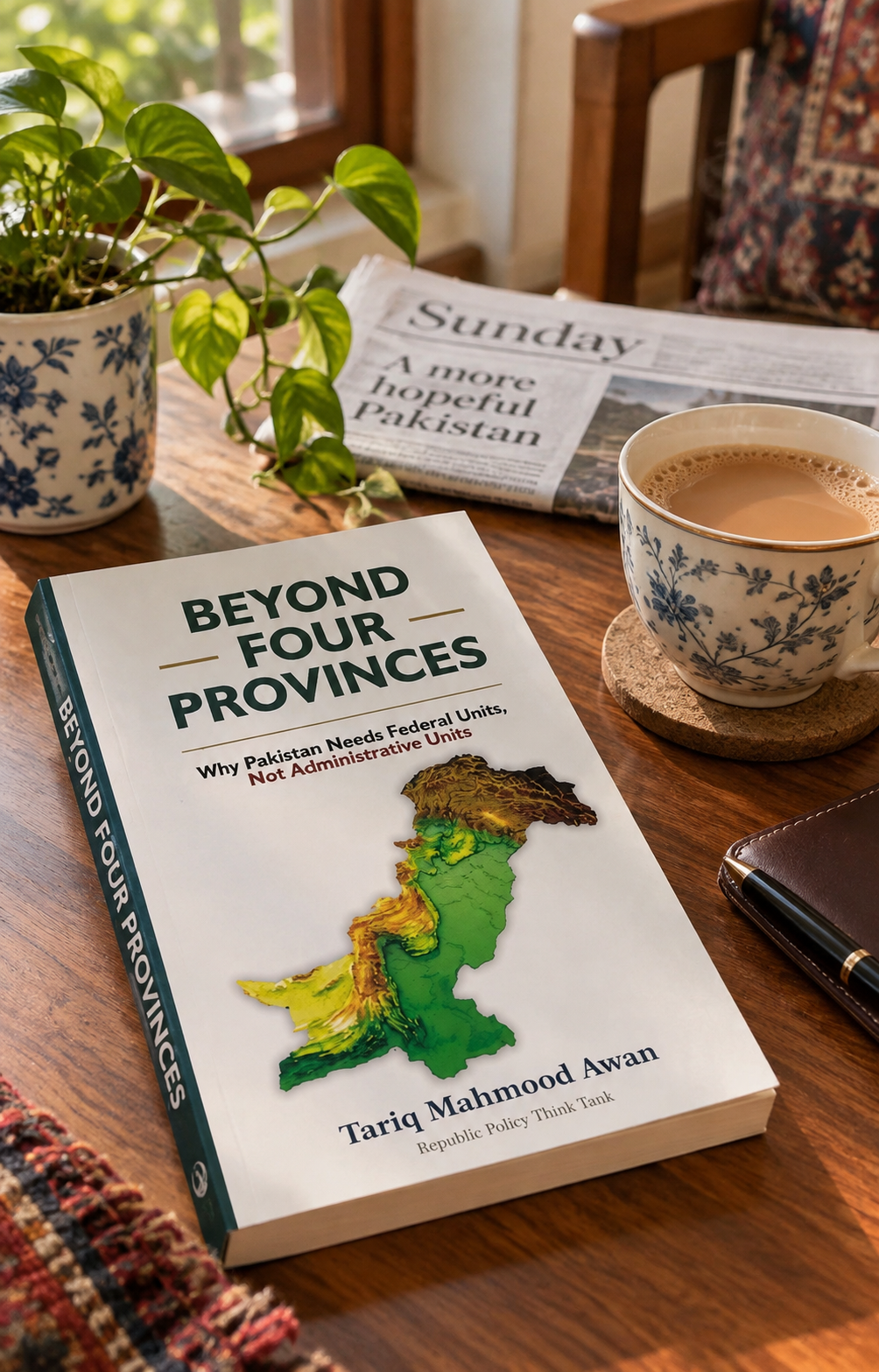
Republic Policy Think Tank’s book The Bureaucratic Coup is directly relevant here. It examines how the bureaucracy operates in Pakistan, what the architecture of administrative power looks like, how decisions flow through the system, and what accountability mechanisms exist on paper and how they function in practice. For journalists, researchers, students, and policy professionals seeking to understand the machinery they are meant to scrutinise, this book offers a serious and detailed guide. Accountability reporting without structural knowledge is like auditing accounts without knowing how accounting works. The Bureaucratic Coup provides that structural knowledge.
The book is available at Vanguard Books, Readings, Sang-e-Meel, Kitab Sarai, Saeed Book Depot, and leading bookstores across Pakistan. For home delivery, contact +92 336 2567031 or +92 301 4243788.
Pakistani journalism has the legal tools, the constitutional protections, and the public mandate to do serious accountability work. What it requires is the professional discipline to use them. Evidence before allegation. Documentation before publication. Understanding before accusation. That is the standard. It is not an unreasonably high one.
#PublicPolicy #Journalism #RightToInformation #RTI #Governance #Accountability #Bureaucracy #Pakistan #InvestigativeJournalism #RepublicPolicy #TheBureaucraticCoup #Transparency