Tahir Maqsood Chheena
Sixteen years have passed since the 18th Constitutional Amendment reshaped the architecture of the Pakistani federation, yet the country continues to conduct its development planning as though little had changed. Islamabad still dominates decisions that, on paper at least, belong to the provinces. This contradiction has grown harder to defend with each passing year, which is why the proposal advanced by economist Dr Kaiser Bengali, offered during a policy roundtable on Pakistan’s development budget and the challenges of the post-devolution era, that each province set up its own planning commission, merits serious and immediate attention. The idea speaks directly to one of the most neglected gaps in the governance framework that emerged after devolution.
The 18th Amendment was never meant to be a simple administrative handover, a transfer of files and departments from federal ministries to provincial secretariats. Its deeper purpose was to move the locus of decision making closer to the people themselves, so that policy could grow out of local conditions rather than being handed down from central assumptions formed in Islamabad. Health, education, population welfare and a long list of other subjects were devolved on precisely this reasoning. Provincial governments were expected to take real ownership of their development priorities, not merely inherit the paperwork. That expectation remains only partly realised so long as planning, the very function that determines what gets built, funded and prioritised, continues to rest disproportionately in federal hands.
Planning is often mistaken for a narrow, technical exercise: drawing up an annual development programme, distributing a budget across departments, ticking boxes. In truth it is a far more demanding discipline. It requires identifying long-term priorities that outlast election cycles, conducting feasibility studies that separate viable projects from politically convenient ones, evaluating the economic returns of competing proposals, coordinating strategies across sectors that often work at cross purposes, and measuring outcomes honestly enough to learn from failure. A province cannot claim to have absorbed its constitutional responsibilities if it lacks the institutional capacity to perform these functions on its own, professionally and independently, rather than waiting for federal institutions to do the thinking on its behalf.
The urgency of this argument has only sharpened as Pakistan’s fiscal space continues to shrink. Debt servicing now consumes such a large share of public resources that governments at every level, federal and provincial alike, are forced into difficult and often painful spending choices. In such an environment, every rupee spent on development has to justify itself. There is simply no room left for the loose project selection and weak accountability that have characterised so much of public spending in the past. Stronger planning is not a luxury reserved for better economic times; it is a necessity precisely because times are hard.
The wider conversation about what development actually means has also shifted in recent years. Economists increasingly argue that education, healthcare and nutrition should not be treated as mere social expenditure, a cost to be minimised, but as investment in human capital, a driver of long-term productivity and growth. This is not a semantic distinction. It changes how planning institutions ought to be built. A planning commission designed around this newer thinking must be able to integrate economic planning with human development objectives, rather than keeping the two in separate silos as has traditionally been the case. Provincial planning commissions are well positioned to make that integration, since they sit closer to the communities whose human capital is actually being developed.
There is also a strong practical case rooted in the sheer diversity of Pakistan’s provinces. Balochistan’s economic priorities, shaped by its geography, its resource base and its demographic patterns, differ markedly from those of Punjab. Sindh grapples with urban challenges of a scale and character quite unlike anything found in Khyber Pakhtunkhwa. A planning framework built around centralised, one-size-fits-all assumptions is poorly equipped to serve such varied realities. A framework grounded in provincial circumstances, by contrast, is far more likely to allocate resources efficiently, because the people making the decisions understand the terrain, quite literally, on which those decisions will play out.
This logic fits naturally within the broader principle that devolution was meant to embody. Power was never supposed to flow from the federation to the provinces and then simply stop there, frozen at the provincial level as though that were the final destination. Effective governance depends on pushing decision making as close as possible to the communities it affects, which means provincial institutions should, in turn, be empowering local governments capable of responding to district and municipal needs. Devolution, properly understood, is not a single constitutional event that concluded in 2010. It is a continuing process, one that Pakistan has left unfinished.
For years now, the country has debated whether its persistent development gap is the result of insufficient resources, inefficient spending or weak institutions. The honest answer is almost certainly some combination of all three. But of these, institutional weakness is perhaps the most fixable, and provincial planning commissions offer a concrete, achievable step toward addressing it. Better planning alone cannot solve every problem that afflicts Pakistan’s development trajectory. Poor planning, however, all but guarantees that whatever limited resources are available will continue to produce disappointing results, year after year, regardless of how much money is eventually allocated.
The 18th Amendment set out to reshape Pakistan’s governance by placing authority in the hands of those best positioned to exercise it wisely. That vision remains incomplete as long as provinces keep relying on institutions built for a far more centralised state than the one the Constitution now describes. Establishing provincial planning commissions would do more than satisfy the technical requirements of devolution. It would strengthen the country’s capacity to plan with foresight, prioritise with discipline and deliver development where it is needed most, in the districts and communities that have waited far too long for the promise of the 18th Amendment to be fully kept.
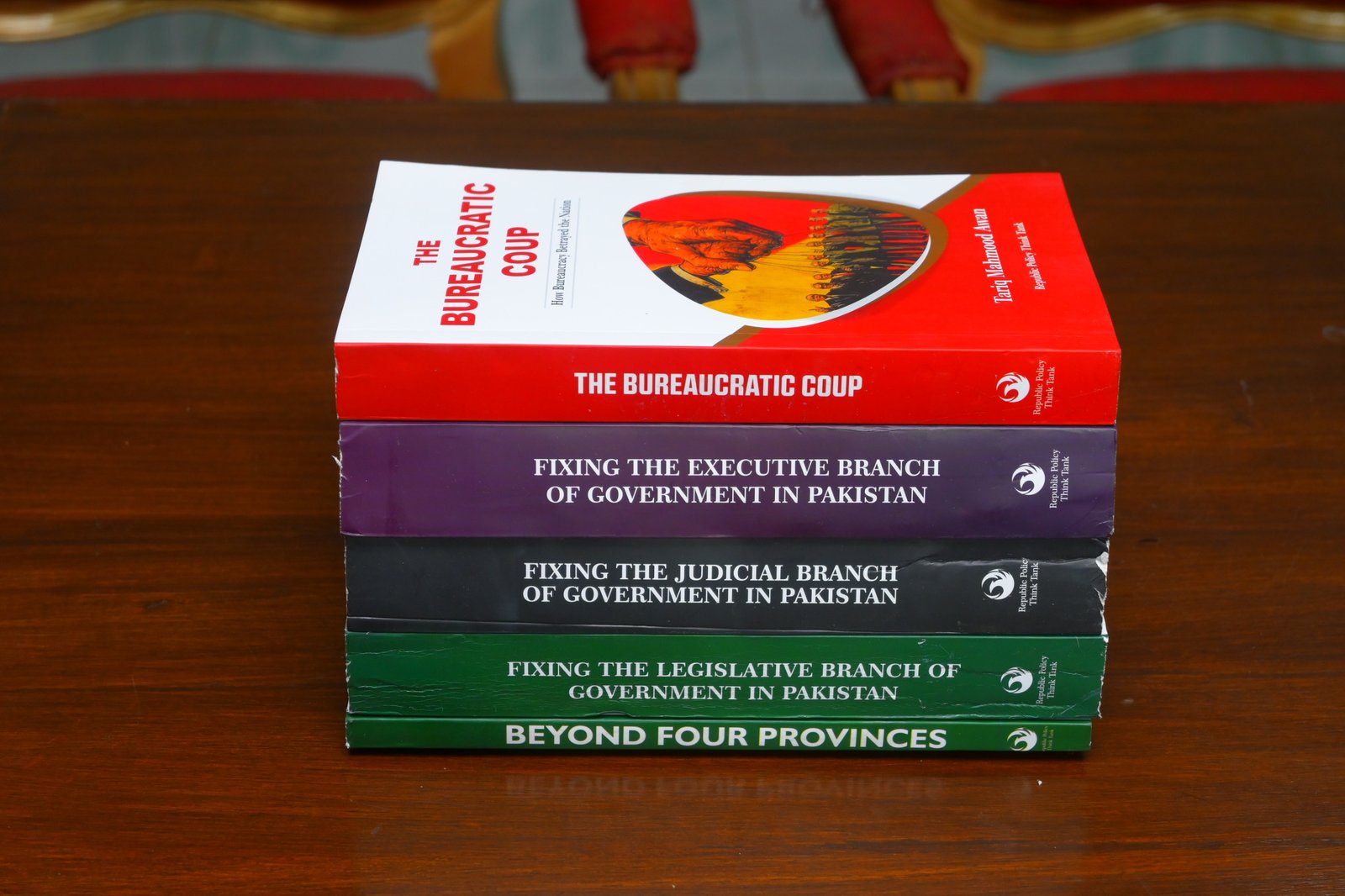
The best-selling books of Republic Policy Think Tank, including the landmark book The Bureaucratic Coup, are available at Vanguard Books, Liberty Books, Readings, Kitab Sarai, Sang-e-Meel, Saeed Book Bank Islamabad, National Book Foundation, and others across Pakistan. Contact for home delivery: 0300 9552542.