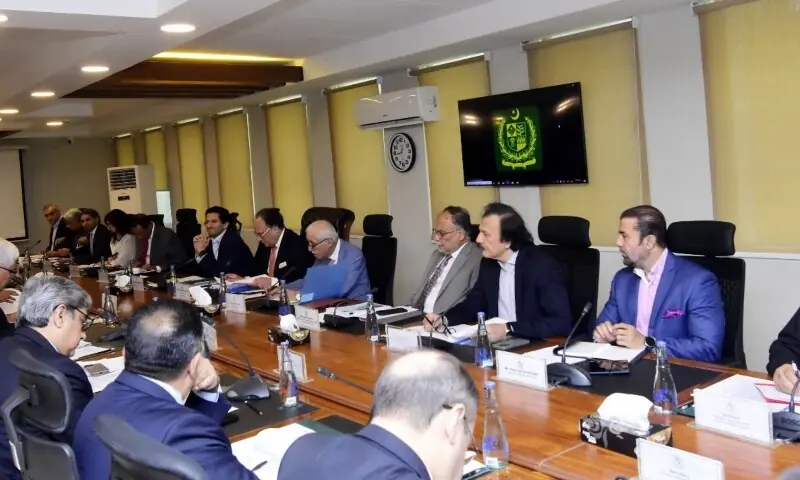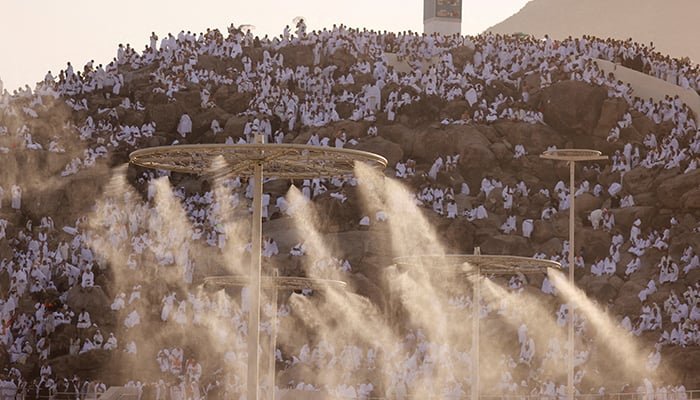

ISLAMABAD: The federal cabinet, chaired by Prime Minister Shehbaz Sharif, on Tuesday approved Pakistan’s Hajj Policy and Plan 2027–2030, introducing the country’s first comprehensive four-year framework designed to improve long-term planning, operational efficiency and services for intending pilgrims.
According to a statement issued by the Prime Minister’s Office, the cabinet appreciated Federal Minister for Religious Affairs Sardar Muhammad Yousaf and his team for successfully managing this year’s Hajj operation before reviewing the key features of the new policy.
Under the new framework, pilgrims will be required to register only once for Hajj up to 2030 instead of completing the registration process every year. The system will enable the government to maintain a priority-based waiting list and improve future planning for Hajj arrangements.
The policy also introduces a Shariah-compliant Hajj savings scheme, allowing prospective pilgrims to gradually save for pilgrimage expenses through an organised financial mechanism.
The cabinet was informed that the Hajj management system will be fully digitised, covering registration, payments, complaint resolution and monitoring processes to enhance transparency and service delivery.
The policy also provides for the allocation of government and private Hajj quotas, the introduction of both long and short Hajj packages, mandatory training for pilgrims, and arrangements for Takaful coverage and emergency response services.
The cabinet directed that Hajj assistants be selected through a transparent and merit-based process and called for independent third-party evaluation of both government and private Hajj operations to ensure accountability and improved performance.
Separately, the cabinet approved a policy to outsource services at Islamabad’s Isolation Hospital and Infectious Treatment Centre (IHITC) and the Regional Blood Centre (RBC) with the objective of enhancing healthcare services.
The cabinet also reviewed the performance of Pakistan Railways and was informed that the department recorded a 24.19 percent increase in revenue, rising from Rs95 billion in fiscal year 2024–25 to more than Rs115 billion in fiscal year 2025–26. The growth was attributed to higher earnings from freight operations, passenger services, property and other sources.
The cabinet praised Railways Minister Hanif Abbasi and his team for the department’s improved financial performance.
The meeting also ratified decisions taken by the Cabinet Committee on Legislative Cases (CCLC) on May 19 and the Economic Coordination Committee (ECC) on July 2.