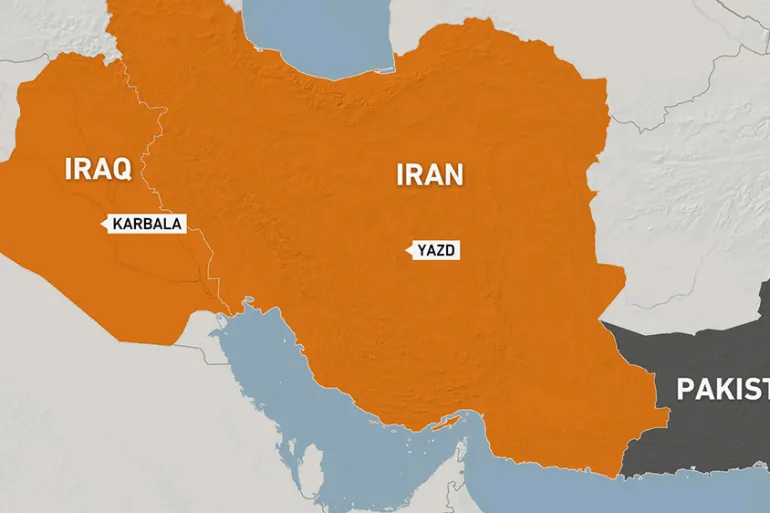

BEIJING: Iran has announced plans to introduce new service charges for commercial vessels transiting the Strait of Hormuz after the expiry of a temporary agreement with the United States, while indicating that China and other friendly countries will receive preferential treatment under the proposed arrangement.
Speaking at the World Peace Forum in Beijing on Saturday, Iran’s Ambassador to China, Abdolreza Rahmani Fazli, said Tehran, in cooperation with Oman, was developing a new framework for managing the strategically important waterway.
“As a country where the Strait of Hormuz forms part of its territorial waters, we will certainly charge service fees,” Fazli said, stressing that the charges should not be regarded as transit tolls.
According to the Iranian envoy, the new arrangements will cover maritime security, monitoring the movement of vessels and addressing the environmental impact caused by heavy shipping traffic through the strait.
Iran’s NourNews agency also reported that China and other countries maintaining friendly relations with Tehran would receive “special considerations” regarding the level and nature of the service charges imposed on vessels using the waterway.
Last month, Iran and the United States reached an initial agreement to halt hostilities, allowing commercial vessels to pass through the Strait of Hormuz free of charge for 60 days. However, the long-term arrangements governing navigation after the temporary period remain under negotiation.
The United States has maintained that Iran will not be allowed to impose transit tolls or mandatory fees on vessels under any permanent agreement.
The Strait of Hormuz is one of the world’s most strategically important maritime routes, handling nearly one-fifth of global crude oil and liquefied natural gas shipments during normal conditions. Shipping through the passage was severely disrupted after the outbreak of war between Iran, the United States and Israel in late February, triggering sharp increases in global energy prices.
The conflict also prompted the United States to impose a naval blockade on Iran’s southern ports in April in an effort to curb Iranian oil exports.
Fazli said the four-month conflict had transformed the Strait of Hormuz into a major security issue, making new management arrangements necessary.
He added that Iran and Oman, which share control over the strategic waterway, have established a joint committee to develop a new mechanism for its future administration and security.
The Republic Policy Think Tank’s special work on governance reforms in Pakistan is now available in the form of four important books at bookstores across Pakistan: Fixing the Executive Branch of Government, Fixing the Legislative Branch of Government, Fixing the Judicial Branch of Government, and The Bureaucratic Coup. These books are available at Vanguard Books, Liberty Books, Readings, Kitab Sarai, Sang-e-Meel, Saeed Book Bank Islamabad, National Book Foundation, Saeed Book Stores, and other bookstores across Pakistan. Contact for home delivery: 03009552542.