
Pakistan’s merchandise trade deficit widened sharply to $39.47 billion during the fiscal year ended June 30, 2026 (FY2025-26), marking a 21.57% increase over the previous fiscal year, according to data released by the Pakistan Bureau of Statistics (PBS) on Thursday. The latest figures place the country’s trade gap at its highest level in four years, reflecting a significant imbalance between imports and exports.
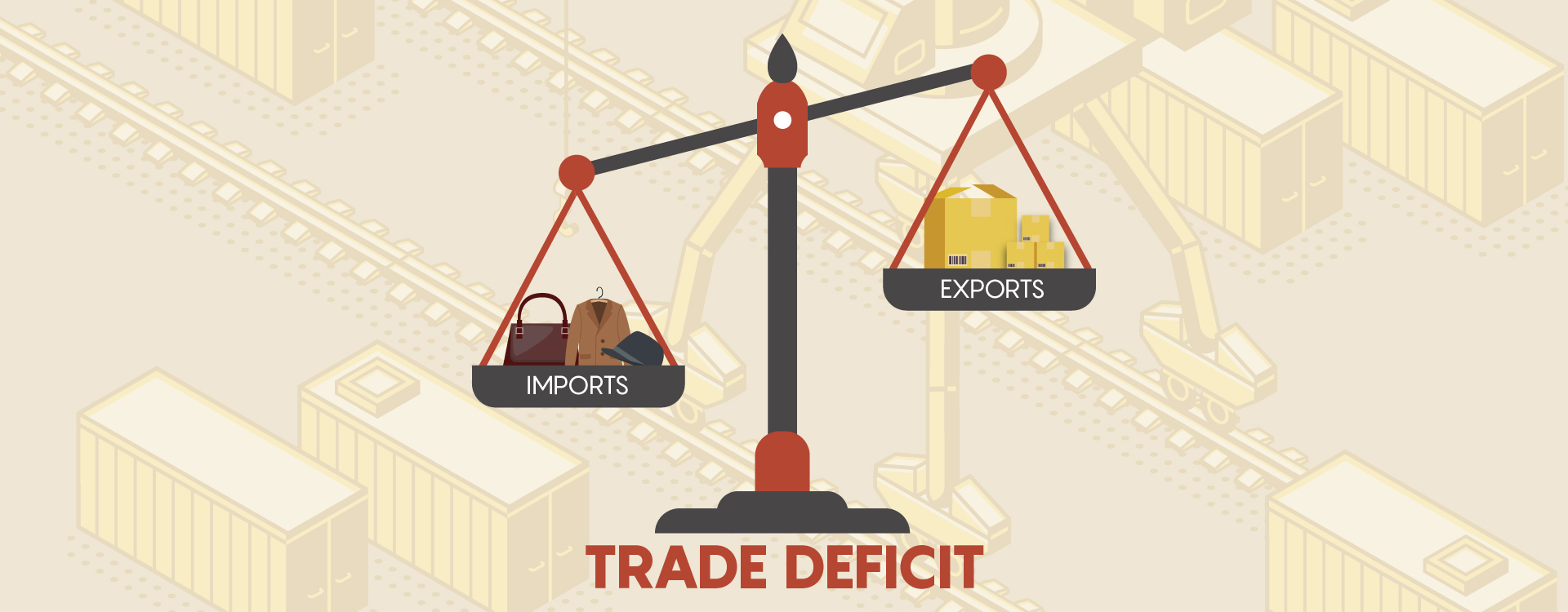
A trade deficit occurs when the value of a country’s imports exceeds its exports, increasing pressure on foreign exchange reserves and the broader external sector. While higher imports can support economic expansion, sustained deficits without corresponding export growth can create macroeconomic vulnerabilities.
The monthly data also showed a sharp deterioration in June 2026. Pakistan recorded a trade deficit of $4.53 billion, which was more than 57% higher than in June 2025 and nearly 64% above the $2.76 billion recorded in May 2026. The widening gap was driven by a surge in imports alongside declining export earnings.
According to the PBS, total imports rose by nearly 8% to $69.59 billion in FY2025-26, while exports declined by almost 6% to $30.13 billion. In June alone, imports increased 26.27% year-on-year to $6.77 billion, whereas exports fell 9.61% to $2.24 billion. Compared with May 2026, imports climbed by more than 24%, while exports dropped by nearly 17%, further widening the monthly trade gap.
Analysts believe both international and domestic factors contributed to the increase in the deficit. AKD Securities Director Research Muhammad Awais Ashraf said higher global oil prices during the US-Iran conflict significantly raised Pakistan’s petroleum import bill. He added that geopolitical tensions in the Middle East also increased freight and insurance costs, making imports more expensive.
Ashraf further noted that the gradual recovery of Pakistan’s economy encouraged greater imports of machinery, automobiles, and industrial equipment. The decline in the State Bank of Pakistan’s policy rate to 11.5%, from a peak of 22% two years earlier, supported higher business activity and investment demand. However, he stressed that sustaining economic growth will require stronger export performance to narrow the widening trade imbalance and strengthen the country’s external sector.
The best-selling books of Republic Policy Think Tank, including the landmark book The Bureaucratic Coup, are available at Vanguard Books, Liberty Books, Readings, Kitab Sarai, Sang-e-Meel, Saeed Book Bank Islamabad, National Book Foundation, and other bookstores across Pakistan. Contact for home delivery: 0300 9552542.